To all appearances, it really looks as if the United Arab Emirates has picked a side as a result of the US and Israel's war with Iran , a side that could isolate it from much of the rest of the Arab w
Key facts
- •The fund was apparently agreed to during a secret visit Israeli Prime Minister Benjamin Netanyahu made to the UAE, which he made public on the evening of May 13.
- •A few hours later, the UAE denied the visit ever happened.
- •The day before, at an event in Tel Aviv, US Ambassador to Israel Mike Huckabee confirmed that Israel had loaned the UAE aerial defense weaponry in order to help defend against air attacks from Iran.
- •All that — combined with the UAE's late-April announcement that it was leaving the oil producers' syndicate OPEC , to which it had belonged for 59 years — caused a rash of analyses stating that the…
- •"A decades-old Gulf order is fading, and another is taking shape," Cinzia Bianco, a visiting fellow at the European Council on Foreign Relations, wrote in a mid-May commentary .
To all appearances, it really looks as if the United Arab Emirates has picked a side as a result of the US and Israel's war with Iran , a side that could isolate it from much of the rest of the Arab world. Earlier this week, it was reported that Israel and the UAE were establishing a joint defense fund, which would see the two countries buying weapons together. The report, first published by the media outlet Middle East Eye , cited two unnamed US officials and has not been confirmed by either go
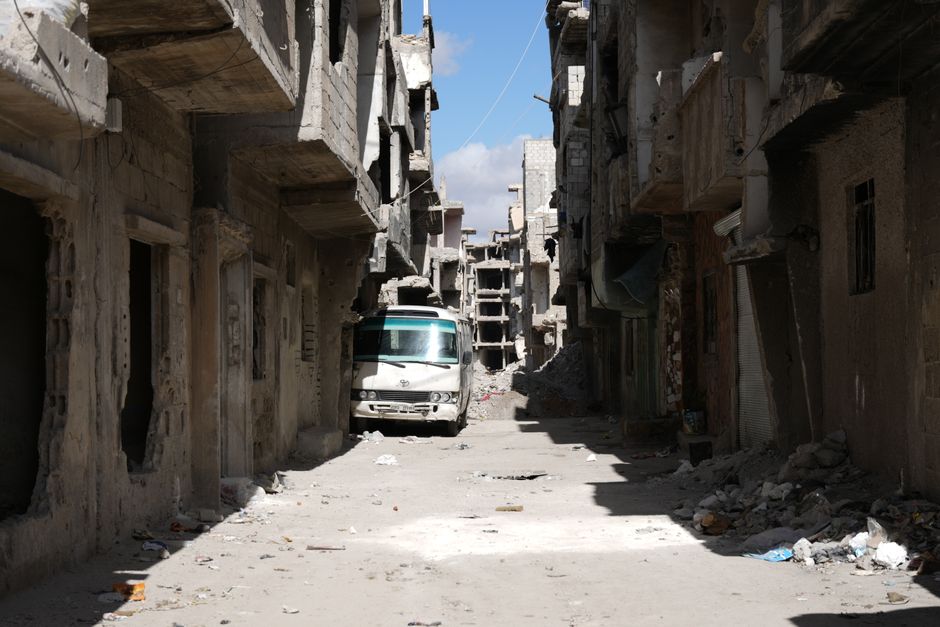
The fund was apparently agreed to during a secret visit Israeli Prime Minister Benjamin Netanyahu made to the UAE, which he made public on the evening of May 13. A few hours later, the UAE denied the visit ever happened. The day before, at an event in Tel Aviv, US Ambassador to Israel Mike Huckabee confirmed that Israel had loaned the UAE aerial defense weaponry in order to help defend against air attacks from Iran. All that — combined with the UAE's late-April announcement that it was leaving the oil producers' syndicate OPEC , to which it had belonged for 59 years — caused a rash of analyses stating that the Middle East was changing radically. "A decades-old Gulf order is fading, and another is taking shape," Cinzia Bianco, a visiting fellow at the European Council on Foreign Relations, wrote in a mid-May commentary . "The geopolitical earthquake sparked by the UAE is more than a temporary regional conflict," Ma Young-sam, a former Korean ambassador to Israel, recently said in the English-language daily The Korea Times . "It signals the emergence of a new Middle Eastern order." Israel sent soldiers and parts of its Iron Dome system to the UAE, but until Huckabee's statement that hadn't been confirmed Image: Wisam Hashlamoun/Anadolu/picture alliance Marcus Schneider, who heads the Friedrich Ebert Foundation's regional project for peace and security in the Middle East in Lebanon, described the two emerging blocs like this: One is a hexagon, he said, made up of the UAE and Israel, and the second is a diamond shape, consisting of Saudi Arabia , Pakistan , Turkey and Egypt . The latter countries, which have Sunni-majority populations, have also been called "the Quartet." Schneider said what connects Israel and the UAE is that both are currently practicing policies of "disruption" to try to "reshape the Middle East and beyond." Netanyahu has frequently boasted that Israel is "changing the face of the Middle East," something he repeated in early March after Israel's joint attack on Iran with the US. The UAE also "seeks to redraw the map of the Middle East and build new networks of geopolitical and geoeconomic influence centered on Abu Dhabi," Bianco wrote. But there are also other pragmatic reasons for the partnership. "For the UAE, Israel offers resources, networks, defense capabilities, technological prowess and influence in capitals around the world," Bianco continued. Meanwhile, the so-called Sunni "diamond" is pursuing a different kind of policy, Schneider told DW.
This article was independently rewritten by ManyPress editorial AI from reporting originally published by Deutsche Welle.