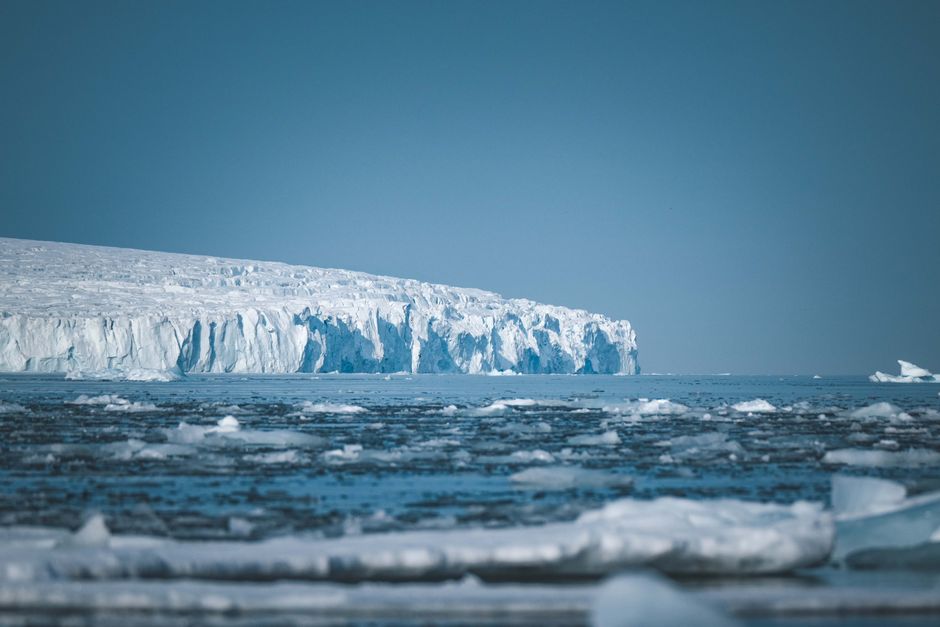
The Araon, a South Korean ice-breaker vessel, navigates a bed of sea ice near the Thwaites glacier in January 2026 Antarctica’s most threatened glacier is about be further destabilised, as the floatin
Key facts
- •Worse still, its collapse is expected to set off a domino effect in the entire West Antarctic ice sheet, ultimately resulting in a calamitous sea-level rise of 3.3 metres and changing the coastline…
- •Many Antarctic glaciers form ice shelves that float out onto the ocean and buttress against the flow of ice from the continent.
- •Thwaites glacier has one on its eastern front, known as Thwaites Eastern Ice Shelf (TEIS), that is about the size of Greater London – 1500 square kilometres – and 350 metres thick.
- •But satellite images show alarming signs that this will imminently detach.
- •In fact, by some measures, this break-up is already under way.
The Araon, a South Korean ice-breaker vessel, navigates a bed of sea ice near the Thwaites glacier in January 2026 Antarctica’s most threatened glacier is about be further destabilised, as the floating ice shelf in front of Thwaites glacier is set to break away. “Its final demise could happen suddenly, and to avoid being caught on the hop, we have already prepared an ‘obituary’ press release,” says Rob Larter at the British Antarctic Survey. Dubbed the “doomsday glacier”, Thwaites is about the s
Worse still, its collapse is expected to set off a domino effect in the entire West Antarctic ice sheet, ultimately resulting in a calamitous sea-level rise of 3.3 metres and changing the coastline of the entire planet. Many Antarctic glaciers form ice shelves that float out onto the ocean and buttress against the flow of ice from the continent. Thwaites glacier has one on its eastern front, known as Thwaites Eastern Ice Shelf (TEIS), that is about the size of Greater London – 1500 square kilometres – and 350 metres thick. But satellite images show alarming signs that this will imminently detach. In fact, by some measures, this break-up is already under way. “Suddenly, large areas are just falling to pieces,” says Christian Wild at the University of Innsbruck in Austria. “It looks like a windscreen that’s shattering.” Huge fractures are opening up around the pinning point – where the ice shelf’s floating front is held in place by a raised ridge on the ocean floor – and along the grounding line, the point where the glacier meets the ocean and starts to float. I was there in 2019/2020 and when I look at the satellite images now, I don’t recognise the shelf. There are huge gashes where there used to be none,” says Karen Alley at the University of Manitoba in Canada, who has been analysing how this break-up is playing out. For a start, the ice has been thinned by melting due to changes in ocean circulation. Shifts in the ice-flow dynamics also mean that the shelf is now being slammed into the pinning point, tearing the ice apart. “It’s gone from a thick, strong ice shelf that is very well grounded on this pinning point to a thin, weak ice shelf that is now splitting apart around the point that used to stabilise it,” says Alley.
This article was independently rewritten by ManyPress editorial AI from reporting originally published by New Scientist.