Anthropic has launched a new hardware standard called MHS, designed to allow AI agents to interact with and control physical laboratory and manufacturing equipment.
Key facts
- •MHS allows AI models to automate tasks like calibrating lasers and moving microscopes for scientific experiments.
- •The system uses a tagging mechanism to communicate physical constraints and safety limits to AI agents.
- •Anthropic reported that early testing with scientific partners reduced the time required to integrate new devices.
- •Current partners include Amazon Web Services, Hugging Face, Raspberry Pi, Automata, and Universal Robots.
- •The long-term goal is to make MHS an open-source standard for integrating AI with physical systems.
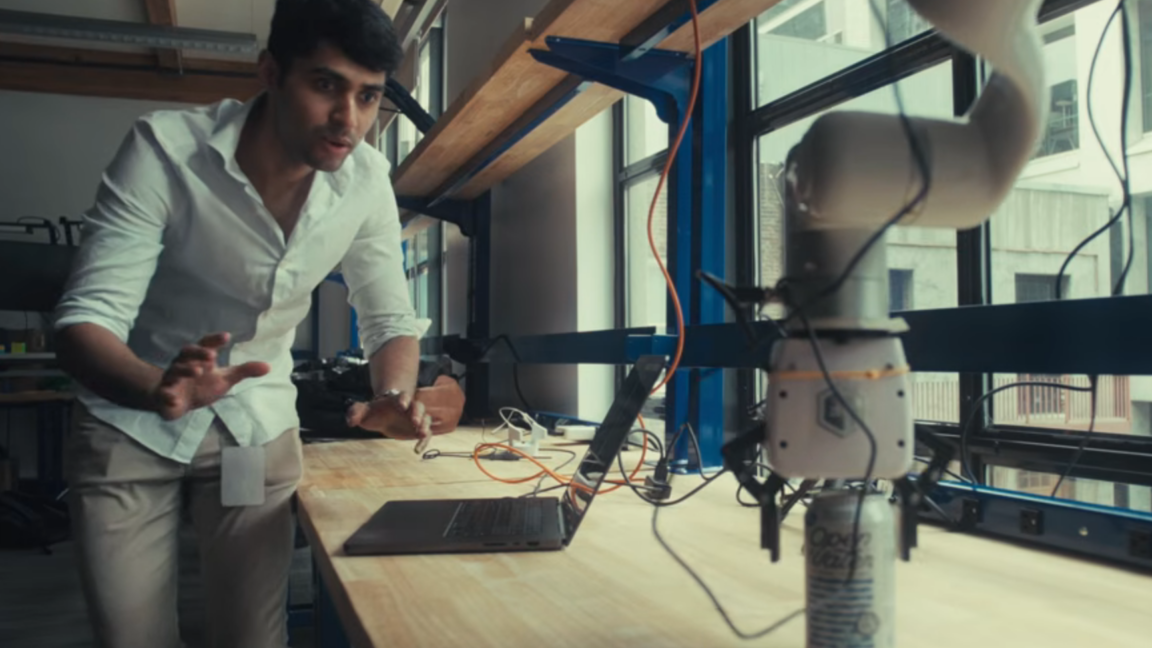
Anthropic has introduced a new hardware standard, MHS, aimed at enabling AI models to operate and calibrate physical devices. The system allows AI agents to perform tasks such as adjusting lasers, focusing microscopes, and controlling robotic arms by writing and adjusting API scripts. Anthropic is currently testing the standard with a select group of research labs and manufacturers.
Standardized Hardware Integration
MHS includes a tagging system that provides AI models with essential data about physical hardware, such as weight, range, and safety limits. This allows models to interact with devices they have not been specifically trained on by referencing these standardized files. Anthropic notes that this approach enables models to sequence steps across different instruments automatically.
Industry Partnerships and Future Goals
The company is currently working with partners including Amazon Web Services, Hugging Face, Raspberry Pi, Automata, and Universal Robots during an initial preview period. These collaborations aim to establish safety evaluations and best practices for AI-operated physical equipment. Anthropic plans to eventually transition MHS into an open-source, agent-agnostic standard.
Advertisement
This article was independently rewritten by ManyPress editorial AI from reporting originally published by Ars Technica.