Trainees in specialized trades are increasingly combining manual craftsmanship with digital tools like 3D printing and CAD to preserve and evolve traditional industries.
Key facts
- •Ollie Priestley, a 29-year-old apprentice at Tolman, is training as a heritage vehicle technician using both traditional restoration methods and modern CAD software.
- •Government data indicates a nearly 25% decline in level two intermediate apprenticeships over the past year, with a shift toward higher-level qualifications.
- •Ernest Wright uses 3D metal printing to produce small batches of test scissors, reducing the cost and waste associated with traditional manufacturing.
- •Sheffield-based scissor manufacturer William Whiteley, established in 1760, was acquired by Kaymich in 2024 and is exploring the use of reclaimed materials.
- •Platts & Nisbett now uses laser tagging on its surgical instruments to ensure traceability across hospital systems.
Apprenticeships in fields ranging from car restoration to scissor manufacturing are evolving to integrate modern technologies alongside traditional manual skills. Trainees are now learning to use computer-aided design (CAD), 3D printing, and CNC programming to complement foundational techniques like welding and hand-finishing. This shift aims to prepare workers for specialized roles that require both diagnostic problem-solving and the ability to fabricate components that are no longer commercially available.
By the numbers
Modernizing Heritage Trades
At the Heritage Skills Academy (HSA), a three-year apprenticeship introduced in 2018 now incorporates digital skills like 3D printing and CAD. Managing director John Pitchforth notes that this curriculum replaces older frameworks to better combine modern technology with engineering fundamentals. This approach is designed to produce technicians capable of diagnosing and repairing systems without relying solely on computer diagnostics, a common issue among engineers transitioning from mainstream dealerships.
Technology in Manufacturing
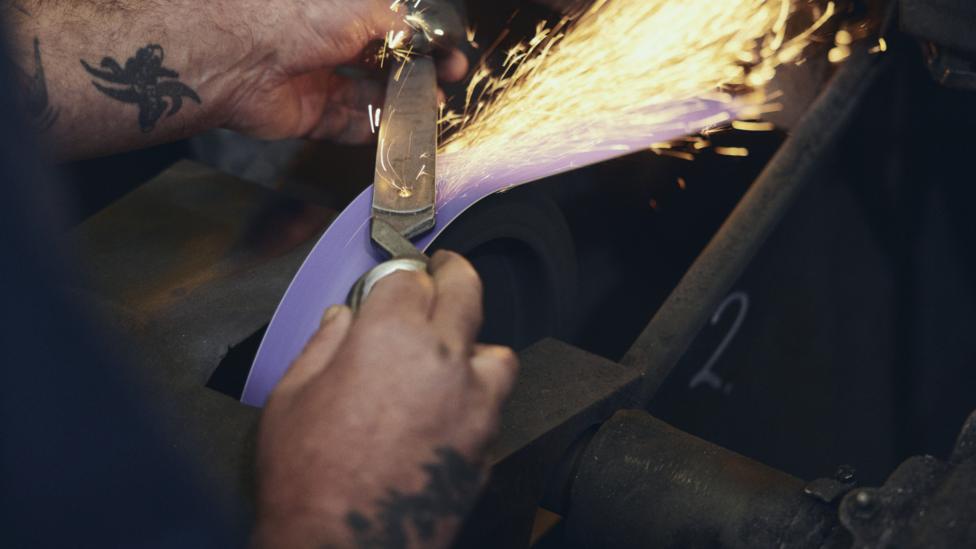
In Sheffield, historic firms are leveraging new technology to maintain their niche. Scissor-maker Ernest Wright, operating since 1902, uses 3D metal printing to create prototypes, allowing the company to test designs before committing to full production. Similarly, surgical instrument maker Platts & Nisbett utilizes CNC machinery for initial component cutting, followed by manual fitting and finishing. Despite these advancements, business leaders emphasize that technology is intended to support, not replace, the human element of craftsmanship.
Timeline
- 1760Whiteley begins operations as a scissor-maker.
- 1902Ernest Wright begins operations as a scissor-maker.
- 2018The Heritage Skills Academy introduces its current three-year apprenticeship framework.
- 2024Whiteley is sold to the manufacturing company Kaymich.
Advertisement
This article was independently rewritten by ManyPress editorial AI from reporting originally published by BBC Technology.