
Korean-Chinese artist Woo Jin Joo creates sculptural creatures and embroidery inspired by shamanism, mythology, and discarded everyday objects.
Key facts
- •Woo Jin Joo is a Korean-Chinese artist based in London who creates art inspired by Korean myth and philosophy.
- •Her work often incorporates found objects, such as discarded furniture or plastic bags, to represent the 'dokkaebi' spirit.
- •She is preparing for her first solo exhibition, 'Bodily Inbetweenness,' at the Ruup & Form gallery in London.
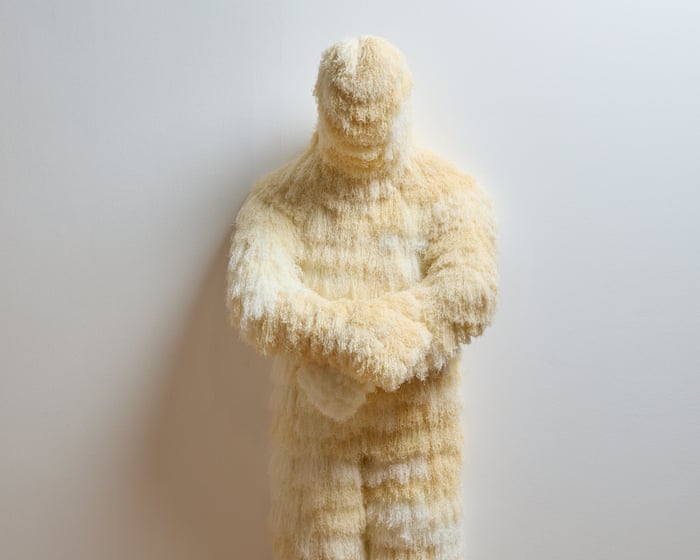
- •Joo’s sculpture 'I Hear Things Existing With Me' was featured at the London Collect Craft Fair in February.
- •The artist holds degrees from Central Saint Martins and the Royal Academy.
Artist Woo Jin Joo creates 3D sculptural creatures and embroidery that draw on Korean mythology, shamanism, and her own cultural background. Based in London, Joo incorporates found objects into her work, transforming discarded items into figures that reflect her interest in the relationship between humans and the natural world.
Artistic Process and Inspiration
Joo’s work often utilizes a freehand embroidery machine, which she describes as feeling like painting. Her practice is influenced by the Korean folklore concept of 'dokkaebi,' which suggests that inanimate objects can possess spirits. By repurposing items like old Ikea bags, shirt sleeves, and wooden tables, she aims to highlight the idea that ordinary objects hold special significance.
Career and Upcoming Exhibitions
After moving to the UK 12 years ago, Joo studied at Central Saint Martins and the Royal Academy. She is currently preparing for her first solo exhibition, 'Bodily Inbetweenness,' at London’s Ruup & Form gallery, which will coincide with Shoreditch Design Week. Additionally, she has an upcoming show scheduled at the Harley Foundation in Nottinghamshire.
Perspectives on Contemporary Craft
Joo advocates for the evolution of traditional craft, noting that modern makers are increasingly experimental and playful. She expresses pride in her identity as a maker, despite noting a persistent hierarchy in the art world that often favors fine artists over those with a craft background. She believes that the distinction between these fields should be more fluid.
Advertisement
This article was independently rewritten by ManyPress editorial AI from reporting originally published by The Guardian Culture.


