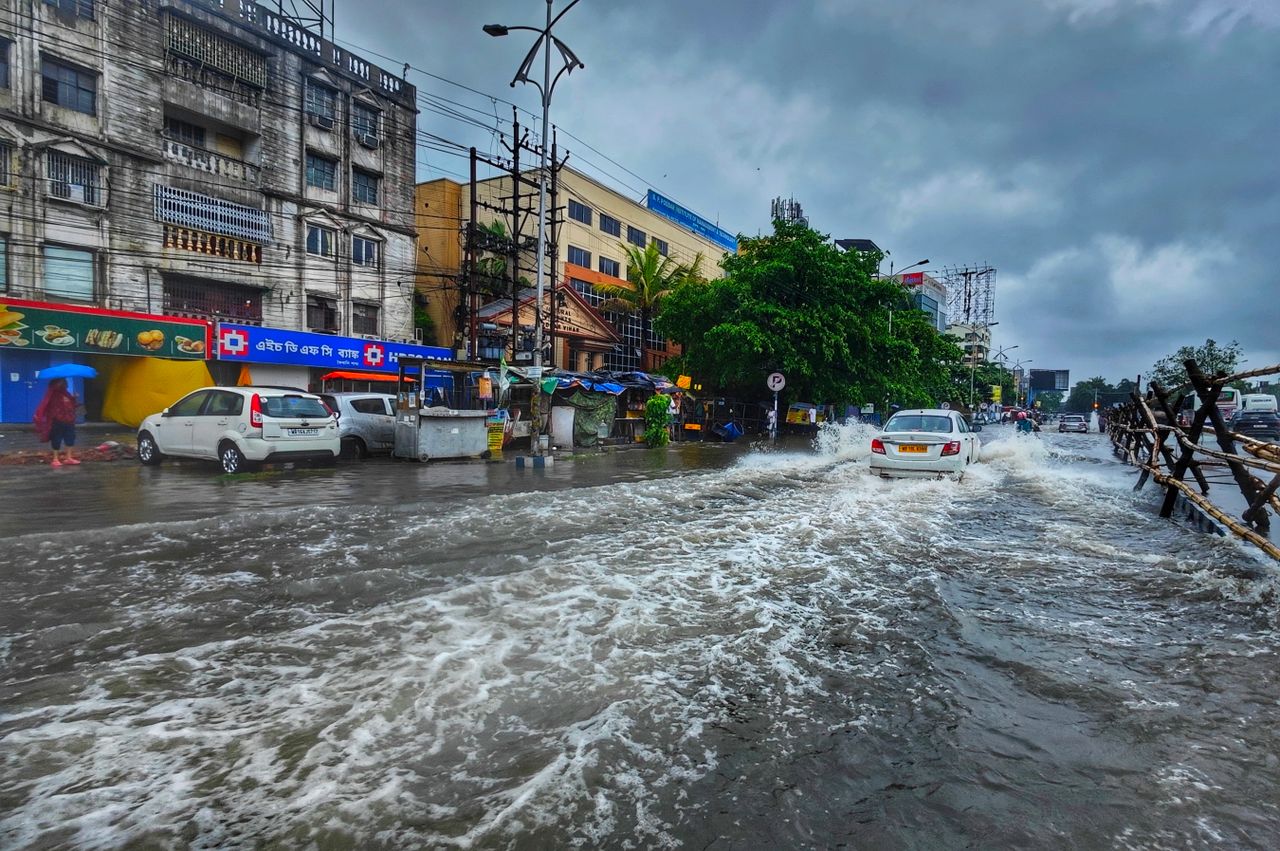
Severe flooding in Bangkok has resulted in at least 31 deaths and thousands of evacuations after a stalled low-pressure system dumped record-breaking rainfall on the city.
Key facts
- •Roughly 300 mm of rain fell on Bangkok within 48 hours, exceeding the typical monthly average of 344 mm.
- •At least 31 people have died and thousands have been forced to evacuate due to the flooding.
- •Bangkok's land has been sinking for decades, though policy changes have reduced the rate to 2–3 cm per year.
- •Surface water runoff in Bangkok has increased by 25% over the past 30 years due to urbanization.
- •The 2011 floods in Thailand caused an estimated US$46.5 billion in damages and resulted in more than 800 deaths.
Bangkok has been declared a citywide disaster zone after a stalled low-pressure system caused roughly 300 mm of rain to fall over 48 hours. The extreme downpour overwhelmed the city's drainage systems, leading to at least 31 deaths and forcing thousands of residents to evacuate. The flooding follows a period of intense weather that exceeded the city's typical monthly rainfall averages.
By the numbers
Factors Contributing to the Flooding
The flooding was driven by a low-pressure system that remained over the Bangkok region for approximately three days, causing continuous rainfall. High sea surface temperatures in the Gulf of Thailand, which are currently near 30°C, provided additional moisture and energy for the storm. Bangkok's geography as a flat city on a floodplain, combined with decades of land subsidence and rapid urbanization, has limited the city's ability to absorb and drain water.
Urbanization and Climate Trends
Urban development has replaced soil with concrete, increasing surface water runoff by 25% over the last 30 years. While the specific impact of climate change on this event is still being studied, research indicates that the heaviest rainfall days in Bangkok are increasing by 6–12 mm per decade. As global temperatures rise, the atmosphere's capacity to hold water vapor increases, suggesting that future rainfall events may become more intense.
Future Mitigation Strategies
Experts suggest that urban drainage systems must be redesigned to account for projected increases in rainfall intensity. Proposed solutions include the implementation of green infrastructure and permeable pavements to improve water absorption. Additionally, there is a call for improved early warning systems and better weather modeling to help protect residents from future extreme weather events.
Advertisement
This article was independently rewritten by ManyPress editorial AI from reporting originally published by Phys.org.