NASA satellite data highlights the unique tidal environment and rich marine life of the Bijagós Archipelago, a UNESCO World Heritage site in Guinea-Bissau.
Key facts
- •The Bijagós Archipelago consists of 88 islands and islets off the coast of Guinea-Bissau.
- •The region's tidal range can reach up to 7 meters, significantly higher than the 1-meter average for the West African coast.
- •UNESCO estimates the islands support 870,000 migratory shorebirds.
- •Green sea turtles nest on the island of Poilão, though less than 1 percent of hatchlings are estimated to reach adulthood due to high predation.
- •The site is the only active deltaic archipelago on Africa’s Atlantic coast.
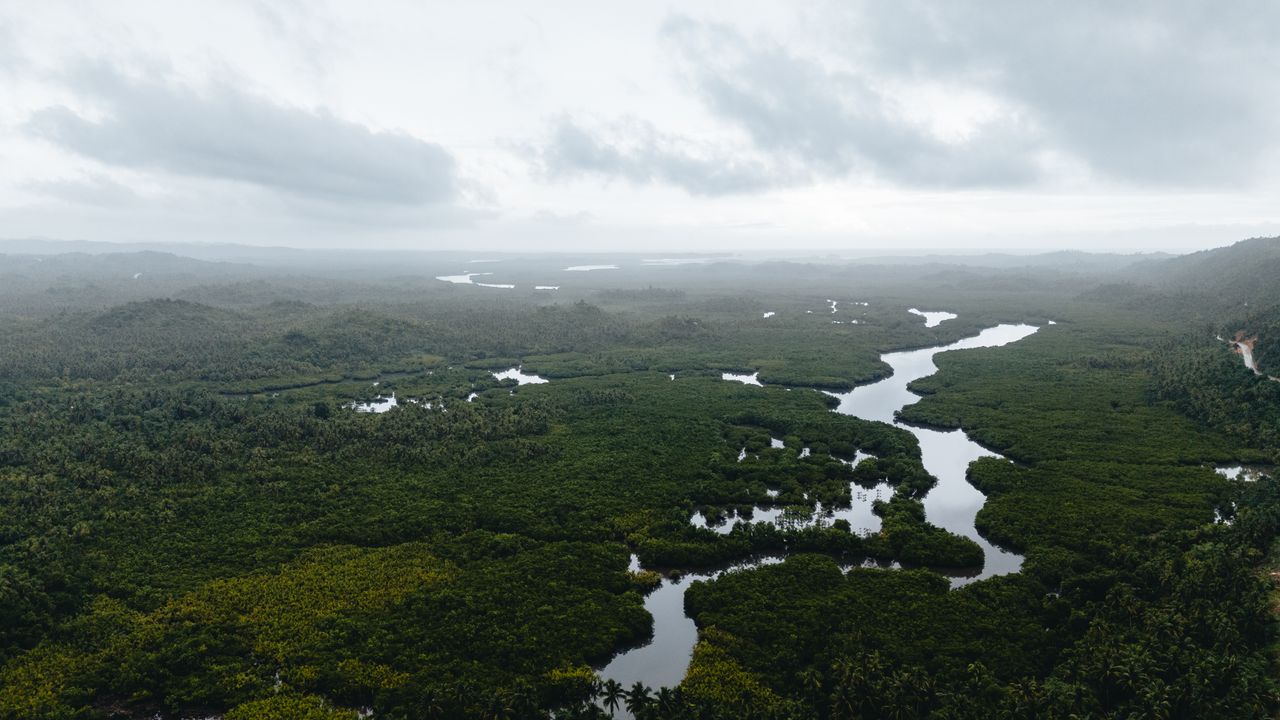
The Bijagós Archipelago in Guinea-Bissau is a highly productive ecosystem shaped by significant tidal activity. Comprising 88 islands and islets, the area was inscribed as a UNESCO World Heritage site in 2025. Satellite imagery from the Landsat 8 mission shows how daily tidal ebbs and flows expose vast mudflats and sandflats, creating a dynamic landscape that supports diverse marine life and migratory bird populations.
By the numbers
Tidal Dynamics and Geography
A 2025 analysis identified the archipelago as having some of the largest tidal ranges in West Africa, reaching up to 7 meters (23 feet). This is significantly higher than the 1-meter (3-foot) range typically seen along other parts of the West African coast. Researchers attribute this to the region's wide, shallow shelf and specific estuary geometry, validating these findings using altimetry data from NASA and CNES satellites.
Marine and Avian Biodiversity
The archipelago serves as a critical feeding ground for approximately 870,000 migratory shorebirds along the East Atlantic Flyway. These birds rely on the marine worms, crustaceans, mollusks, and small fish exposed during low tide. During high tide, the mangrove-lined islands provide refuge for dolphins, manatees, and various fish species. Additionally, the island of Poilão, located within the João Vieira and Poilão Marine National Park, is a major nesting site for green sea turtles.
Advertisement
This article was independently rewritten by ManyPress editorial AI from reporting originally published by NASA Breaking News.