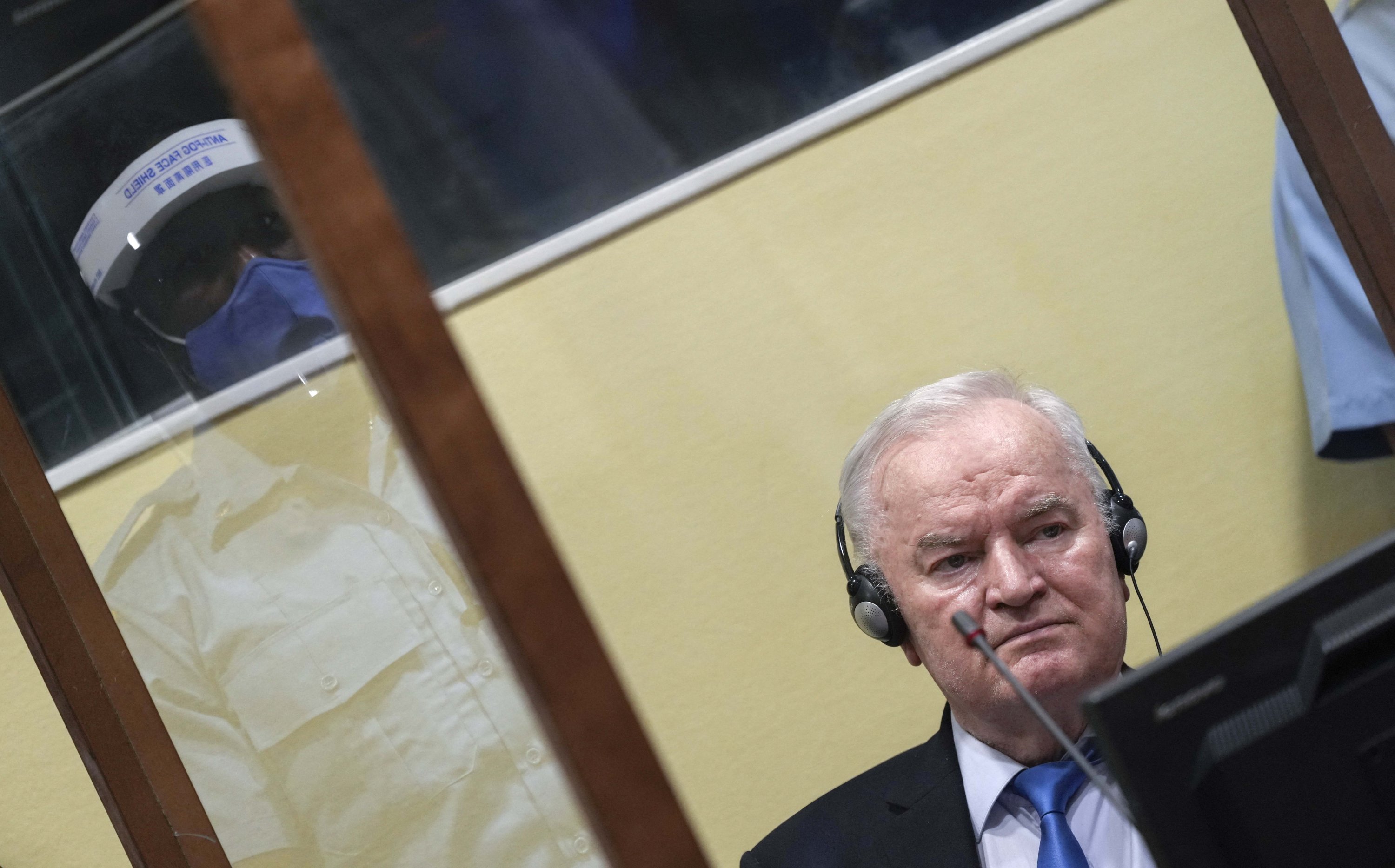
Ratko Mladic, the former Bosnian Serb general convicted of genocide and war crimes, has reportedly died in a United Nations prison hospital in The Hague.
Key facts
- •Ratko Mladic was convicted of genocide for his role in the 1995 Srebrenica massacre of over 8,000 Muslim men and boys.
- •The ICTY sentenced Mladic to life in prison in 2017, a verdict that was upheld on appeal in 2021.
- •Mladic had been in custody since 2011 after spending years as a fugitive following the Bosnian War.
- •The Bosnian War resulted in more than 100,000 deaths and displaced over 1 million people.
- •Mladic was born on March 12, 1942, in the village of Bozinovici, located 40 kilometers south of Sarajevo.
Ratko Mladic, the former Bosnian Serb general serving a life sentence for war crimes and genocide, has died at age 84. Reports from Serbian state broadcaster RTS and other outlets indicate he passed away in a United Nations prison hospital in The Hague following several strokes. While family members have confirmed the reports, United Nations court officials stated they could not immediately verify his death.
By the numbers
Conviction and Crimes
Mladic was the military commander of Bosnian Serb forces during the 1992-1995 Bosnian War. He was convicted by the International Criminal Court for the former Yugoslavia (ICTY) in 2017 for crimes including genocide, crimes against humanity, and war crimes, with the sentence confirmed on appeal in 2021. He was specifically held responsible for the 1995 Srebrenica massacre, where more than 8,000 Muslim men and boys were systematically killed, as well as the prolonged siege of Sarajevo and the operation of detention camps for non-Serb civilians.
Background and Legal Status
Born in 1942 in the village of Bozinovici, Mladic was a former Yugoslav army officer who rose to prominence as a hardline nationalist during the disintegration of Yugoslavia. He remained a fugitive for many years before being taken into custody in 2011. Throughout his trial, Mladic remained defiant, frequently shouting at judges and rejecting the court's authority. Prior to his reported death, Serbian justice minister Nenad Vujic had requested his transfer to a Belgrade military hospital, warning that his health was failing.
Advertisement
This article was independently rewritten by ManyPress editorial AI from reporting originally published by Deutsche Welle, Daily Sabah.