Rights groups are criticizing the British government's plan to use AI facial-recognition technology to screen migrant ages, citing risks of racial bias and the misclassification of children.
Key facts
- •The Home Office contracted German firm Cognitec to provide facial age-estimation technology.
- •Home Office data shows 755 children were wrongly identified as adults in 2025.
- •Government-acknowledged systems have a 30-month margin of error.
- •Lighthouse Reports found the technology showed bias against sub-Saharan Africans.
- •Critics argue that trauma and malnutrition can physically alter a child's appearance, affecting AI assessments.
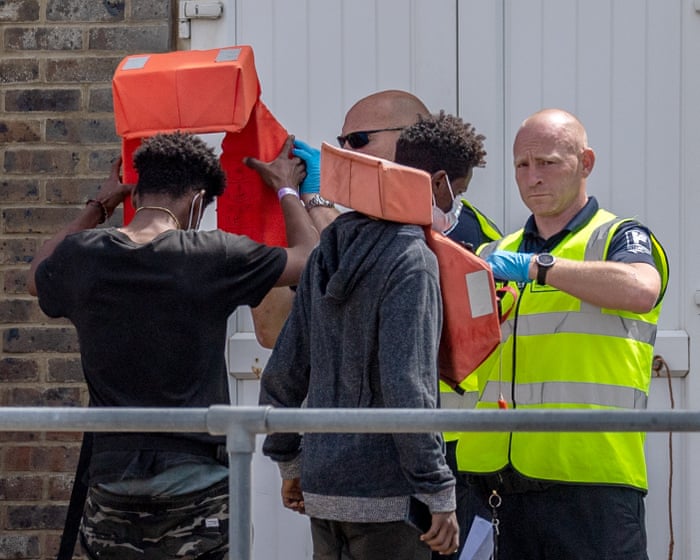
Rights groups and children's charities have warned that the British government's plan to implement AI-powered facial age-estimation technology for migrant screening will endanger children. Critics argue that the systems are flawed and racially biased, potentially leading to more children being incorrectly processed as adults. The Home Office maintains that the technology is being explored to make age assessment processes more robust and consistent.
By the numbers
Concerns over accuracy and bias
Maddie Harris of the Humans for Rights Network stated that the technology is an experimental process that fails to address existing issues in border assessments. According to Home Office figures cited by the Helen Bamber Foundation, 755 children were incorrectly identified as adults upon arrival in the UK in 2025. The government has acknowledged that even its most effective systems can have a 30-month margin of error. Critics, including the tech monitor Foxglove, have alleged that the technology relies on racist bias. An investigation by Lighthouse Reports in June found that the software developed by the German firm Cognitec showed a tendency to overpredict the ages of minors from sub-Saharan Africa.
Impact on unaccompanied minors
Advocates warn that misclassifying children as adults exposes them to detention, removal, and placement in adult accommodation, where they may face violence. Experts also note that physical indicators of trauma, malnutrition, and dehydration from difficult journeys can alter a person's appearance, further complicating the accuracy of facial-recognition tools. Petra Molnar of the Migration and Tech Monitor compared the use of these systems to discredited 19th-century phrenology, arguing that categorizing individuals based on physical features is an unreliable method for determining age.
Timeline
- May 2025The Helen Bamber Foundation reported that 755 children were incorrectly identified as adults.
- May 2025The government announced a contract with Cognitec for facial age-estimation technology.
- June 2025Lighthouse Reports published an investigation finding bias in the technology against sub-Saharan Africans.
Advertisement
This article was independently rewritten by ManyPress editorial AI from reporting originally published by The Guardian Global Development.