Chinese chipmakers are prioritizing supernode technology to link thousands of chips into unified supercomputers as AI models grow in complexity.
Key facts
- •AI models are currently expanding beyond 1 trillion parameters.
- •Huawei Technologies and Biren Technology showcased supernode hardware at the WAIC.
- •Morgan Stanley analysts identified a shift toward interconnects and memory sharing in the Chinese AI sector.
- •Suanova CEO Chen Daliang stated that a supernode requires more than just assembling multiple GPUs.
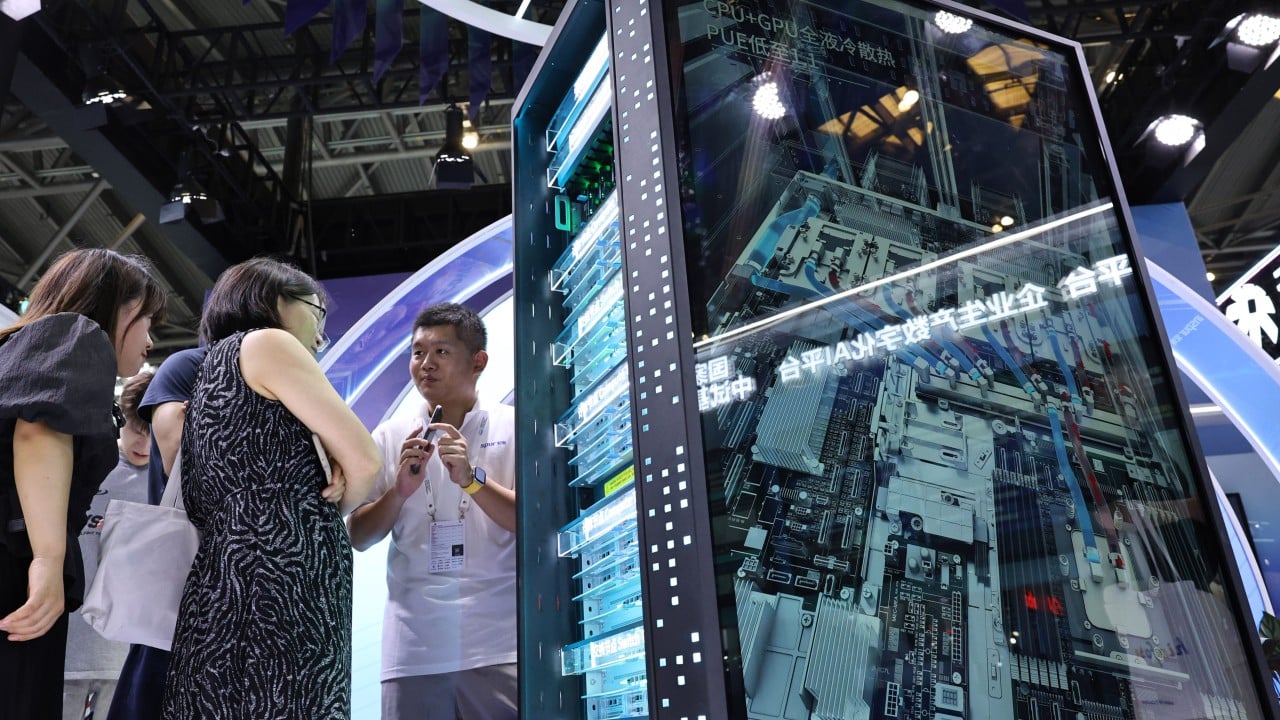
At the recent World Artificial Intelligence Conference (WAIC), Chinese chipmakers including Huawei Technologies and Biren Technology introduced hardware designed to connect hundreds or thousands of chips into a single supercomputer, a concept termed a "supernode." This development comes as AI models increasingly exceed 1 trillion parameters, necessitating more advanced computing architectures.
Shift in AI computing strategy
According to a research note from Morgan Stanley on Tuesday, the focus of China's AI computing ecosystem is moving away from individual chip specifications. Instead, the industry is prioritizing interconnects, memory sharing, and system reliability to support larger AI models.
Defining the supernode
Chen Daliang, CEO of the Shanghai-based AI computing provider Suanova, noted that creating a supernode is more complex than simply combining graphics processing units. Suanova is a subsidiary of the Hong Kong-listed company Yeebo Technology.
Advertisement
This article was independently rewritten by ManyPress editorial AI from reporting originally published by SCMP Business.