Chinese green tea has become a staple in West African social rituals, with China supplying the vast majority of tea imports to countries like Mauritania and Gambia.
Key facts
- •The ataya ritual involves serving three rounds of strong, sweet green tea to encourage social interaction.
- •In 2024, China supplied more than 90 percent of Mauritania's tea imports by value.
- •Gambia sourced approximately 91 percent of its tea imports from China in 2024.
- •The Chinese embassy in Mauritania officially recognizes the 'three cups of tea upon meeting' tradition in its visitor guide.
- •The practice is common across several Sahel region countries, including Senegal, Mali, and Niger.
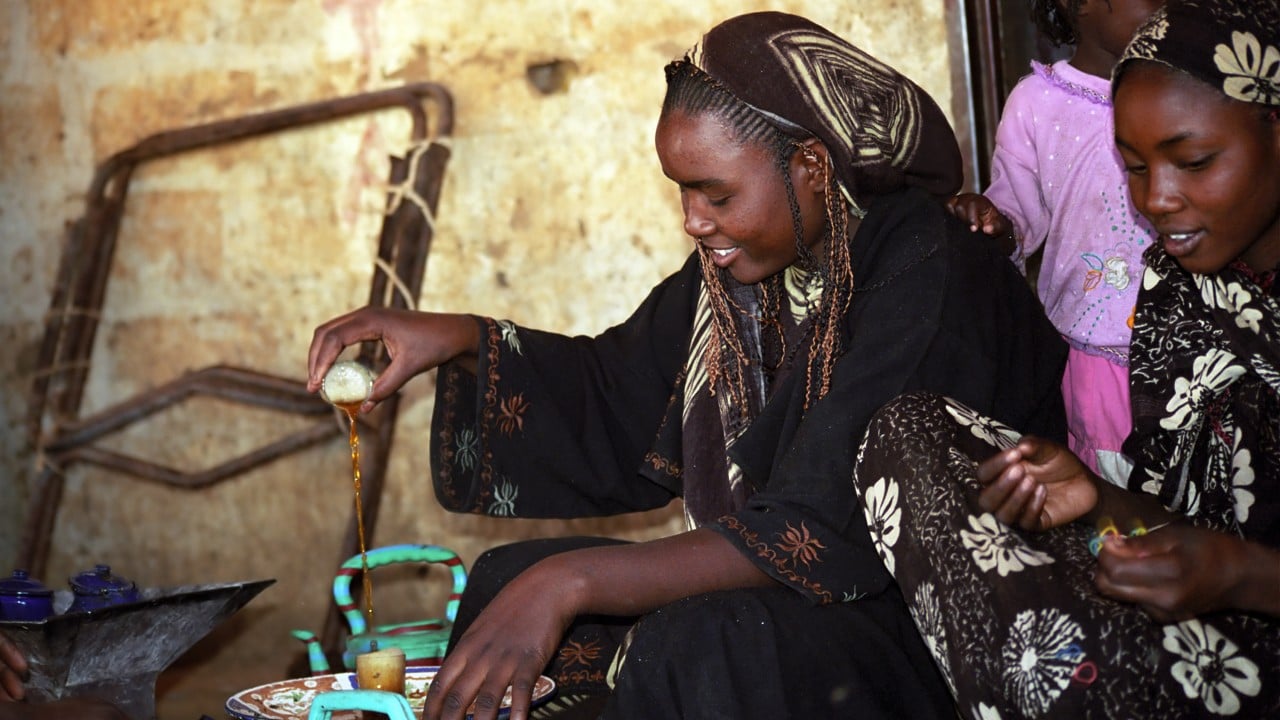
Chinese green tea has become integral to the West African social tradition known as ataya, or attaya. The ritual involves serving strong, sweet tea in three rounds to facilitate socializing among family, friends, and colleagues. This practice is widespread across countries including Mauritania, Senegal, Mali, Niger, and Gambia.
By the numbers
Dominance in Regional Markets
Chinese tea currently dominates the markets in several West African nations where the ataya tradition is practiced. In 2024, China accounted for over 90 percent of tea imports by value in both Mauritania and Gambia. According to data from the Observatory of Economic Complexity, Mauritania imported $65.1 million worth of tea from China out of a total of $66.4 million, while Gambia imported $28.5 million from China out of a total of $31.3 million.
Cultural Significance
The tea ritual is deeply embedded in local culture, serving as a primary means for people to connect in settings ranging from government offices to roadside stalls. The Chinese embassy in Mauritania has even included the practice in a guide for Chinese visitors, noting the tradition of serving 'three cups of tea upon meeting' to guests.
Advertisement
This article was independently rewritten by ManyPress editorial AI from reporting originally published by South China Morning Post.