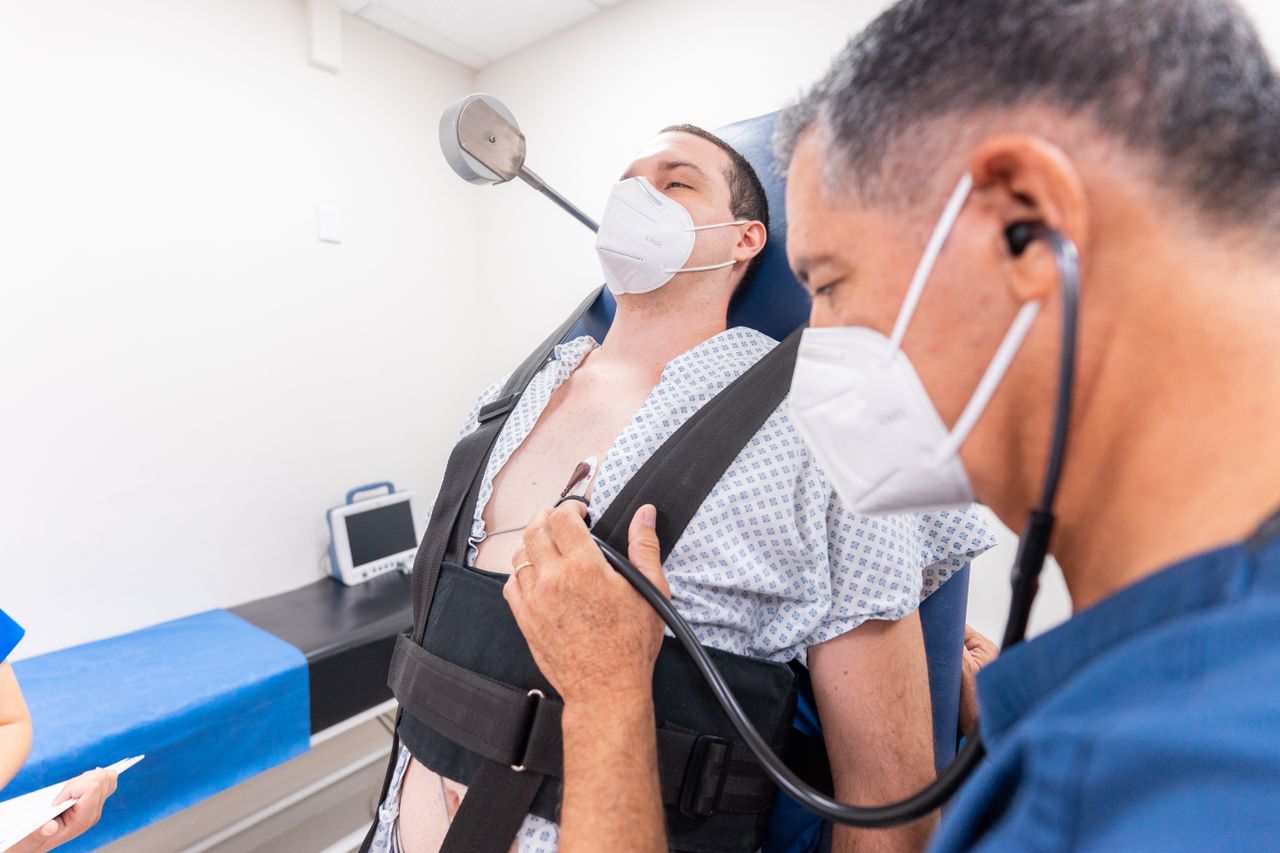
Over 150 clinicians have written to government ministers warning that excessive school screen use may be damaging children's physical and developmental health.

Key facts
- •More than 150 clinicians signed an open letter to the UK government regarding classroom screen use.
- •Global short-sightedness in children rose from 24% in 1990 to 36% in 2023, according to the cited analysis.
- •Clinicians report they are increasingly prescribing glasses, hearing aids, and speech therapy to children.
- •The UK government is developing new screen-time guidance for students aged five to 18.
- •A ban on smartphones in English schools was implemented in June.
A group of more than 150 clinicians, including GPs and paediatricians, has issued an open letter to Education Secretary Lucy Powell and Health Secretary Yvette Cooper. The signatories warn that the use of tablets and laptops in English classrooms is occurring without a full understanding of long-term health impacts. They are calling for a reduction in screen use, citing concerns over eye health, speech development, and hearing.
By the numbers
Concerns Over Rising Short-Sightedness
The clinicians highlighted an analysis of 276 studies involving 5.4 million participants, which indicated that short-sightedness in children and adolescents rose from approximately 24% in 1990 to nearly 36% by 2023. Dr. Becky Foljambe, an NHS GP and founder of Health Professionals for Safer Screens, stated that this increase cannot be attributed to genetics alone. The letter further warns that children with special educational needs are disproportionately directed toward screen-based learning.
Government and School Leadership Response
The Department for Education stated it is currently developing screen-time guidance for children aged five to 18 and plans to consult on the safety of educational technology. While acknowledging the potential for technology to support learners, the government maintains that it can be a powerful tool when used correctly. Pepe Di'Iasio of the Association of School and College Leaders noted that technology is part of a broader strategy that includes non-screen activities like physical education and social interaction.
Advertisement
This article was independently rewritten by ManyPress editorial AI from reporting originally published by BBC Health.