King Charles officially opened the 23rd Commonwealth Games in Glasgow, marking the start of a ten-day competition held under a reduced budget and scale.
Key facts
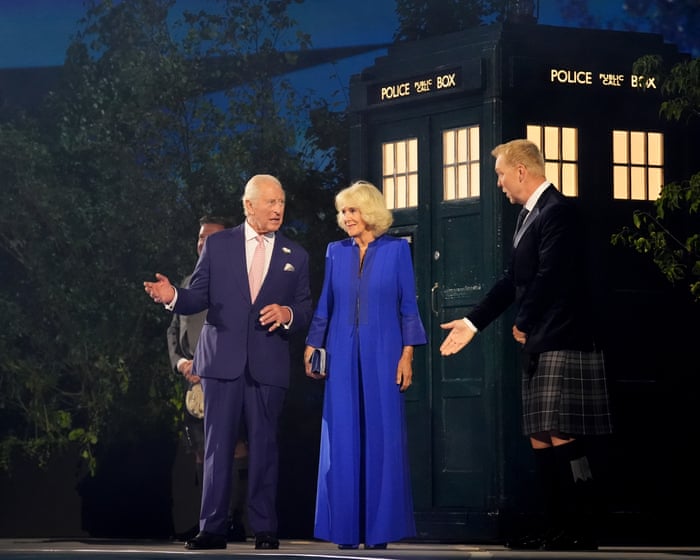
- •The opening ceremony featured a mechanical Loch Ness monster and a reference to the Doctor Who Tardis.
- •The Scottish team was led into the arena by bowls star Alex “Tattie” Marshall.
- •Prime Minister Andy Burnham attended the ceremony in his first major public engagement since taking office on Monday.
- •The Games are scheduled to continue for 10 days of sporting competition.
- •The baton relay for this year's event carried a specific message regarding the removal of plastic pollution from oceans.
The 23rd Commonwealth Games officially began on Thursday evening at the Hydro Arena in Glasgow. King Charles and Queen Camilla opened the event, which features a significantly reduced program compared to previous years. The ceremony, attended by Prime Minister Andy Burnham, focused on athlete celebrations and local cultural themes, serving as a modest start to a competition that was relocated to Glasgow after Victoria withdrew due to financial constraints.
By the numbers
A Scaled-Back Sporting Event
The current Games represent a smaller iteration of the event, featuring 10 sports compared to the 19 held in Birmingham four years ago. The number of participating athletes has also decreased, with 3,000 competitors present this year, down from nearly 5,000 in the previous edition. Organizers have adopted a more restrained approach to the ceremony, omitting large-scale pyrotechnics in favor of a focus on the athletes and local musical performances, including sets by KT Tunstall and Callum Beattie.
Royal Address and Environmental Focus
During his opening address, King Charles described the Commonwealth as a unique family of nations and praised the dedication of the competing athletes. Beyond the sporting context, the King used the event to highlight environmental concerns, specifically the impact of plastic pollution on oceans and waterways. He advocated for global efforts to protect 30% of the world's oceans by 2030, citing the importance of marine reserves for restoring ecosystems and protecting food resources.
Advertisement
This article was independently rewritten by ManyPress editorial AI from reporting originally published by Guardian Sport.