The 17th Ebola outbreak in the Democratic Republic of the Congo has become the deadliest on record, prompting calls for increased community involvement and better support for frontline workers.
Key facts
- •The DRC's 17th Ebola outbreak, caused by the Bundibugyo virus, has resulted in approximately 2,500 deaths.
- •Uganda has successfully interrupted transmission and declared its own outbreak over, demonstrating that the virus can be stopped.
- •As of August 18, 163 health workers in the DRC have been infected with Ebola, and 47 have died.
- •The Africa CDC and WHO are advocating for a village-centered strategy that prioritizes local community leadership.
- •Officials emphasize that delayed or fragmented financing for the response directly impacts the ability to save lives.
The Democratic Republic of the Congo (DRC) marked 100 days since declaring its 17th Ebola outbreak, which involves the Bundibugyo virus. The crisis has become the deadliest of its kind, resulting in approximately 2,500 deaths. Health officials from the Africa CDC and the World Health Organization are now emphasizing that stopping the virus requires deeper collaboration with local communities and better protection for health workers operating in insecure areas.
By the numbers
The Role of Community Engagement
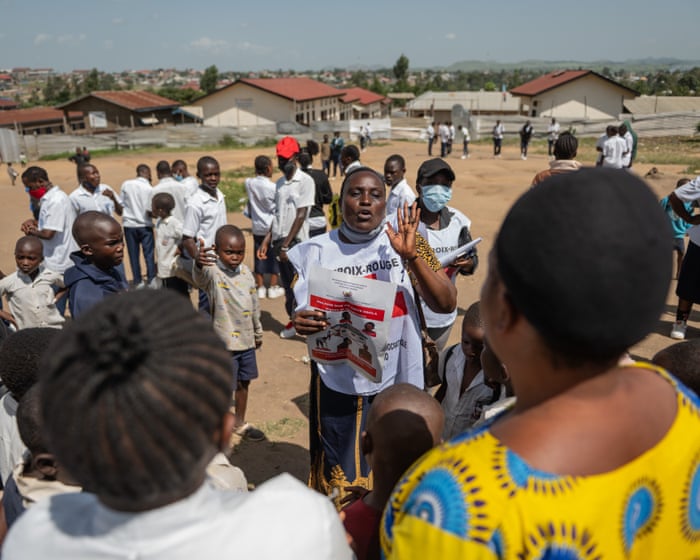
Health leaders state that communities possess the essential knowledge to identify early symptoms, trace contacts, and combat misinformation. By involving local groups—including women’s organizations, religious leaders, and survivors—the response can reach individuals who might otherwise remain invisible to health teams. Officials argue that trust is built when these communities see direct action in response to their concerns, such as safe transport for suspected cases and compassionate burial services.
Protecting and Supporting Frontline Workers
Frontline responders face significant risks, with some having contracted the virus while on duty. As of August 18, 163 health workers in the DRC have been infected, and 47 have died; Uganda has recorded four health worker infections. To improve safety and effectiveness, officials are calling for reliable equipment, consistent training, timely salary payments, and better access to vaccinations and testing for all staff.
Funding and Cross-Border Coordination
The response remains dependent on predictable financing to maintain surveillance, laboratories, and logistics. Delays in funding or fragmented financial support are cited as major obstacles that the virus exploits. Additionally, officials stress the need for strong cross-border cooperation, including rapid information-sharing and prepared health facilities along trade routes, to manage the movement of people between countries.
Advertisement
This article was independently rewritten by ManyPress editorial AI from reporting originally published by The Guardian Global Development.