
Vaccinators in Kashmir trek miles into mountain forests to reach nomadic communities, maintaining India's national immunization coverage for children under five.
Key facts
- •India has been certified polio-free since 2014, with the last confirmed case occurring in West Bengal in January 2011.
- •The national immunization program targets 27 million children under five during a single day of a drive.
- •Vaccinators in Pulwama receive 125 rupees, or approximately £1, per day for their work during these campaigns.
- •The oral polio vaccine creates communal immunity by stimulating antibodies in the intestinal lining, protecting children who share water sources.
- •India utilizes a surveillance network of 60,000 health workers to monitor 40,000 sites for symptoms of wild poliovirus.
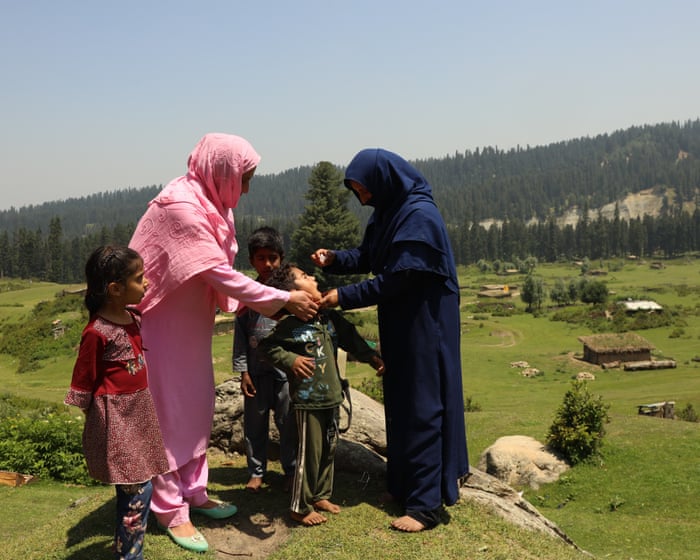
In the Pulwama district of Indian-administered Kashmir, frontline health workers Shameema and Tanzeela trek over 12 miles of rugged mountain terrain to deliver oral polio vaccines to nomadic Gujjar and Bakarwal families. These women are part of a massive national effort involving 2.5 million health workers who ensure children in remote settlements receive protection. Despite the challenging landscape and limited compensation, their work remains essential to maintaining India’s polio-free status, which has been certified since 2014.
By the numbers
Logistics of the Vaccination Drive
Vaccinators must maintain a strict cold chain, keeping vaccine vials at temperatures between 2C and 8C inside insulated boxes. These workers navigate steep paths to reach 'dhokas,' the seasonal mud-and-stone homes of pastoral families who spend summer months in the highlands. The effort requires coordination between state health departments, local village councils, and workers who possess intimate knowledge of the mountain trails. During national immunization drives, which occur four to six times annually, workers target children under five. The operation is vast, with up to 1.7 million vaccinators deployed across 750,000 booths and mobile teams to reach children in forests, deserts, and urban slums. In regions like Kashmir, where 73% of the population lives in rural areas, this final delivery leg is often completed entirely on foot.
Public Health Impact and Methodology
The oral polio vaccine, developed by Albert Sabin, works by stimulating antibodies in the intestinal lining to destroy the virus before it enters the bloodstream. This method provides communal immunity, which is critical in areas where clean water is sourced from streams and springs. By reducing viral shedding in infected children, the vaccine prevents the transmission of the virus within clusters of families. India’s success in eradicating polio, with the final case reported in January 2011, relies on a surveillance network of 60,000 workers monitoring 40,000 sites for acute flaccid paralysis. For the nomadic Gujjar and Bakarwal communities, who number approximately 1.2 million, these mobile teams are the primary link to essential health services.
Advertisement
This article was independently rewritten by ManyPress editorial AI from reporting originally published by The Guardian Global Development.


