South African entomologist Letodi Luki Mathulwe has identified a naturally occurring fungus that kills the African armyworm, a pest that destroys staple crops and threatens livestock.
Key facts
- •The African armyworm is a major pest that threatens food security and livestock health across east and southern Africa.
- •Letodi Luki Mathulwe discovered the fungus in KwaZulu-Natal while investigating a 2025 outbreak.
- •The fungus is effective against mature armyworms, a stage where chemical controls often fail.
- •A 2017 armyworm outbreak destroyed up to 40% of Zambia's maize production.
- •Mathulwe is currently working on developing the fungus into a usable product for farmers.
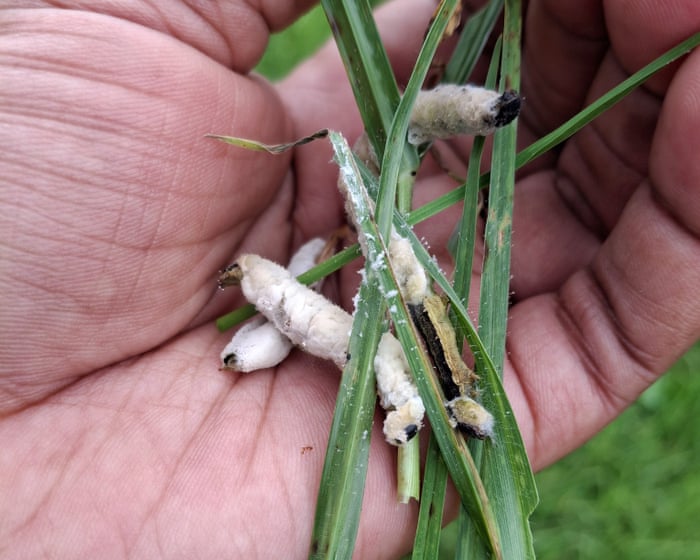
Entomologist Letodi Luki Mathulwe has discovered a soil fungus capable of killing the African armyworm, a highly destructive pest that migrates through east and southern Africa. Mathulwe identified the fungus in KwaZulu-Natal, South Africa, after observing dead caterpillars covered in a white substance during a 2025 outbreak. Her research, now peer-reviewed, suggests the fungus could provide a new method for controlling mature armyworm populations where chemical treatments have failed.
By the numbers
Impact of the African armyworm
The African armyworm (Spodoptera exempta) causes significant damage to staple crops like maize and sorghum. Beyond crop destruction, the pest releases a chemical compound in grass that can sicken cattle. Outbreaks have historically caused severe economic strain, including a 2017 event that destroyed an estimated 40% of Zambia's maize production, and have contributed to food security challenges in countries like Zimbabwe and Malawi.
Developing a new control method
Mathulwe collected samples of the fungus and dead caterpillars for testing at her laboratory in Pietermaritzburg. While chemical controls exist for early-stage caterpillars, they are often ineffective against mature populations. Mathulwe aims to develop the fungus into a product for future outbreaks, noting that it could help protect livestock and reduce the panic farmers experience when the insects appear in grazing fields. Further testing and development are required before the product is ready for agricultural use.
Timeline
- 2017An armyworm outbreak destroyed up to 40% of Zambia's maize production.
- 2024Inflation reached 736% in Zimbabwe and 35% in Malawi amid armyworm-related agricultural problems.
- 2025An armyworm outbreak began in northern South Africa and reached KwaZulu-Natal by April.
Advertisement
This article was independently rewritten by ManyPress editorial AI from reporting originally published by The Guardian Global Development.