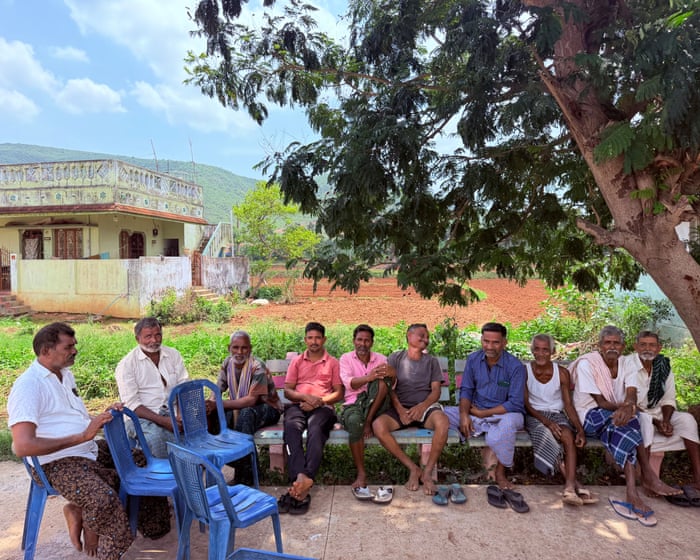
Villagers in Tarluvada, India, are protesting the construction of a massive Google AI datacentre, citing concerns over land displacement, environmental impact, and lack of transparency.
Key facts
- •The project is estimated to receive subsidies and incentives totaling 220bn rupees ($2.2bn) over 20 years.
- •State environmental clearances were issued to Google in nine days without public consultation.
- •The datacentre complex will encompass three separate sites around the state capital of Vizakhapatnam.
- •More than 100 acres of forest have been cleared to prepare the site in Tarluvada.
- •520 local families in Tarluvada reportedly had land taken back by the government.
Google is constructing a large-scale AI datacentre in Tarluvada, a village in the Indian state of Andhra Pradesh. While the state government promotes the project as a major economic opportunity, local residents and activists have raised concerns regarding environmental risks, water usage, and the forced acquisition of farmland. The project is being developed in partnership with the Adani Group.
By the numbers
Scale and Environmental Concerns
Although the project was publicly announced as a 1GW facility, state environmental clearances indicate it is permitted for 2.51GW, which is equivalent to the power output of two large nuclear reactors. Activists warn that the facility's energy demands could increase fossil fuel emissions, as 75% of India's current electricity grid relies on coal. Additionally, residents fear the project will exacerbate extreme heat and water shortages in the region.
Land Acquisition and Legal Challenges
Villagers report that land was taken for the project without adequate notice or public consultation, with some families losing plots they had farmed for decades. While the state government maintains that compensation was generous and no land was taken forcibly, affected farmers claim promised replacement land and jobs have not materialized. Multiple petitions have been filed with India's National Green Tribunal and the Andhra Pradesh high court challenging the project's rapid approval process.
Advertisement
This article was independently rewritten by ManyPress editorial AI from reporting originally published by Guardian AI.