Despite modern trends toward uninterrupted viewing, many Greek cinemas continue to include intermissions, citing social benefits and essential revenue from concession sales.
Key facts
- •Greek cinema owners report that intermission concession sales are critical for financial survival due to a lack of government support.
- •Mid-screening sales account for roughly 30% of profits at Cine Alsos, an open-air theater in Athens.
- •The tradition of intermissions in Greece dates back to the mid-20th century, though it faded somewhat with the introduction of multiplexes in the late 1990s.
- •Projectionists at theaters like Cine Alsos and Trianon manually select scene changes to insert breaks, aiming to avoid interrupting major action sequences.
- •Some cinema operators, such as Peggy Ringa, consider intermissions non-negotiable, with longer films occasionally receiving two separate breaks.
While international directors often design films without breaks, Greek cinema operators frequently insert intermissions into screenings, including recent showings of long-form features. These intervals, typically lasting five to 10 minutes, serve as a social tradition and a critical financial component for independent theaters in Athens. Operators manually select suitable moments in digital files to pause films for restroom breaks, smoking, and refreshments.
By the numbers
Economic and Social Importance
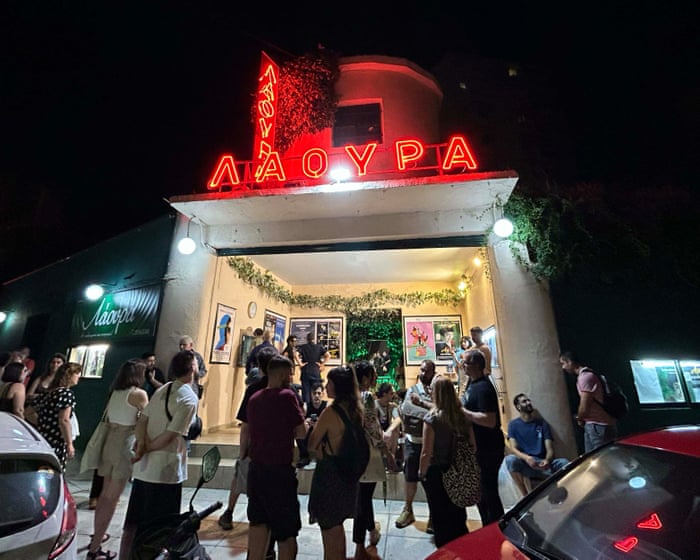
For many Greek cinema owners, the intermission is vital for survival. Dafni Bechtsi, who took over the Cinobo Patision in 2024, notes that theaters receive no government support, making the revenue generated from food and drink during the break essential to their business model. At Cine Alsos, mid-screening sales account for approximately 30% of total profits. Beyond finances, operators emphasize the social value of the break, which allows patrons to discuss the film, socialize, or even participate in events like marriage proposals.
Historical Context and Implementation
Intermissions were standard practice in Athens by 1960, when the city hosted at least 350 movie theaters. While the practice declined with the rise of multiplexes in the late 1990s and digital projection in the 2000s, it remains a staple of the city's summer open-air cinemas. Projectionists employ varying methods to time these breaks, with some reviewing films in their entirety to ensure the pause does not interrupt key action sequences. The tradition is so ingrained that distributors have historically had to explain the practice to international directors, such as Béla Tarr, who were initially alarmed to see audiences leaving their seats mid-film.
Advertisement
This article was independently rewritten by ManyPress editorial AI from reporting originally published by The Guardian Culture.