The historic Hull Maritime Museum has reopened following a major renovation that doubled its public space and introduced new exhibits detailing the city's 800-year maritime history.
Key facts
- •The museum displays approximately 1,300 artifacts, a 50% increase in the number of objects on view.
- •The project cost £20.4 million, with the majority of funding provided by the local council and the National Lottery Heritage Fund.
- •The museum is housed in a Victorian dock office building originally designed by Christopher Wray and opened in 1871.
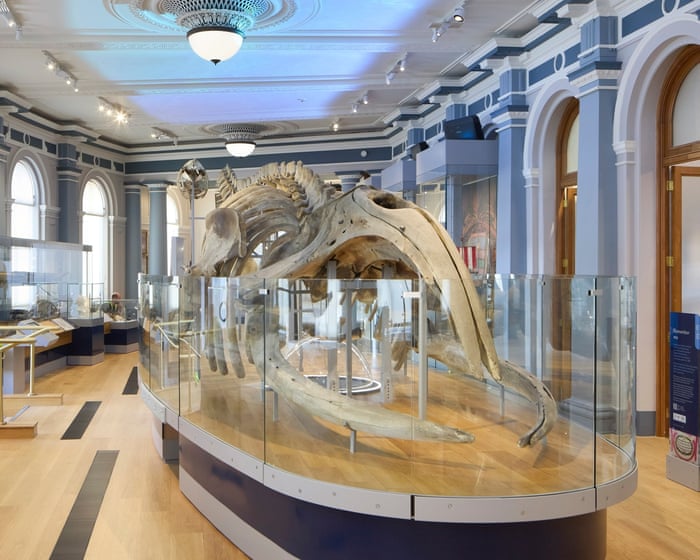
- •The North Atlantic right whale skeleton is a primary attraction, with fewer than 400 of the species estimated to remain in the wild today.
- •The restoration of the Court Room ceiling required eight conservators to hand-clean plasterwork for six weeks.
The Hull Maritime Museum has officially reopened following a £20.4 million restoration project. The museum, housed in a Grade II* listed Victorian building, now features doubled public exhibition space and displays approximately 1,300 artifacts, many of which are being shown to the public for the first time.
By the numbers
Exhibits and Collections
The museum’s centerpiece is a 40-foot-long North Atlantic right whale skeleton, which visitors can walk beneath. Other notable items include a world-class collection of scrimshaw—intricate carvings on whale teeth and walrus tusks—and a wooden figurehead from the Sirius, the first steamship to complete a transatlantic crossing entirely under steam power in 1838. The collection also highlights the city's social history, including the activism of Lillian Bilocca, who campaigned for fishing fleet safety in the 1960s, and a memorial to the more than 6,000 crewmen lost during 150 years of commercial trawling.
Restoration and Design
Overseen by conservation specialists at Purcell, the renovation removed an intrusive mezzanine ramp that previously obstructed the main hall. The interior color palette was updated to marine blues and white to improve historical accuracy and visibility. A team of eight conservators spent six weeks cleaning the Court Room’s ceiling decorations, which feature intricate plasterwork of foliage and starfish, to restore the space for use as an events venue.
Funding and Future Context
The project was funded by a £11.8 million contribution from Hull City Council, £7.7 million from the National Lottery Heritage Fund, and additional private donations. The museum’s reopening is part of a broader urban renewal effort in Hull, which includes the re-landscaping of Queen’s Gardens and the creation of a new visitor center for the historic trawler Arctic Corsair at the North End Shipyard.
Advertisement
This article was independently rewritten by ManyPress editorial AI from reporting originally published by The Guardian Culture.