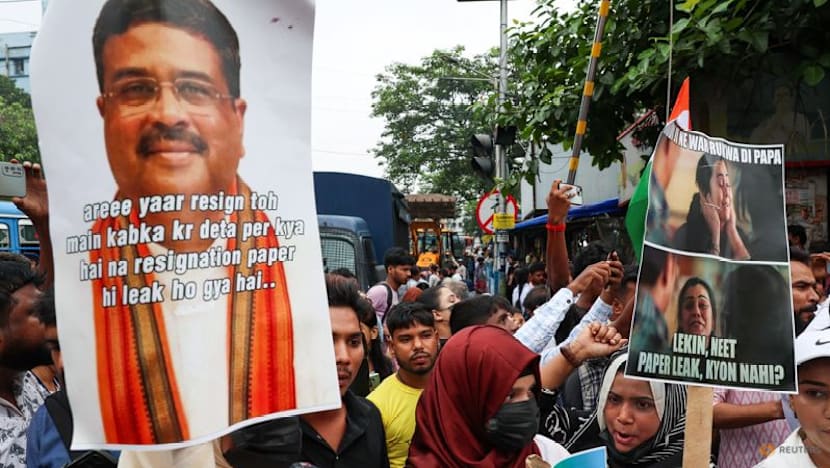
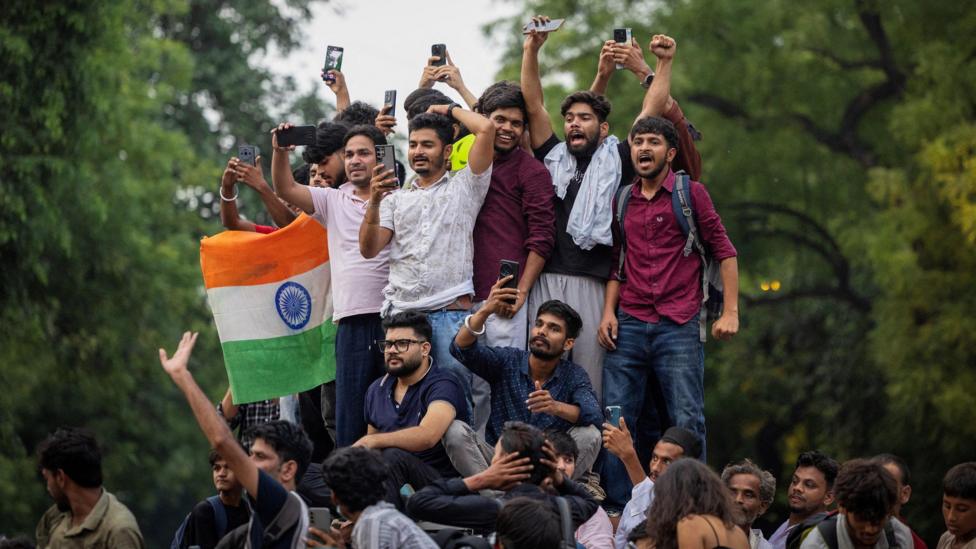
The youth-led Cockroach Janta Party has ended its five-week protest in Delhi after Education Minister Dharmendra Pradhan resigned from his post.
Key facts
- •Education Minister Dharmendra Pradhan resigned citing the need to protect student futures and national unity.
- •The CJP protest lasted five weeks and centered at Jantar Mantar in Delhi.
- •Activist Sonam Wangchuk supported the movement with an indefinite hunger strike that began on June 28.
- •Prime Minister Modi announced plans for a new law to address examination paper leaks.
- •The movement's founder, Abhijeet Dipke, stated that the group will continue to seek compensation for affected families.
The Cockroach Janta Party (CJP), a youth-led movement, has called off its five-week protest in Delhi following the resignation of India's Education Minister, Dharmendra Pradhan. The movement, which uses an AI-generated cockroach as its mascot, gained momentum as a platform for addressing youth anxieties regarding education and employment. Pradhan announced his resignation on X, citing a desire to prevent the exploitation of the situation and to allow students to focus on their careers.
By the numbers
Movement Origins and Demands
The CJP emerged after the Chief Justice of India referred to unemployed youth turning to activism as "cockroaches," a term the movement subsequently adopted as a symbol of resilience. Led by 30-year-old strategist Abhijeet Dipke, the group campaigned for educational reforms, accountability for exam paper leaks, and the resignation of the education minister. The movement garnered significant online support, reaching 26 million followers on Instagram.
Protest Escalation and Government Response
Tensions rose following a police crackdown on Monday during a march to parliament, which resulted in approximately 300 hospitalizations, including both protesters and security personnel. Approximately 70 protesters were arrested, though most have since been released on bail. Prior to the resignation, Prime Minister Narendra Modi announced plans for fast-track courts to address exam paper leaks and the development of new legislation to combat such issues.
Future Objectives
Despite ending the protest at Jantar Mantar, CJP founder Abhijeet Dipke stated that the movement's work is not finished. The group intends to continue advocating for compensation for the families of students who died by suicide following the cancellation of a medical exam. Additionally, the CJP is calling for action against police officers accused of using excessive force against protesters during the July 20 march.
Timeline
- June 28Activist Sonam Wangchuk joined the protest and began an indefinite hunger strike.
- July 20Police used force against CJP supporters attempting to march to Parliament.
- ThursdayPrime Minister Modi announced plans for fast-track courts regarding exam paper leaks.
- Friday morningSonam Wangchuk ended his hunger strike following government assurances.
Advertisement
This article was independently rewritten by ManyPress editorial AI from reporting originally published by BBC World.