Iran says it has a two-year plan to counter new US sanctions, which the Treasury Department described as the 'greatest financial offensive ever.'
Key facts
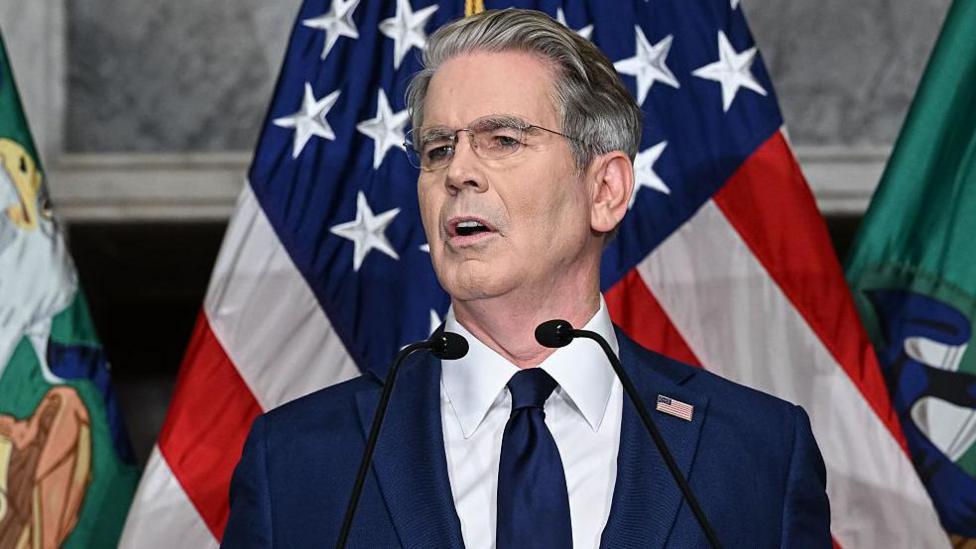
- •US Treasury Secretary Scott Bessent described the new measures as the 'single greatest financial offensive ever.'
- •Iran's economy minister Ali Madanizadeh claimed the country has a two-year plan to counter the sanctions.
- •The US Treasury has sanctioned nearly 60 entities, individuals, and vessels across five economic sectors.
- •The Strait of Hormuz has been blocked since the end of February, affecting one-fifth of global oil and gas flow.
- •Brent crude oil prices were recorded at $92 per barrel on Monday.
US Treasury Secretary Scott Bessent has announced a major economic offensive against Iran, threatening to cut all economic ties with the country and isolate nations that continue to partner with it. In response, Iran's economy minister Ali Madanizadeh stated that the government is prepared for the measures and has a two-year plan to manage the situation. The US initiative, dubbed 'Operation Economic Outcast,' targets Iran's financial networks and aims to block revenue sources for the Iranian regime.
By the numbers
Scope of US Sanctions
The US Treasury Department has issued determinations against five sectors: digital assets, technology, gold, aviation, and shipping. Additionally, the department has imposed sanctions on nearly 60 entities, individuals, and vessels. Secretary Bessent stated that the US has mapped financial channels used by Iran to evade sanctions and trade oil, noting that the administration intends to move quickly to enforce these restrictions.
International and Economic Impact
Iran has warned ships against passing through the Strait of Hormuz without permission, a waterway that has been effectively blocked since late February. This blockade has contributed to higher global oil prices, with Brent crude reaching $92 per barrel on Monday. While the US seeks to isolate Iran, Chinese officials have indicated they will protect their interests, and analysts at Capital Economics suggest the new sanctions may have limited impact on energy flows given that approximately 90% of Iran's oil is exported to China.
Timeline
- End of FebruaryThe conflict began and the Strait of Hormuz was effectively blocked.
- AprilPresident Trump threatened that a 'whole civilisation will die' unless Iran agreed to a deal.
- MondayThe US announced 'Operation Economic Outcast' and Iran responded with claims of a two-year counter-plan.
Advertisement
This article was independently rewritten by ManyPress editorial AI from reporting originally published by BBC Business.