President Masoud Pezeshkian has rejected claims that he might resign and defended a June memorandum with the U.S., accusing domestic critics of echoing Israeli narratives.
Key facts
- •The memorandum was signed on June 18 following mediation by Pakistan and Qatar.
- •Pezeshkian stated that Iran agreed to allow ships to transit the Strait of Hormuz under Iranian regulations.
- •The president denied that Iran had conceded any military or defensive capabilities during the talks.
- •Regional tensions escalated on February 28 following coordinated attacks by Israel and the U.S. on Iranian infrastructure.
- •Pezeshkian dismissed rumors of his resignation, stating he would announce such a decision officially if it were to occur.
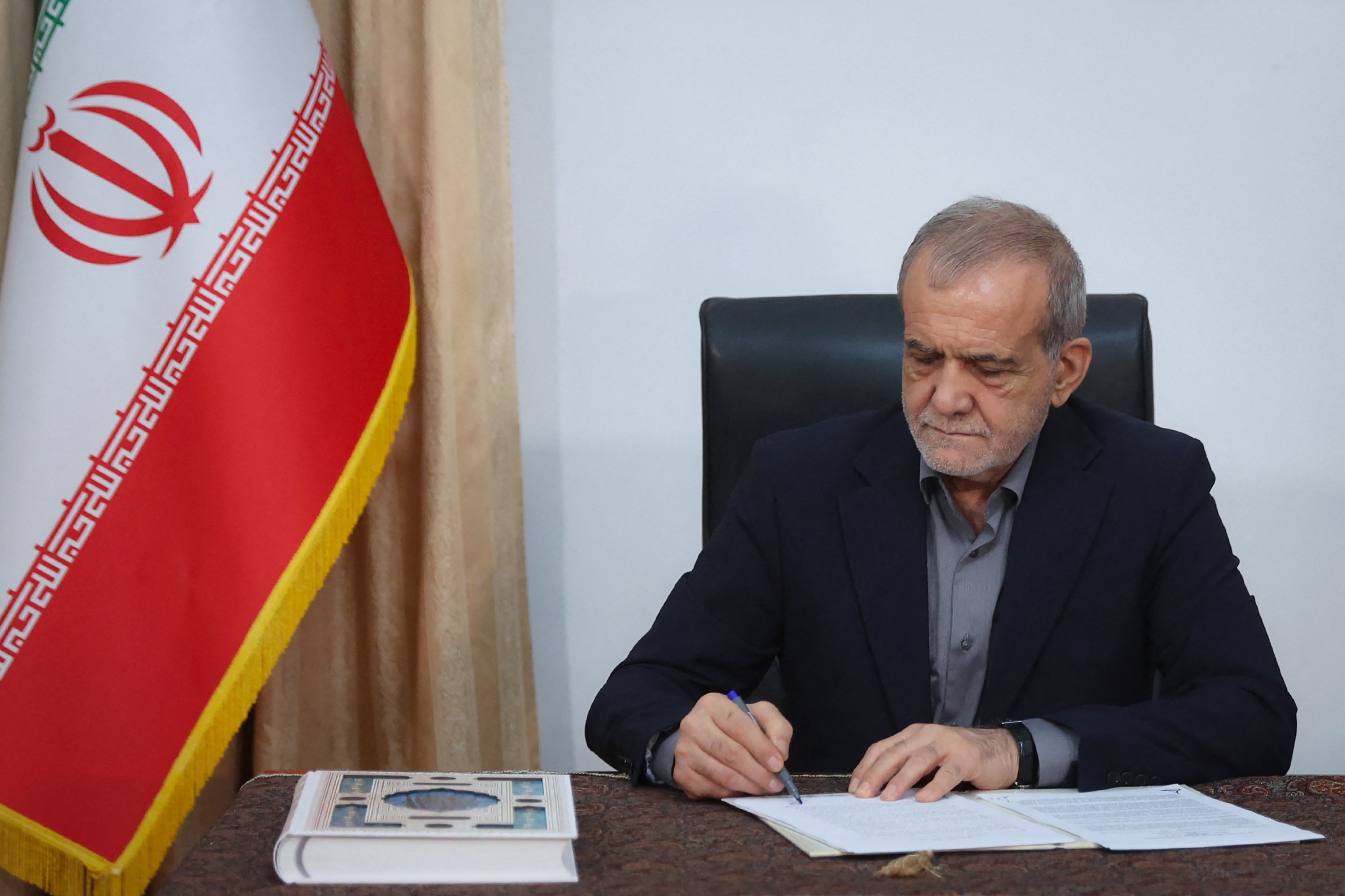
Iranian President Masoud Pezeshkian defended a June memorandum of understanding with the United States during a national address on Thursday. Addressing mounting domestic criticism, Pezeshkian rejected speculation regarding his potential resignation and accused opponents of adopting Israel’s narrative by labeling the agreement a failure.
Defense of the Memorandum
Pezeshkian asserted that Iran made no compromises in the memorandum, which includes provisions to end hostilities, open the Strait of Hormuz, and initiate negotiations on Iran's nuclear program. He challenged critics to identify any clause where Iran had backed down, arguing that the agreement allows Iran to secure its rights through diplomacy rather than pursuing a path of perpetual conflict that he claims serves Israeli interests. The president emphasized that Iran’s implementation of the deal remains reciprocal, stating that Iran will only fulfill its commitments as long as the U.S. does the same.
Negotiation Details and Regional Policy
The president revealed that the memorandum was originally intended to be signed in Geneva by Parliament Speaker Mohammad Bagher Qalibaf and U.S. Vice President JD Vance. The plan was later adjusted to involve President Donald Trump and Pezeshkian to provide the document with greater political weight. Pezeshkian stated that Iran successfully resisted U.S. efforts to strip the country of its military and defensive capabilities during the negotiations. He contrasted Iran’s stated goal of peaceful coexistence with what he described as Israel’s pursuit of a 'Greater Israel' and territorial expansion.
Timeline
- Feb. 28Israel and the U.S. launched coordinated attacks on Iranian military, nuclear, and energy infrastructure.
- June 18Iran and the U.S. signed a memorandum of understanding to end active hostilities.
- ThursdayPresident Pezeshkian addressed the nation to defend the agreement and reject resignation rumors.
Advertisement
This article was independently rewritten by ManyPress editorial AI from reporting originally published by Daily Sabah.