A court has overturned a ban on an Orange Order parade in Portadown, allowing the march to proceed on Sunday for the first time in 28 years.
Key facts
- •The parade is the first to be held on the Garvaghy Road in 28 years.
- •The Court of Appeals overturned a high court injunction at 11:30 p.m. on Saturday.
- •The Parades Commission limited the procession to 35 participants.
- •The march was originally banned following sectarian violence in 1998 outside Drumcree church.
- •First Minister Michelle O’Neill criticized the court's decision as reckless and unwanted.
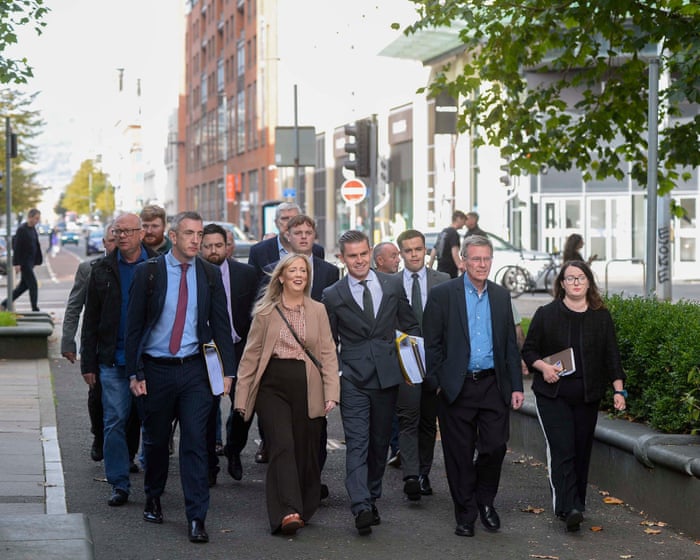
A loyalist Orange Order parade is set to proceed along the Garvaghy Road in Portadown on Sunday morning after a high court ban was overturned late Saturday night. The Court of Appeals ruled that the initial injunction against the march was an error in law. The parade, which has been banned for 28 years following sectarian violence in 1998, will take place despite concerns regarding potential unrest.
By the numbers
Legal proceedings and court rulings
Earlier on Saturday, Justice Smyth had issued a temporary suspension of the parade following a five-hour high court hearing, citing the potential for escalation and urging all parties to step back from the abyss. However, at 11:30 p.m., Lady Chief Justice Dame Siobhan Keegan overturned that decision, stating the lower court had erred in law. The Parades Commission has set conditions for the event, including an 8 a.m. start time and a limit of 35 participants, though it did not restrict the route.
Political and community reaction
The decision has drawn sharp criticism from political leaders. First Minister Michelle O’Neill called the ruling disgraceful and stated that Sinn Féin stands with the Garvaghy Road community. SDLP leader Claire Hanna described the parade as provocative. Conversely, DUP MP Carla Lockhart stated that residents have nothing to fear. Authorities, including British Prime Minister Andy Burnham and Northern Ireland Secretary Chris Bryant, had previously called for calm as fears of potential clashes grew, with estimates for a potential counter-protest ranging from 300 to 5,000 people.
Timeline
- 1998Widespread sectarian violence occurred outside Drumcree church, leading to a long-running ban on the march.
- Saturday morningJustice Smyth issued an order temporarily suspending the parade following a high court hearing.
- Saturday 11:30 p.m.The Court of Appeals overturned the ban, allowing the parade to proceed.
Advertisement
This article was independently rewritten by ManyPress editorial AI from reporting originally published by Guardian Politics (UK).