During a visit to Dublin, U.S. President Donald Trump stated he would "love" to see Northern Ireland and the Republic of Ireland unify, drawing criticism from pro-British unionists.
Key facts
- •President Trump stated he would "love" to see a unified Ireland during a press appearance with Irish Prime Minister Micheál Martin.
- •The 1998 Good Friday Agreement mandates that any referendum on Northern Ireland's status must be authorized by the British government.
- •Democratic Unionist Party leader Gavin Robinson stated that Northern Ireland's future should be decided by its own people, not external commentary.
- •Former U.S. special envoy Mick Mulvaney stated that the President's remarks do not represent a change in U.S. foreign policy.
- •Downing Street confirmed that the British government's stance against holding a referendum on Northern Ireland remains unchanged.
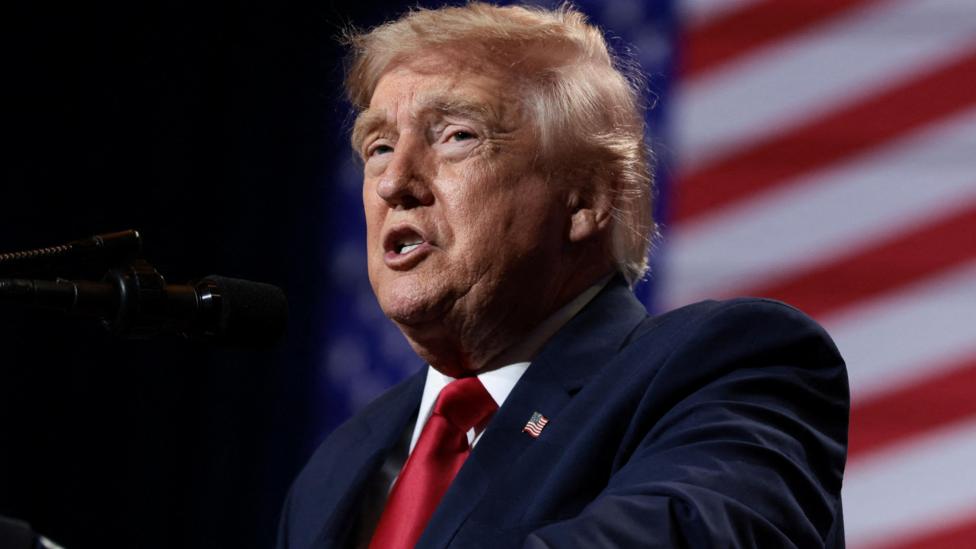
U.S. President Donald Trump stated on Saturday that he would "love" to see Northern Ireland unify with the Republic of Ireland. The remarks were made in Dublin during a meeting with Irish Prime Minister Micheál Martin. While Trump acknowledged that the United Kingdom would have a say in the matter, he described the potential for unification as "a fantastic thing" and predicted it would happen eventually.
Political Reaction and Constitutional Context
The comments drew immediate pushback from pro-British unionists in Northern Ireland. Gavin Robinson, leader of the Democratic Unionist Party, rejected the prediction, stating that Northern Ireland's constitutional future is for its own people to decide rather than leaders in Washington, London, or Dublin. Robinson warned that unification would lead to the "destruction of our country." Under the 1998 Good Friday Agreement, a referendum on Northern Ireland's status can only be held at the discretion of the British government. Downing Street confirmed that the position of British Prime Minister Andy Burnham—who recently stated that a referendum is "off the table"—remains unchanged.
Analysis of Foreign Policy Implications
Former Republican Congressman and former U.S. special envoy to Northern Ireland, Mick Mulvaney, cautioned against interpreting the President's comments as a shift in official U.S. foreign policy. Mulvaney emphasized that the U.S. remains committed to the Good Friday Agreement, noting that the deal enjoys bipartisan support. Trump later repeated his sentiments during a speech to business leaders at the U.S. Ambassador's residence in Dublin. While the event was intended to focus on business, the President spent significant time discussing domestic U.S. issues, including immigration, defense production, and his criticisms of the U.K.'s support for his military operation in Iran.
Advertisement
This article was independently rewritten by ManyPress editorial AI from reporting originally published by CBC World, BBC Europe.