A critical examination of Yayoi Kusama's work, exploring its impact, commercial appeal, and the sensory experience of her large-scale installations.
Key facts
- •Yayoi Kusama’s work is characterized by the frequent use of dots, pumpkins, and infinity mirror rooms.
- •The artist’s installations have been displayed at venues including the Museum of Modern Art in New York and Aviva Studios in Manchester.
- •Critics note that Kusama’s art has achieved widespread popularity on social media and within the global art market.
- •Some observers argue that the artist's work functions as a decorative commodity for high-end collectors.
- •The author suggests that experiencing Kusama’s work effectively often requires viewing a large volume of pieces to create a sense of sensory overload.
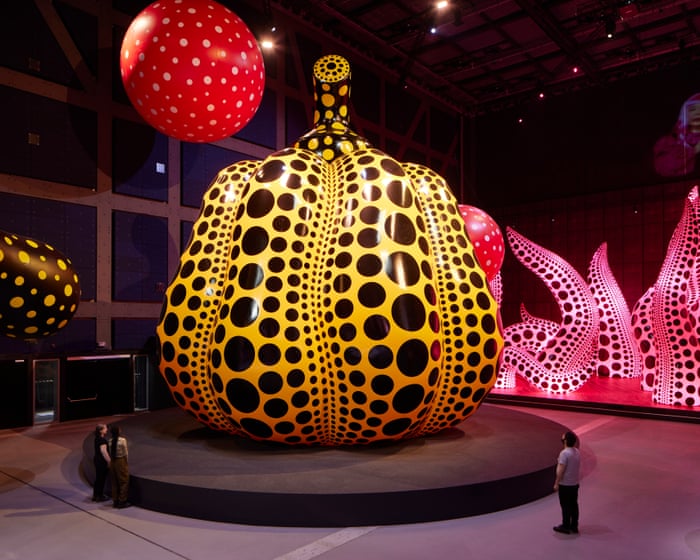
Yayoi Kusama’s art has become a global phenomenon, characterized by its ubiquitous presence in galleries and on social media. While some critics find her signature dot-covered works and pumpkins predictable or decorative, others experience them as immersive, psychedelic environments. The artist's work is currently featured in large-scale installations, such as those recently hosted at Aviva Studios in Manchester.
The Experience of Kusama’s Installations
Kusama’s work often relies on scale to achieve its effect. While individual pieces, such as a single pumpkin at an art fair, may appear blank or commodified to some observers, vast gatherings of her work can create a sense of sensory overload. At Aviva Studios in Manchester, the artist's large-scale inflatables and installations, including dot-covered octopus tentacles, transformed an industrial space into a setting described as enchanted and sublime.
Artistic Intent and Market Reception
There is a noted disconnect between the artist's personal history of trauma and anti-war activism and the aesthetic of her art, which is often perceived as creating a dreamy utopia. Her work has gained significant traction within a contemporary art market that includes global galleries and high-net-worth collectors. Critics observe that the decorative nature of her work, such as her spotty fruit sculptures, aligns with the tastes of this modern market.
Comparison with Other Abstract Artists
When compared to abstract artists like Jackson Pollock or Bridget Riley, Kusama’s work is often viewed as less intellectually complex. While Riley’s abstract vortices are described as interfering with the brain to create an 'intelligent trip,' Kusama’s work is seen by some as requiring an 'overdose' of exposure to achieve a similar level of impact. Ultimately, the reception of her art depends on the viewer's willingness to engage with the sensory experience rather than seeking deep, soul-harrowing meaning.
Advertisement
This article was independently rewritten by ManyPress editorial AI from reporting originally published by The Guardian Culture.