Australian playwright Tom Holloway’s new production for the MTC examines the work of Joseph Weizenbaum and the creation of the early AI program Eliza.
Key facts
- •The play is set at MIT in 1966 and focuses on the real-life computer scientist Joseph Weizenbaum.
- •The ELIZA program was named after the protagonist of George Bernard Shaw’s play 'Pygmalion.'
- •Dan Spielman, Hamish Michael, and Manali Datar comprise the play's three-person cast.
- •The production draws stylistic inspiration from Orson Welles’ film adaptation of Kafka’s 'The Trial.'
- •The play posits that the danger of AI lies in human perception rather than the machine's actual ability to think.
The play 'Eliza,' written by Tom Holloway for the Melbourne Theatre Company (MTC), depicts the 1966 development of the ELIZA program by German-American computer scientist Joseph Weizenbaum. Set at MIT, the narrative follows Weizenbaum as he creates a programming language designed to mimic psychoanalysis, intending to debunk theories that machines could learn to think. The production explores the unintended consequences of the program's reception by his colleagues and superiors.
Plot and Thematic Focus
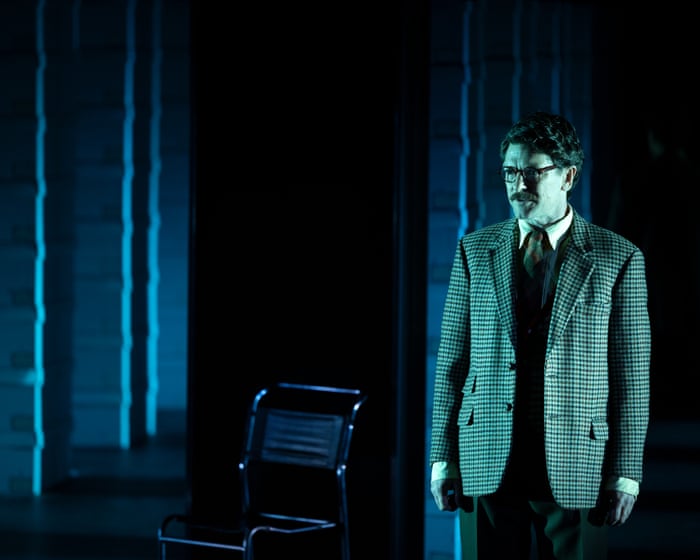
In the play, Weizenbaum, portrayed by Dan Spielman, works alongside his colleague Ron, played by Hamish Michael, and his secretary Becky, played by Manali Datar. While Weizenbaum intends the program to be a minor theoretical exercise, his peers become convinced that the software understands them and responds to their needs. The character of Becky, in particular, finds comfort in the program, which contrasts with the chauvinistic environment of 1960s computer science.
Staging and Artistic Direction
Directed by Paige Rattray, the production employs surrealistic elements and exaggerated theatrics. The set design by Dale Ferguson features rows of white file boxes and machinery, intended to evoke the atmosphere of Orson Welles’ adaptation of Kafka’s 'The Trial.' Paul Jackson’s lighting design contributes to an antiseptic, buzzing environment that mirrors a data center. As the play progresses, the narrative shifts toward psychological horror, with characters displaying increasingly strange behaviors.
Critical Perspective
The play argues that the core issue regarding artificial intelligence is not whether machines can think, but the human tendency to believe they do. While the production is noted for its pace and the performances of its three-person cast, the review suggests that the surrealist approach creates a distance from the characters' humanity. Despite this, the work is described as an ambitious attempt to address the moral consequences of AI's inception.
Advertisement
This article was independently rewritten by ManyPress editorial AI from reporting originally published by Guardian AI.