A modern-dress, two-and-a-half-hour production of Chekhov's play at the Edinburgh International Festival uses silence and sign language to reinterpret the classic story.
Key facts
- •The production runs for two and a half hours without an intermission.
- •The play is a collaboration between Belgian companies Toneelhuis and Olympique Dramatique.
- •The cast features a mix of D/deaf and hearing performers.
- •The first 30 minutes of the performance consist entirely of sign language.
- •The set design uses a traverse stage to expose the construction of theatrical effects.
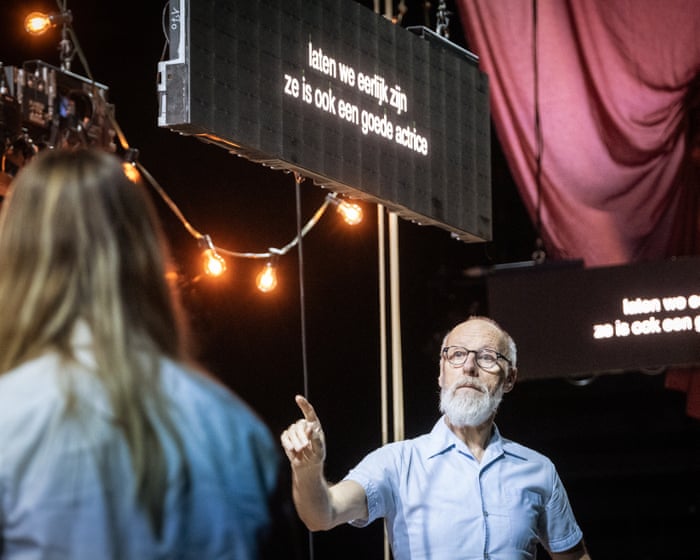
Directed by Stijn Van Opstal, a new adaptation of Anton Chekhov’s The Seagull is currently performing at the Edinburgh International Festival. The production, a collaboration between Belgian theatre companies Toneelhuis and Olympique Dramatique, is a modern-dress chamber piece performed straight through for two and a half hours. It features a cast of both D/deaf and hearing performers, utilizing Flemish and British Sign Language alongside spoken dialogue and music.
Staging and Performance
The production opens with 30 minutes of sign language, with dialogue provided via screens. The cast includes Yana Wuytjens as Konstantin, Sofie Decleir as Arkadina, Serge Vlerick as Trigorin, and Yousra Boukantar as Nina. Lobke Leirens, playing the character Masja, is noted for a formidable stage presence. The performance explores the familiar story of Konstantin’s struggle for artistic recognition, his mother’s return to their country estate, and the resulting love triangle involving the novelist Trigorin and the aspiring actor Nina.
Theatrical Techniques and Criticism
The set design, created by Damiaan De Schrijver and Van Opstal, utilizes a traverse stage that exposes the mechanics of the production. Actors frequently manage their own props and sound effects, while the removal of wooden floorboards toward the end of the play adds an autumnal tone. While the production is praised for its physical intensity and use of silence, it is also criticized for an over-reliance on theatrical tricks, such as random scene freezing and inconsistent surtitles, which leave some artistic choices feeling like clever contrivance.
Advertisement
This article was independently rewritten by ManyPress editorial AI from reporting originally published by The Guardian Culture.