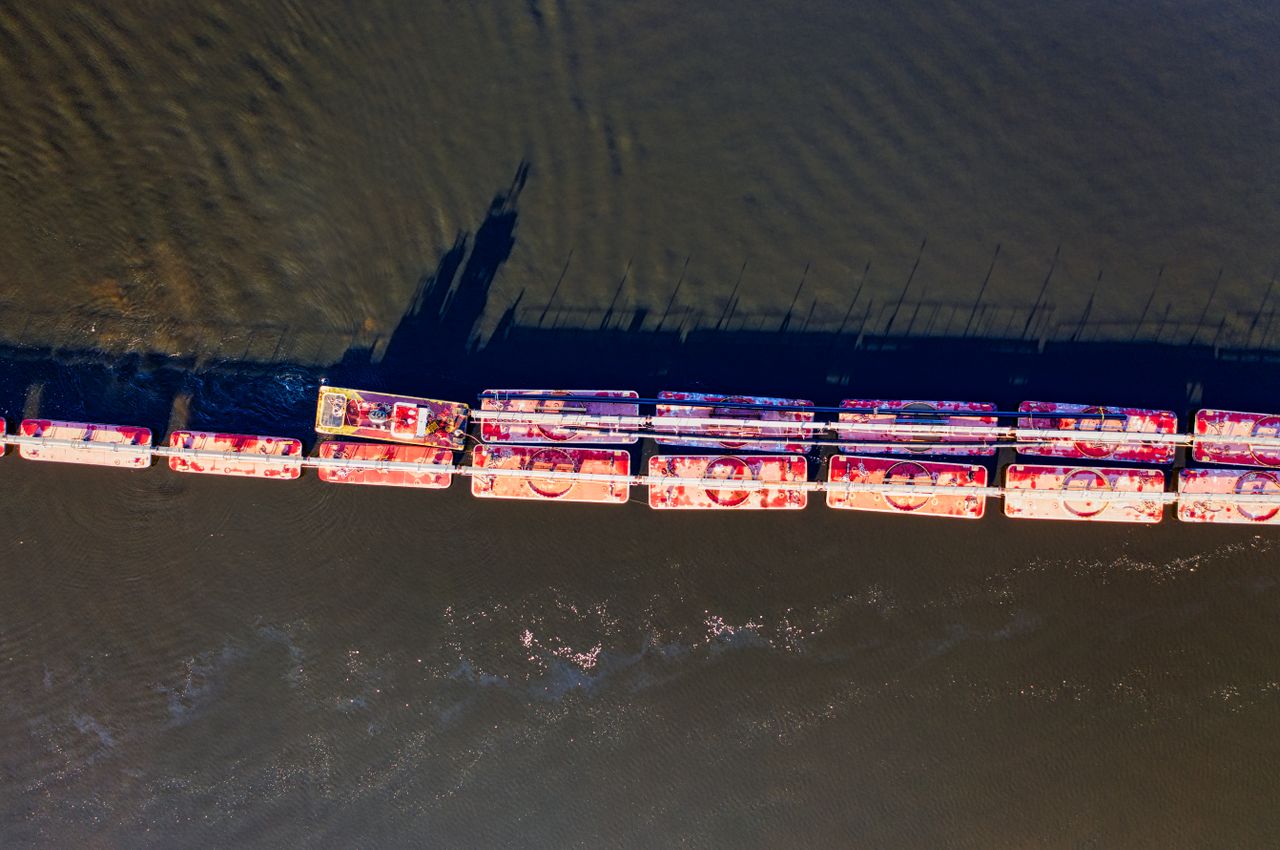
Critically low water levels on the Rhine are disrupting cargo transport, threatening to stifle Germany's industrial output and economic growth.
Key facts
- •The water level at Kaub reached approximately 16 centimeters on Monday, well below the 40-centimeter standard for commercial navigation.
- •Carriers have reduced cargo loads to as little as one-fifth of normal capacity in recent weeks.
- •The German Economic Institute predicts a 0.4% decline in GDP due to the river's low water levels.
- •Transport Minister Steffen Bilger has announced measures to shift cargo to road and rail, including easing Sunday truck restrictions.
- •The Rhine corridor accounts for approximately 40% of European freight by ton-kilometers.
Water levels on the Rhine River have dropped to critical lows due to weeks of drought, with the gauge at Kaub measuring approximately 16 centimeters on Monday. This depth is significantly below the 40-centimeter threshold required for standard commercial vessels. As a result, shipping operators have drastically reduced cargo capacities, and experts warn the river could soon become impassable for commercial traffic.
By the numbers
Economic Impact and Supply Chain Risks
The Rhine is a vital artery for Germany, carrying bulk materials such as coal, iron ore, and petroleum products. With inland waterways accounting for 5% of German goods transport, the current disruption threatens to exacerbate existing economic challenges. The German Economic Institute (IW) predicts a 0.4% drop in GDP, which could effectively erase the country's projected 0.5% growth for the year. Experts estimate potential losses of €1 to €2 billion in the third quarter alone, with the chemical, steel, and energy sectors facing the most significant strain.
Navigability and Mitigation Efforts
Jens Schwanen of the BDB association of inland shipping warned that the river could be effectively split in two if water levels reach single-digit readings at Kaub. This would force companies to shift cargo to rail and road networks. However, the capacity of these alternatives is limited, as a single large barge can carry the equivalent of 50 to 150 truckloads. To mitigate congestion, authorities have eased restrictions on Sunday truck movements and implemented measures to reduce red tape for heavy loads and coordinate better with rail freight services.
Climate Change and Long-term Trends
The current crisis is the third major low-water event in eight years, following droughts in 2018 and 2022. Scientists attribute the increasing frequency and severity of these events to climate change, which has led to record-breaking temperatures and reduced rainfall in Western Europe. Additionally, the traditional buffer provided by Alpine meltwater is weakening as glaciers retreat and snow cover declines, leading the Federal Institute of Hydrology to project that severe low-water events may occur every five to 10 years by mid-century.
Advertisement
This article was independently rewritten by ManyPress editorial AI from reporting originally published by Deutsche Welle Business.