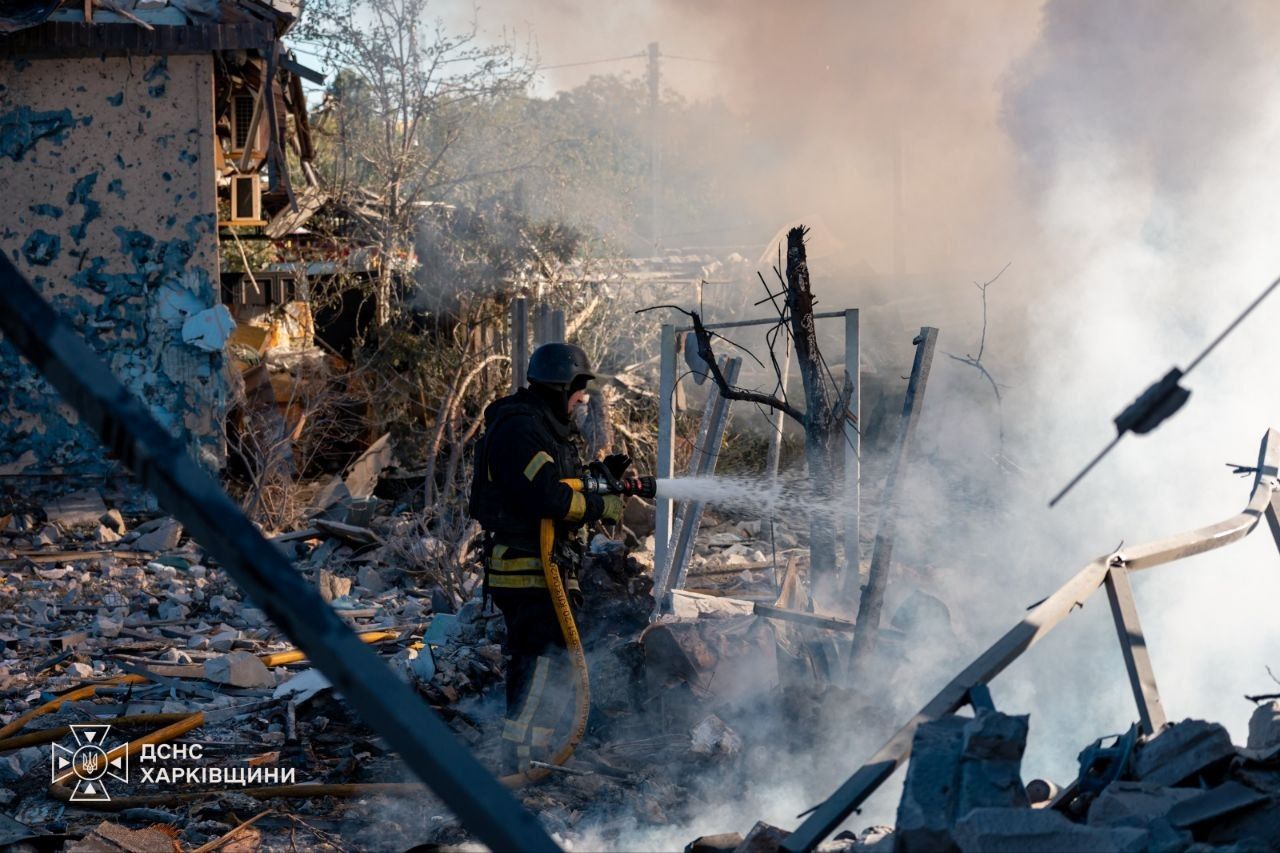
Russian glide bomb attacks on Kharkiv on October 2, 2026, resulted in two deaths and 36 injuries, while a separate drone strike caused further damage.
Key facts
- •Two women, aged 66 and 80, were killed by glide bomb strikes on October 2.
- •The State Emergency Service reported 36 people were injured, including three children.
- •Three glide bombs struck the Slobidskyi and Nemyshlyanskyi districts.
- •A separate Molniya drone strike damaged a private house and a gas pipeline in the Kyivskyi district.
- •Glide bombs are typically deployed by Su-34 aircraft to strike targets from a distance.
Russian forces launched a series of glide bomb strikes against the Slobidskyi and Nemyshlyanskyi districts of Kharkiv on the afternoon of October 2, 2026. The attacks killed two women, aged 66 and 80, and left 36 people injured, including three children. Additionally, a separate Molniya drone strike hit the city's Kyivskyi district, causing damage to a private house and a gas pipeline.
By the numbers
Impact of the Strikes
According to Oleh Syniehubov, head of the Kharkiv Regional State Administration, three glide bombs hit the city, resulting in the destruction of a residential building. The State Emergency Service of Ukraine confirmed the casualty count, noting that the injured included three children. Separately, Mayor Ihor Terekhov reported that a Molniya drone strike in the Kyivskyi district caused property damage, with authorities still clarifying the full extent of the consequences in that area.
Nature of Glide Bomb Weaponry
Russian guided aerial bombs, known as KABs, are repurposed aerial munitions fitted with wings and precision guidance systems. These weapons allow Russian aircraft, such as the Su-34, to release them from significant distances, remaining outside the range of many Ukrainian air defense systems. The warheads range from 300 kilograms to 3 metric tons, providing enough force to destroy multistory buildings.
Advertisement
This article was independently rewritten by ManyPress editorial AI from reporting originally published by Ukrinform, Kyiv Independent.