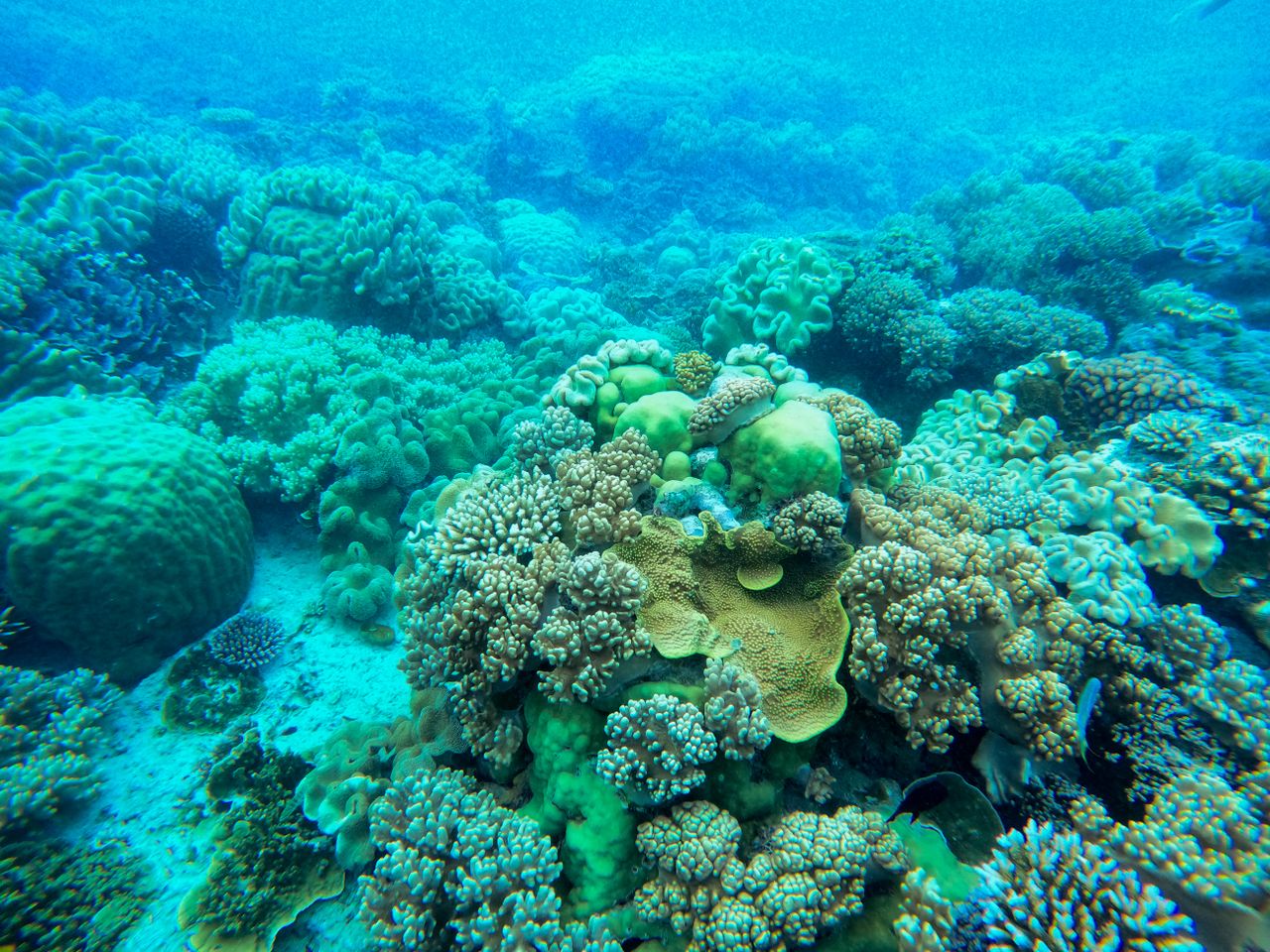
Researchers have found that bleached corals can fully recover in seven weeks by making physical contact with healthy, genetically identical clones.
Key facts
- •Bleached corals recovered in seven weeks after making contact with healthy, genetically identical clones.
- •Beneficial algae moved from healthy to bleached fragments within three days of contact.
- •Algae within the recovering corals doubled every four days, a rate 10 times faster than that observed in wild corals.
- •The study was published in the journal Science Advances in 2026.
- •Researchers are investigating methods to deliver algae to bleached corals without needing continuous physical contact.
Scientists have observed that bleached corals can recover to full health within seven weeks by touching healthy, genetically identical coral fragments. Published in Science Advances, the study describes how beneficial algae transfer from healthy corals to bleached ones through microscopic channels. This process represents the fastest documented recovery for bleached corals to date.
The Mechanism of Recovery
When corals experience heat stress, they expel the beneficial algae that provide them with energy, leading to bleaching. Researchers at the Stanford Doerr School of Sustainability discovered that when a bleached coral touches a healthy clone, their tissues fuse. Microscopic channels align between the two, allowing beneficial algae and nutrients to flow into the bleached fragment. Once the algae enter the bleached coral, they begin to replicate rapidly, doubling every four days.
Experimental Findings
In a laboratory experiment, researchers paired 10 sets of bleached and healthy coral fragments from the same colony. Five pairs were placed in contact, while the others were separated by a few millimeters. The touching pairs fully recovered within seven weeks, whereas the separated corals died. Further testing showed that as little as five to seven days of contact was sufficient to initiate the recovery process, allowing the bleached corals to continue healing on their own after separation.
Future Research Directions
While the findings offer a new approach to coral restoration, the team notes that requiring a genetically identical healthy coral for every bleached one is not currently feasible at scale. Researchers are now exploring ways to deliver beneficial algae to bleached corals without requiring continuous physical contact, such as harvesting and delivering algae in large batches.
Advertisement
This article was independently rewritten by ManyPress editorial AI from reporting originally published by Phys.org.