SpaceX completed its 13th Starship test flight, achieving an intact splashdown and testing new satellite technology.
Key facts
- •The 408-foot-tall Starship Version 3 rocket launched from Starbase, Texas, on July 24, 2026.
- •SpaceX successfully deployed 20 Starlink V3 satellites to test performance in space.
- •The Starship vehicle survived reentry temperatures of up to 2,600° Fahrenheit.
- •The Super Heavy booster experienced a hard splashdown after failing to relight all engines for its landing burn.
- •Elon Musk stated that SpaceX will attempt to catch the ship with the launch tower on the next flight, pending data review.
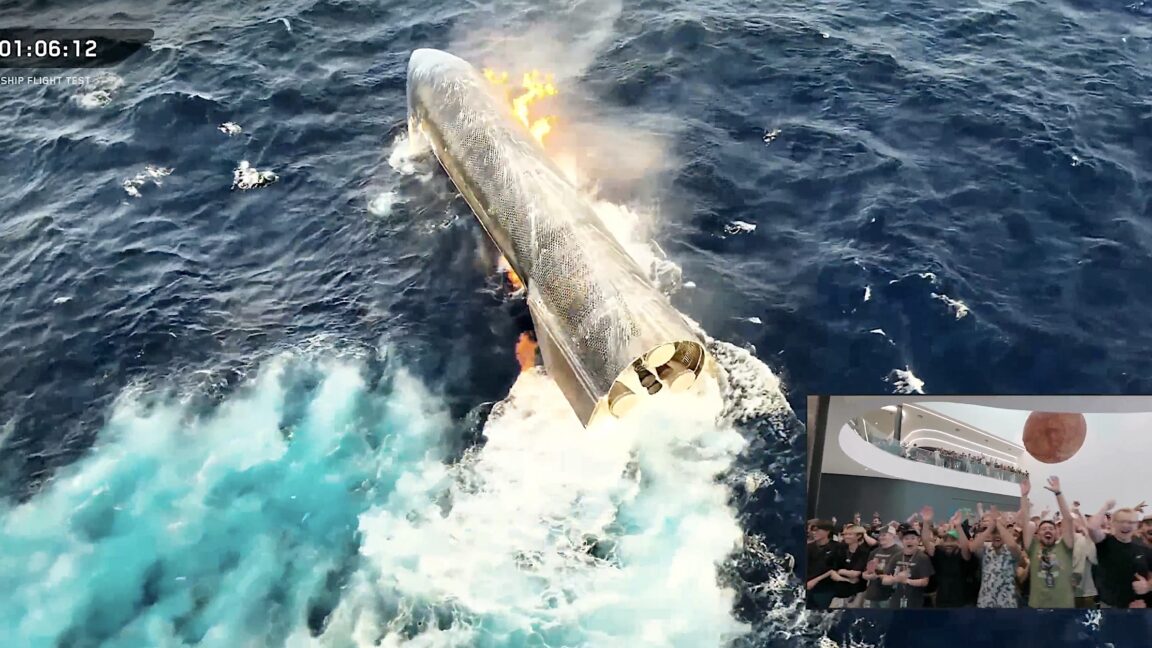
SpaceX successfully completed its 13th Starship test flight on Friday, with the vehicle performing an intact splashdown in the Indian Ocean. The rocket launched from South Texas at 5:51 pm CDT, carrying 20 upgraded Starlink V3 satellites. Following the successful recovery of the ship, CEO Elon Musk indicated that the company plans to attempt a tower catch of the Starship vehicle on its next flight.
By the numbers
Heat Shield and Flight Performance
The flight provided critical data on the Starship heat shield, which consists of over 18,000 ceramic tiles. These tiles withstood temperatures reaching 2,600° Fahrenheit during reentry. Because the ship remained intact in the water, engineers were able to use drones to inspect the vehicle's condition, marking a significant milestone for the program's goal of rapid reusability.
Super Heavy Booster and Satellite Testing
While the Starship vehicle performed well, the Super Heavy booster experienced a hard splashdown in the Gulf of Mexico after failing to restart all engines for its landing burn. During the flight, Starship also successfully deployed 20 Starlink V3 satellites, which were used to test telemetry and communication performance before they burned up in the atmosphere as planned.
Future Orbital Goals
SpaceX aims to move toward orbital flights and refueling demonstrations, which are essential for future NASA Artemis lunar missions. These operations require the ability to dock vehicles in orbit and transfer propellant. The company is currently expanding its launch infrastructure, with new sites under construction in Florida to support these future capabilities.
Timeline
- July 24, 2026, 5:51 pm CDTStarship and Super Heavy booster lift off from South Texas.
- During the flightStarship deploys 20 Starlink V3 satellites for telemetry testing.
- Friday eveningElon Musk announces plans to attempt a tower catch on the next flight.
Advertisement
This article was independently rewritten by ManyPress editorial AI from reporting originally published by Ars Technica.