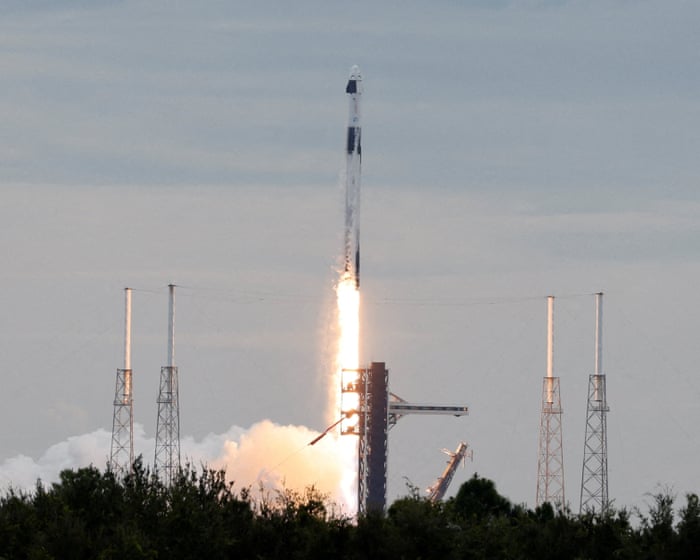
A four-person crew launched from Cape Canaveral on Thursday for a six-month mission to the International Space Station.
Key facts
- •The Crew-13 mission patch pays homage to the 1970 Apollo 13 mission.
- •Jessica Watkins is the first Black woman to lead a crew to orbit.
- •The mission was delayed by three weeks to fix a valve and fuel system leak.
- •The crew will spend up to six months aboard the International Space Station.
- •Joshua Kutryk is the fourth astronaut to have a child born while in orbit.
SpaceX successfully launched the Crew-13 mission from Cape Canaveral, Florida, on Thursday, carrying four astronauts to the International Space Station. The crew, led by commander Jessica Watkins, includes Nasa astronaut Luke Delaney, Canadian Space Agency astronaut Joshua Kutryk, and Russian cosmonaut Sergey Teteryatnikov. The mission, which follows a three-week delay to address propulsion and fuel system concerns, is expected to last up to six months.
Mission Details and Crew Composition
The mission marks the 13th crewed flight SpaceX has conducted for Nasa. Commander Jessica Watkins, a geologist and veteran of a 2022 space station mission, is the first Black woman to lead a crew to orbit. Her crewmates are newcomers to spaceflight: retired marine Luke Delaney, Royal Canadian Air Force colonel Joshua Kutryk, and former submariner Sergey Teteryatnikov. The team will replace four astronauts who have been stationed at the orbiting laboratory since February.
Launch and Transit
The launch occurred from the Cape Canaveral Space Force Station after weather conditions cleared. While the mission was originally scheduled for mid-September, it was delayed to replace a valve in the Crew Dragon's propulsion system and address a leaking fuel system. The transit to the space station is expected to take approximately eight hours, with the crew conducting research intended to support future missions to the Moon and Mars.
Personal Milestones
Canadian astronaut Joshua Kutryk is expecting his third child with his wife, Heather, in late November. He will become the fourth person in space travel history to have a child born while in orbit. Nasa officials have stated they will provide support to keep Kutryk connected to his family during the birth.
Advertisement
This article was independently rewritten by ManyPress editorial AI from reporting originally published by BBC Science & Environment, Guardian Technology.