New research from the University of Oxford disputes theories that Indigenous San rock art depicts dinosaur fossils or prehistoric creatures.
Key facts
- •David Witelson’s research indicates there is no evidence that Indigenous San people interpreted fossils as mythical monsters.
- •The figure previously identified as a dinosaur-related being, ǁKhwai-hemm, is identified in historical manuscripts as a personified veld fire.
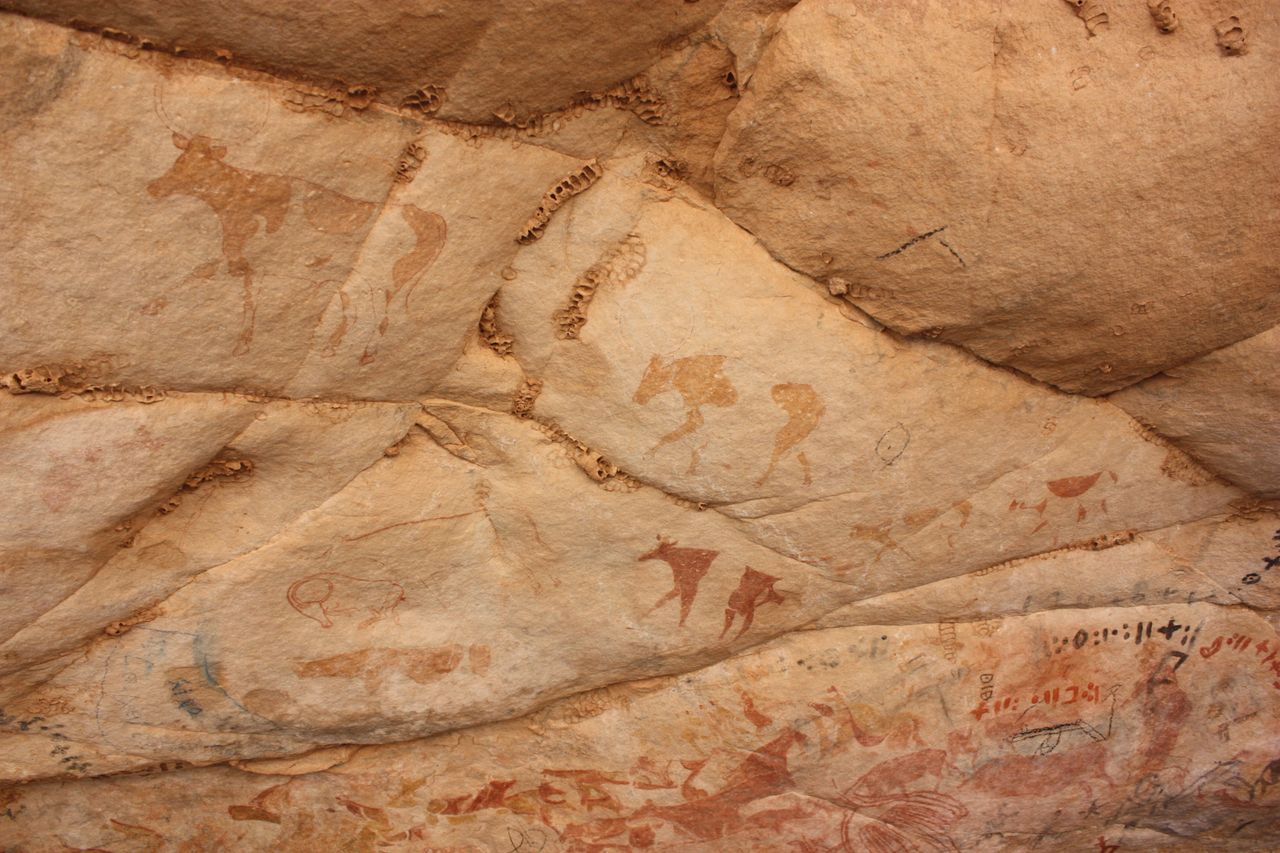
- •Digital enhancement of the 'tusked' animal painting revealed that the tusks were likely paint smears and weathering, not intentional depictions of dicynodonts.
- •Witelson suggests that such claims often stem from Western scientists imposing their own paleontological worldview onto Indigenous art.
A study published in Southern African Humanities by David Witelson of the University of Oxford challenges long-standing claims that Indigenous San and Basotho people in southern Africa incorporated dinosaur fossils into their rock art and mythology. Witelson argues that two prominent cases—one involving a supposed dinosaur footprint and another a tusked creature—are based on misinterpretations of the artwork rather than evidence of fossil-inspired myths.
Reinterpreting the 'Dinosaur' Footprint
Paleontologist Paul Ellenberger previously argued in 2005 that a red shape in rock art represented a dinosaur footprint and that local myths linked it to a creature called ǁKhwai-hemm. However, Witelson’s review of the Digital Bleek and Lloyd Collection reveals that ǁKhwai-hemm is a personified veld fire in ǀXam San stories, not a dinosaur or monster. Ellenberger’s interpretation originated from his own childhood observation in 1930, which Witelson suggests lacks supporting evidence in San oral traditions.
Debunking the Tusked Beast Claim
A 2024 study by Julien Benoit claimed that a rock art figure was inspired by dicynodont fossils, relying on 19th-century copies by George Stow. Witelson, who visited the original site and used digital enhancement, found that the 'tusks' were actually smears of black paint and weathering effects. He concludes the image likely depicts a traditional rain animal, a well-documented figure in San culture, rather than an extinct creature.
Timeline
- 1930Paul Ellenberger first recorded the rock art he later interpreted as a dinosaur footprint.
- 2005Paul Ellenberger and colleagues published the claim that the rock art depicted a dinosaur footprint.
- 2024Julien Benoit published a study claiming a rock art figure was inspired by dicynodont fossils.
Advertisement
This article was independently rewritten by ManyPress editorial AI from reporting originally published by Phys.org.