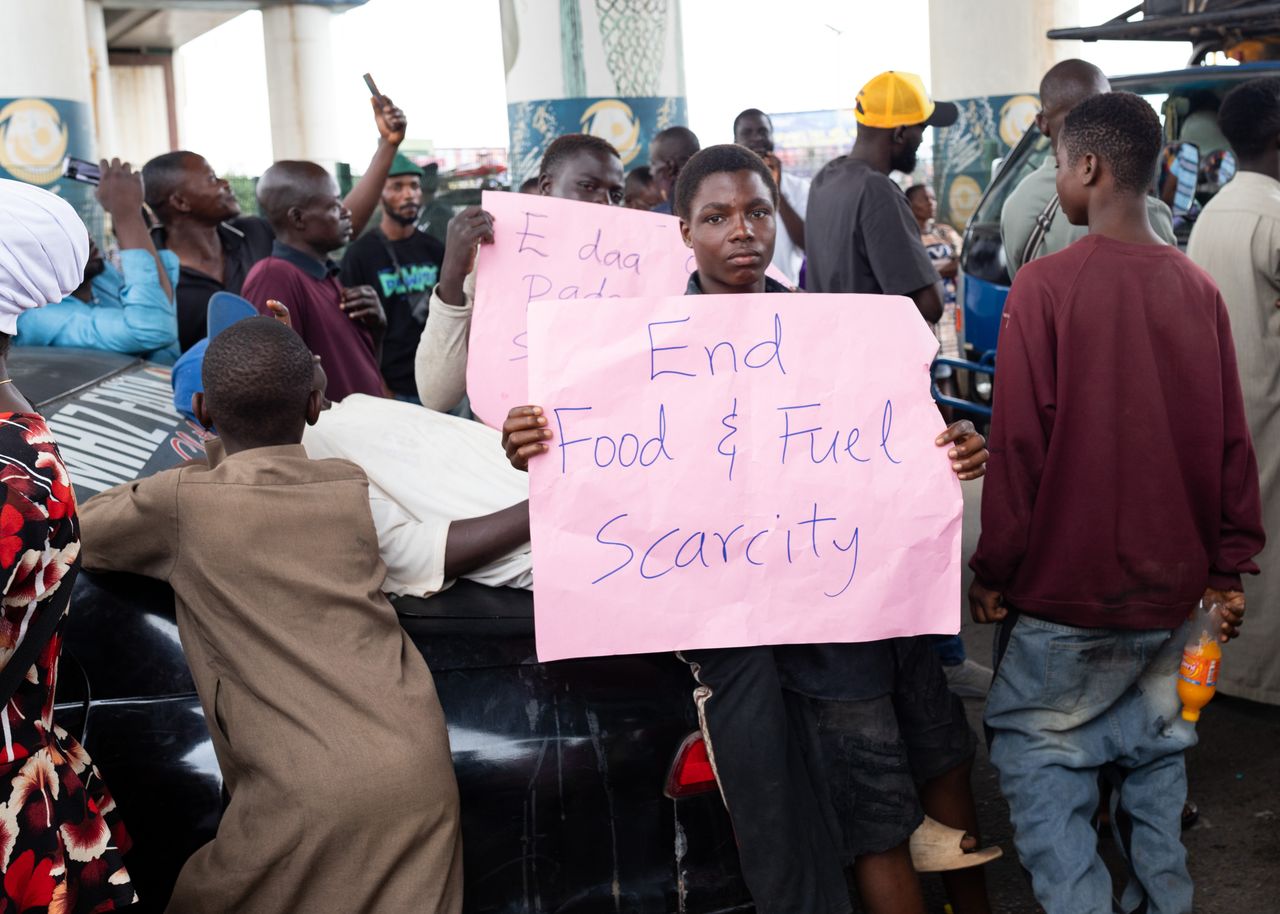
Protesters across Syria have blocked roads and burned tires to demonstrate against government-mandated fuel price increases, the largest such unrest since the fall of the Assad regime.

ManyPress
ManyPress Editorial
Key facts
- •Diesel prices were increased to 175 Syrian pounds per liter.
- •Protesters blocked the highway linking Damascus to the industrial hub of Aleppo.
- •Syria has been importing approximately 60,000 barrels of crude oil per day from Russia this year.
- •The government described the price hikes as a temporary measure that could be revised based on future conditions.
- •Demonstrators specifically demanded the removal of the energy and economy ministers.
Syria is experiencing its most widespread demonstrations in nearly two years following a government decision to significantly raise fuel prices. Protesters have blocked major routes, including the highway connecting Damascus to Aleppo, and obstructed crude oil tanker convoys. The unrest follows a Saturday announcement that diesel prices would increase by 40%.
By the numbers
Economic Pressure and Public Demands
The fuel price hikes include a 40% increase for diesel, a 28% rise for 95-octane gasoline, and a 26% increase for 90-octane gasoline. Household and industrial gas prices were also raised by approximately 9%. Demonstrators in Aleppo have called for the dismissal of the energy and economy ministers, as well as the head of the Syrian Petroleum Company, citing the unsustainable cost of living. According to the United Nations Development Programme, 90% of Syrians now live below the poverty line, a significant increase from the one-third estimated before the civil war began in 2011.
Government Response and Supply Issues
Energy Ministry spokesperson Abdulhamid Salat stated that the price increases are a temporary measure necessitated by rising global procurement costs and Syria's reliance on imports. He noted that prices are also influenced by shortages of refined products and increased transport and supply costs. The country's fuel supply has been further constrained by the three-month maintenance closure of the Baniyas refinery, Syria's largest, and reduced exports from Russia following Ukrainian attacks on Russian refineries.
Advertisement
This article was independently rewritten by ManyPress editorial AI from reporting originally published by Jerusalem Post, Straits Times World, Al-Monitor.