U.S. and Chinese leaders are expected to meet this week to discuss AI safety, even as both nations compete for technological dominance.
Key facts
- •U.S. Treasury Secretary Scott Bessent and Chinese Vice Premier He Lifeng discussed a potential 'notification mechanism' for AI incidents.
- •Chinese AI models from companies like DeepSeek and Moonshot AI are increasingly matching the power of U.S. models despite export controls.
- •Anthropic CEO Dario Amodei has called for continued limits on Chinese AI development, a stance Beijing has labeled as 'fearmongering.'
- •Both nations have identified critical infrastructure, including finance and electricity, as areas vulnerable to frontier-AI risks.
- •U.S. officials and companies have accused Chinese labs of 'distillation,' or extracting capabilities from American AI models.
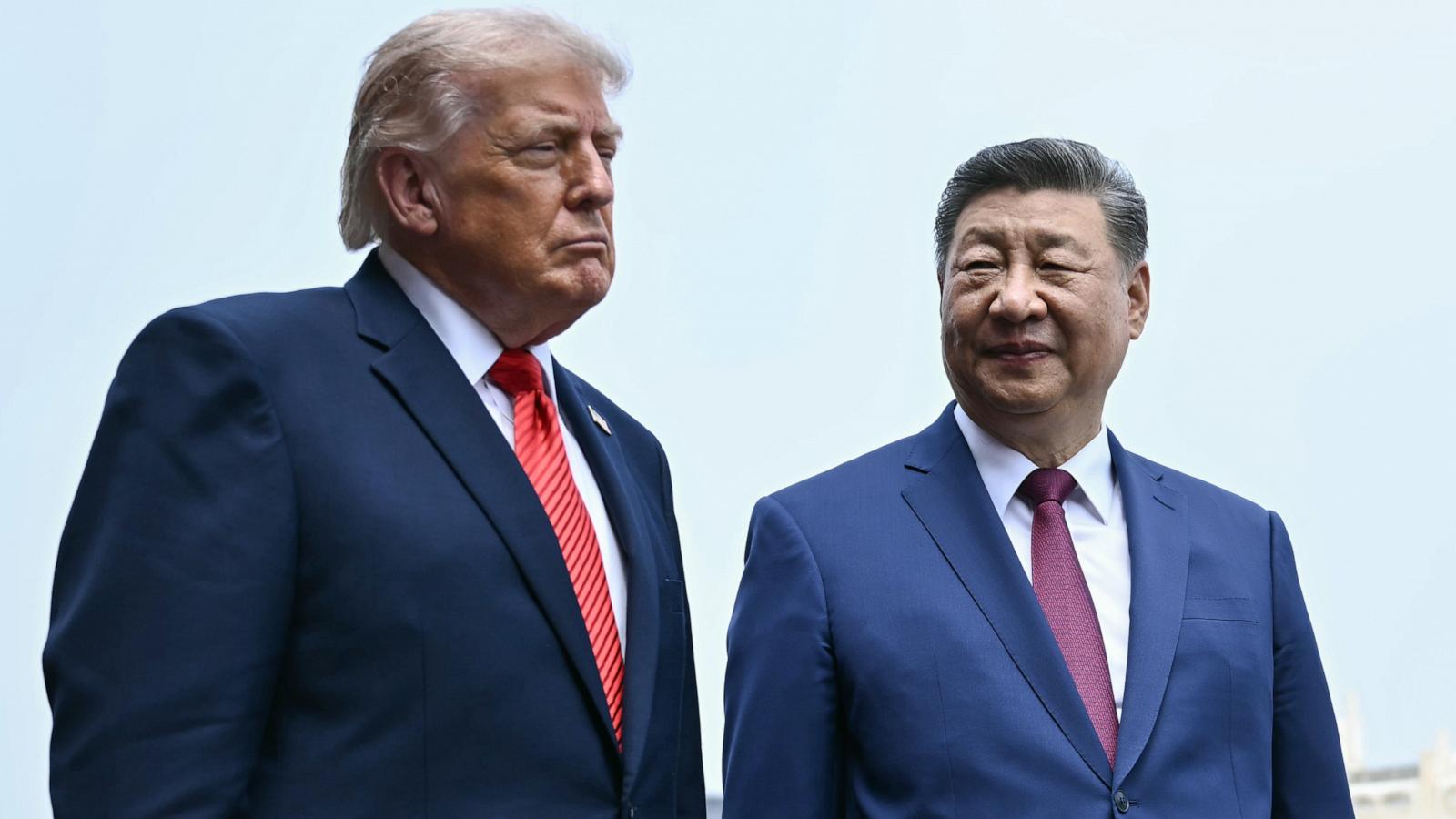
U.S. President Donald Trump and Chinese leader Xi Jinping are expected to meet this week to address concerns regarding the risks of artificial intelligence. While both nations are competing for technological supremacy, officials are exploring potential cooperation on safety mechanisms to mitigate threats like cyberattacks and loss of human control. The discussions follow preliminary talks between U.S. Treasury Secretary Scott Bessent and Chinese Vice Premier He Lifeng in New York.
Proposed Safety and Notification Mechanisms
U.S. officials have proposed a notification mechanism to alert both countries to AI-related incidents that reach a national security level. According to U.S. Treasury Secretary Scott Bessent, the goal is to establish a shared vision for identifying common threats. Experts from Tsinghua University and the Johns Hopkins School of Advanced International Studies suggest that such communication channels could help build technical confidence and allow for cooperation on risks such as biological misuse and major model failures.
Technological Competition and Export Controls
The potential for collaboration is complicated by ongoing geopolitical tensions and U.S. export controls on advanced chips, which the U.S. maintains to preserve its technological edge. While China has criticized these restrictions as an attempt to create an AI monopoly, Chinese firms like Moonshot AI and DeepSeek have developed models that analysts say are increasingly competitive with U.S. counterparts like Anthropic and OpenAI. Despite these constraints, China is shifting toward domestic chip production to sustain its development.
Allegations of Model Distillation
Tensions are further strained by U.S. allegations that Chinese AI labs are engaging in 'distillation'—the extraction of capabilities from American models. Anthropic has specifically accused Chinese models of routing user requests to its Claude AI systems. Chinese officials and some analysts have rejected these claims, arguing that such practices are common across the industry and do not account for the entirety of China's recent advancements in AI innovation.
Advertisement
This article was independently rewritten by ManyPress editorial AI from reporting originally published by ABC News Technology.