
The US has sanctioned three Iranian railway companies as Tehran increasingly relies on overland trade routes to bypass maritime blockades.
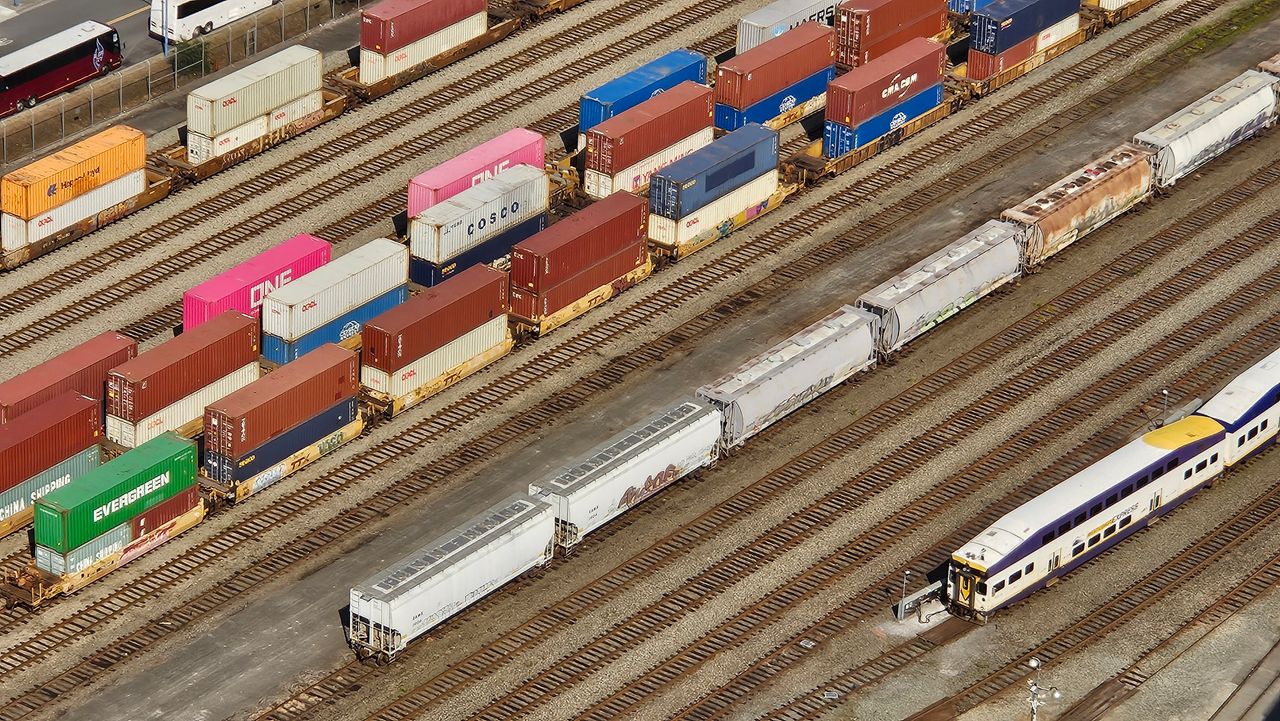
Key facts
- •The US sanctioned three Iranian railway companies on October 1 as part of Operation Economic Outcast.
- •Iran's rail network carried 44 million tons of freight in the year ending March 2026.
- •Actual rail transit times from China to Tehran can take 50-60 days, significantly longer than advertised schedules.
- •Rail transport is primarily used for automotive components, machinery, and electronics.
- •The US aims to isolate Iran by targeting its maritime, financial, aviation, and railway channels.
The US Treasury announced sanctions on October 1 against three Iranian railway companies, seven automakers, and five foreign automotive parts suppliers. The move, part of Operation Economic Outcast, targets industries Washington claims are linked to the Islamic Revolutionary Guard Corps. The sanctions follow Iran's increased reliance on rail and land corridors to transport goods as maritime trade routes have become restricted.
By the numbers
Iran's Growing Rail Infrastructure
According to Shahriar Naghizadeh of Iran's railway authority, the country operates approximately 15,000 kilometers of rail lines, over 35,000 wagons, and nearly 500 diesel locomotives. The network transported 44 million tons of freight in the Iranian year ending in March 2026, with a target of 54 million tons for the current year. The system utilizes 13 rail crossings to connect with neighboring markets, including Turkey, Azerbaijan, Afghanistan, Pakistan, and routes to China via Turkmenistan.
Challenges to Overland Logistics
While rail offers an alternative to maritime routes, it faces significant operational hurdles. Although some transit schedules advertise 14 to 16 days for travel from China to Tehran, commercial estimates suggest actual delivery times can reach 50 to 60 days due to border inspections, customs procedures, and train availability. Experts note that rail cannot fully replace sea freight, which offers larger capacity and lower unit costs, but it remains critical for time-sensitive industrial inputs.
Economic Impact of Sanctions
The new sanctions introduce uncertainty for foreign railway operators, freight forwarders, banks, and insurers working with Iranian entities. Alireza Salavati of Middle East Analytica notes that while rail provides a limited alternative, the US pressure may accelerate Iran's integration into Chinese and Russian economic networks. However, he emphasizes that these partners cannot fully offset the costs of US sanctions, as importers still require access to international banking and insurance services.
Advertisement
This article was independently rewritten by ManyPress editorial AI from reporting originally published by Deutsche Welle Business.