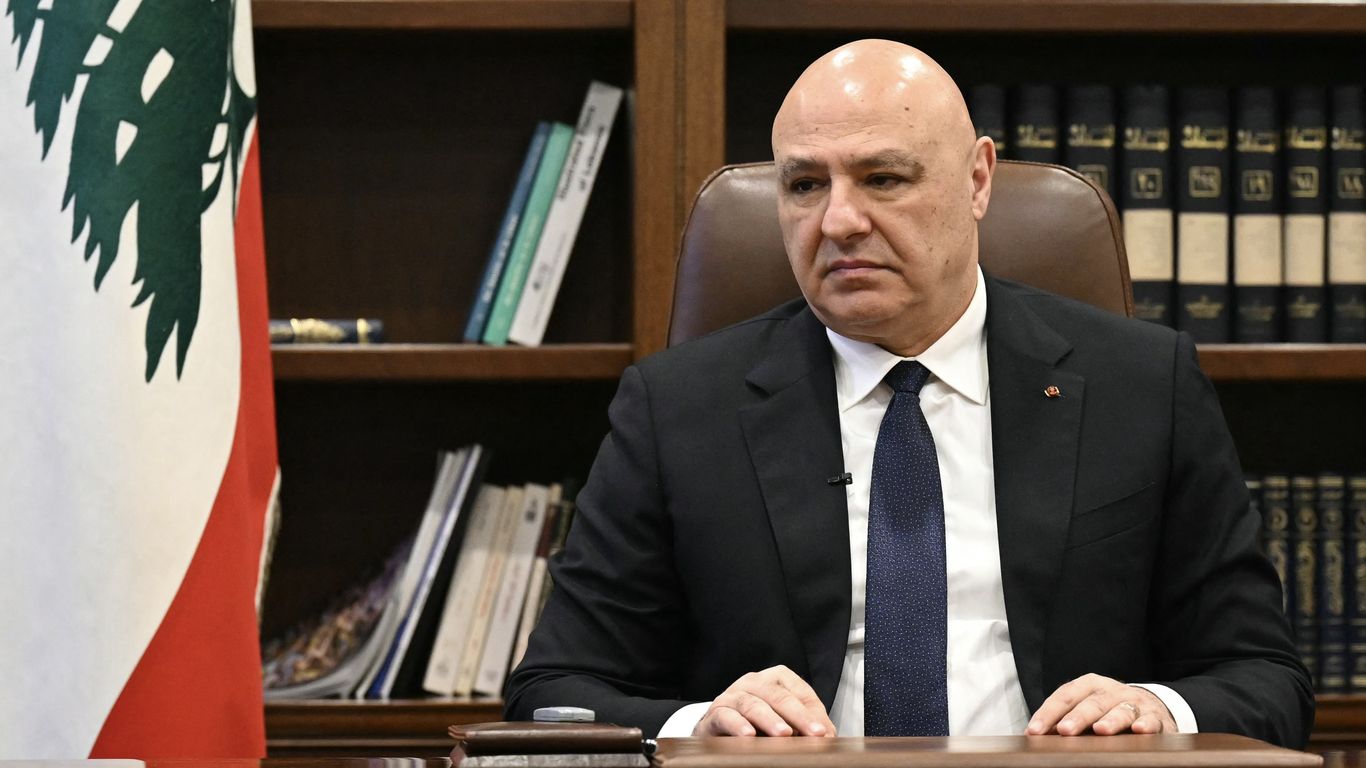
Secretary of State Marco Rubio spoke with Lebanese President Joseph Aoun regarding a large shipment of explosives recently intercepted by Lebanese security forces.

ManyPress
ManyPress Editorial
Key facts
- •Lebanese security forces intercepted a truck carrying approximately 780 kilograms of TNT and C-4 explosives.
- •Hezbollah claims the explosives were intended for use against Israeli troops in southern Lebanon.
- •President Aoun assured the US that the Lebanese government will not show leniency toward those responsible for the shipment.
- •Rubio urged the establishment of direct military-to-military communication between Lebanon and Israel.
- •The Lebanese government has faced pressure from Hezbollah and its allies to release the two arrested suspects and return the explosives.
US Secretary of State Marco Rubio held a call with Lebanese President Joseph Aoun to discuss a truckload of approximately 780 kilograms of explosives seized by Lebanese security forces. Rubio urged Aoun to hold those responsible for the shipment accountable and insisted that the confiscated materials should not be returned to Hezbollah. The incident occurred on a highway connecting the Bekaa Valley to Beirut, leading to the arrest of two suspects.
Hezbollah's Stance and Government Response
Hezbollah lawmaker Hassan Fadlallah acknowledged that the explosives belonged to the group, stating they were intended for use against Israeli forces currently occupying parts of Lebanon. Reports from a Hezbollah official and a security source indicated the materials were intended for explosive drones. In response to Rubio, President Aoun stated that Lebanese security forces are actively working to prevent armed displays and combat smuggling, promising that judicial authorities will enforce the law without leniency.
Diplomatic Tensions and Regional Context
During the conversation, Rubio also advocated for direct military-to-military communication between Lebanese and Israeli forces to facilitate deconfliction. Additionally, he raised concerns regarding Lebanon's 1955 Boycott Law, which prohibits contact with Israelis, citing its use in politicized prosecutions. President Aoun requested that Rubio exert pressure on Israel to cease attacks on southern Lebanese towns and villages.
Advertisement
This article was independently rewritten by ManyPress editorial AI from reporting originally published by Axios, Straits Times World, Al-Monitor, Jerusalem Post.