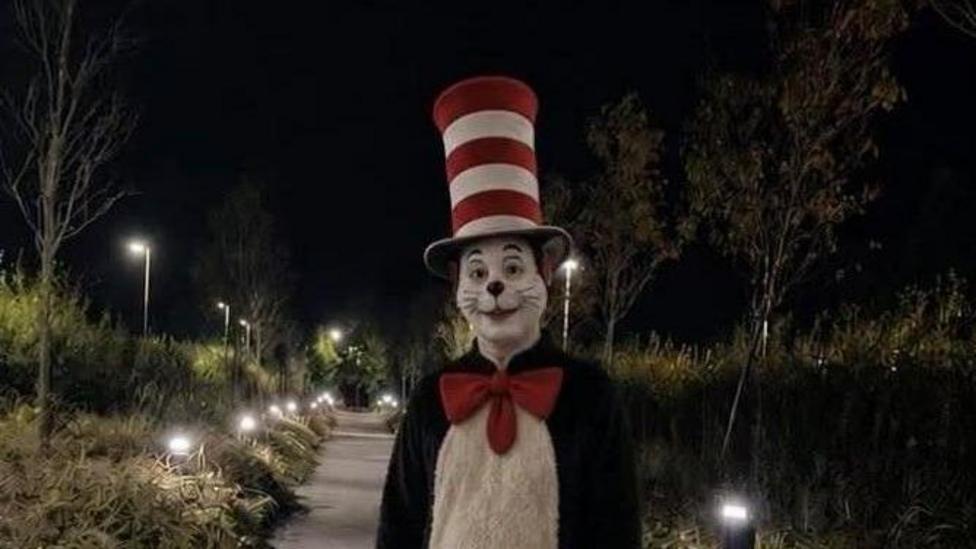
A viral trend featuring AI-generated images and videos of the Cat in the Hat has caused confusion and fear among teenagers in the UK and Ireland, prompting police to issue official denials.
Key facts
- •Viral posts featuring the Cat in the Hat have reached millions of views on TikTok over the past three weeks.
- •Police in Ireland and the UK have officially dismissed the sightings as hoaxes created with AI or costumes.
- •One TikTok post featuring the original film costume received 14.6 million views in three weeks.
- •South Yorkshire Police warned the public to verify the authenticity of social media accounts claiming to provide policing updates.
- •Concerns have been raised by parents and teenagers regarding the potential for the trend to be exploited by individuals with malicious intent.
A series of viral TikTok posts depicting a life-sized Cat in the Hat character wandering streets at night has triggered widespread alarm among young people. The trend, which includes AI-generated imagery and unverified claims of violence, has led police forces in the UK and Ireland to formally confirm the sightings are hoaxes. While many users are participating in the trend for comedic effect, others have reported genuine distress and fear.
Police Response to Online Hoaxes
Police in Ireland and the UK have intervened to address the spread of misinformation. In County Wexford, the Gardaí confirmed that images of the character were generated using artificial intelligence. Similarly, South Yorkshire Police in England issued a statement denying reports of a 'killer Cat in the Hat' after fake social media posts—including one falsely attributed to a non-existent 'Yorkshire Police'—circulated online.
Impact on Teenagers and Public Reaction
The trend has elicited mixed reactions, ranging from amusement to genuine anxiety. Some teenagers have reported feeling unsafe walking alone at night, while others have shared concerns about potential real-world dangers, such as individuals using the trend to manipulate others. The phenomenon has drawn comparisons to previous internet hoaxes like the 'Momo Challenge,' with authorities advising the public to verify information through official channels and exercise caution regarding online invitations to meet strangers.
Advertisement
This article was independently rewritten by ManyPress editorial AI from reporting originally published by BBC Entertainment & Arts.