Discoveries include prehistoric mining, a new octopus species, and singing mice research.
Key facts
- •A possible prehistoric mining site has been discovered in the Pyrenees.
- •A new species of tiny blue octopus, Microeledone galapagensis, has been discovered.
- •Singing mice have a unique neural basis for their behavior.
- •Slapstick acoustics have been studied, with varying results for different types of slapsticks.
- •Mathematicians have identified a 'golden rule' of abstract art using computational topology.
- •Researchers have studied why cats prefer silver vine to catnip.
Scientists have made several notable discoveries in recent months, including a possible prehistoric mining site in the Pyrenees and a new species of tiny blue octopus. Researchers have also studied singing mice and the neural basis of their behavior.
Prehistoric Mining
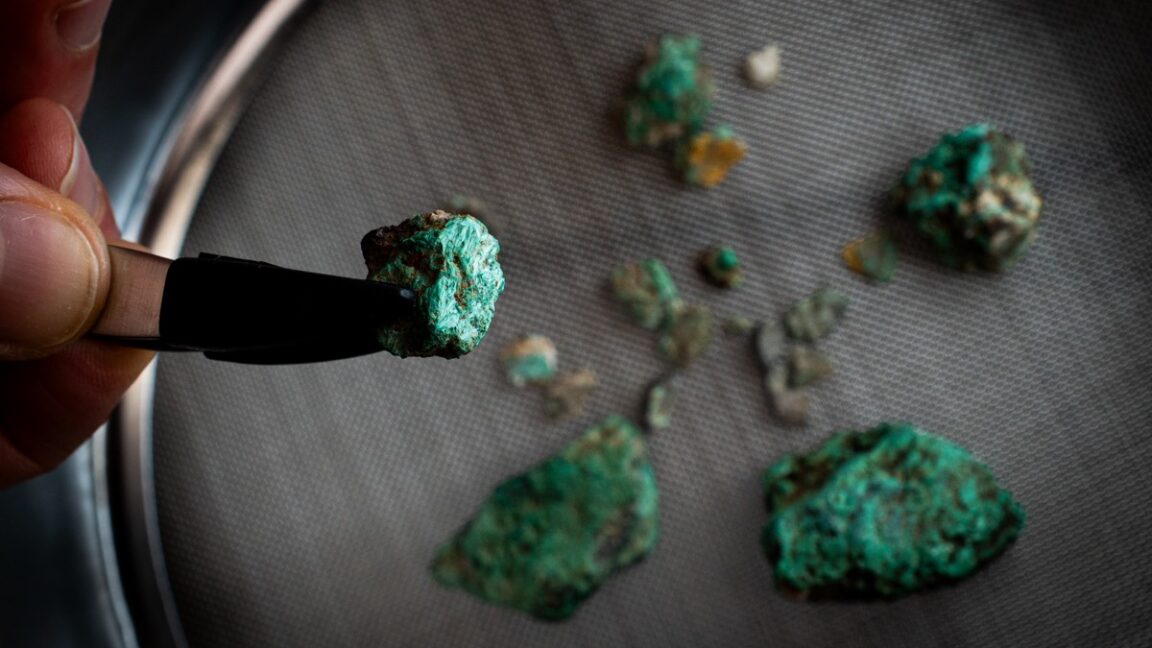
A team of Spanish archaeologists has discovered a possible prehistoric mining site in the Pyrenees. The site, excavated between 2021 and 2023, contains 23 hearths with crushed green mineral fragments that resemble malachite, which can be heated to produce copper. The hearths are estimated to be between 4,000 and 5,500 years old.
New Octopus Species
Scientists have discovered a new species of tiny blue octopus, dubbed Microeledone galapagensis. The creature, collected in 2015, is small enough to fit in the palm of one's hand and has short arms, few arm suckers, and no ink sac.
Singing Mice Research
Researchers at Cold Spring Harbor Laboratory have studied the neural basis of singing behavior in mice. Using a molecular barcoding technique, they found that the ability to sing does not require a major evolutionary leap in brain complexity, but rather targeted changes to existing wiring patterns.
Other Discoveries
Other notable discoveries include research on slapstick acoustics and the identification of a 'golden rule' of abstract art. Mathematicians have developed a new analytical method for art, drawing on a computational topology technique called persistent homology.
This article was independently rewritten by ManyPress editorial AI from reporting originally published by Ars Technica.