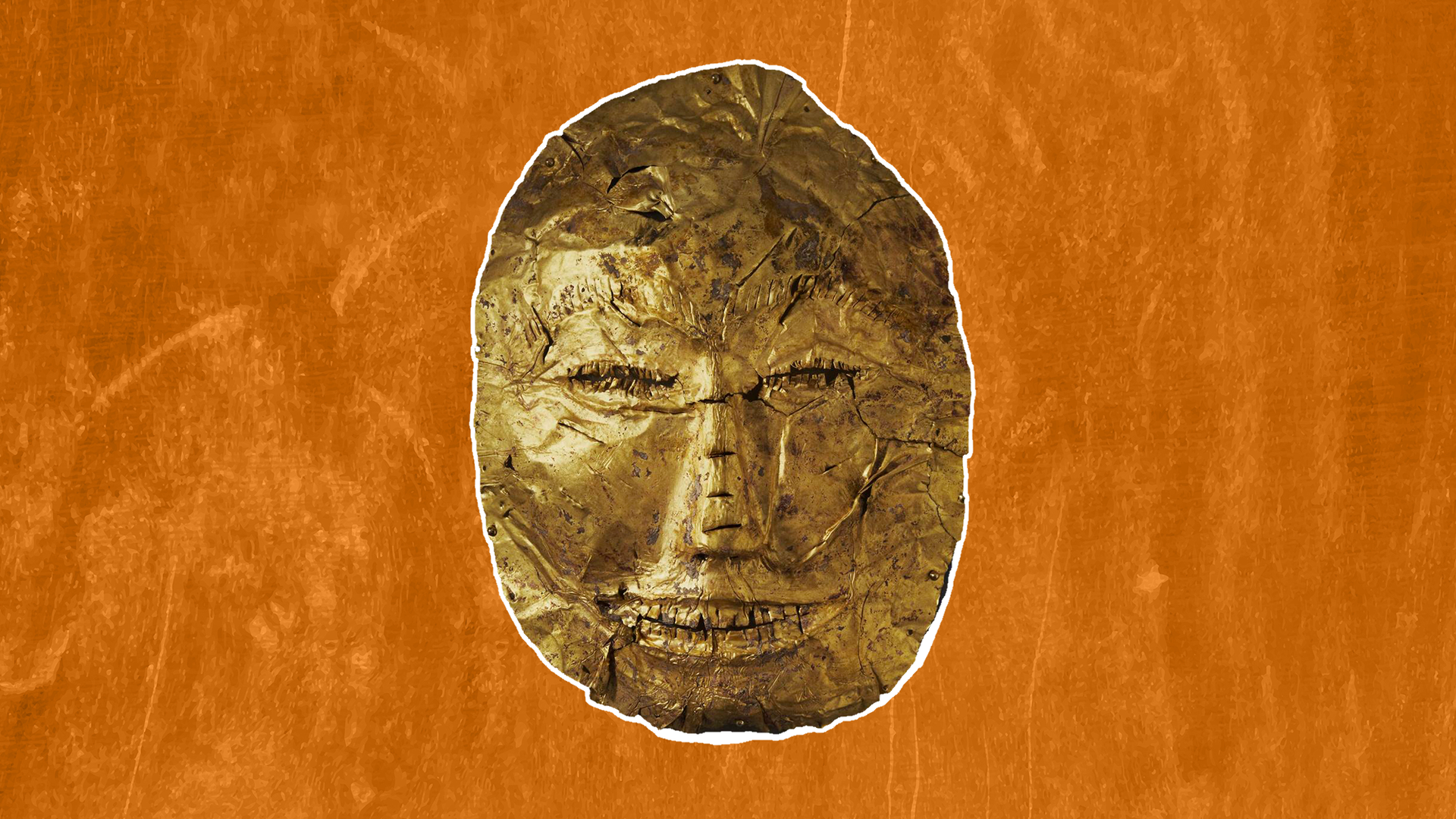
A prehistoric gold mask from Indonesia may have been used to confuse the spirits of the deceased to protect the living.
Key facts
- •The mask dates to Java's Preclassic period, between 500 B.C. and A.D. 200.
- •It measures 8.9 by 6.7 inches and weighs 2.1 ounces.
- •The gold was likely sourced from the nearby islands of Sumatra or Borneo.
- •The artifact was donated to the Yale University Art Gallery in 2007 by Hunter and Valerie Thompson.
- •Archaeologist Wahyono Martowikrido noted the mask is unusually naturalistic and likely intended to resemble the deceased.
A 2,000-year-old gold funeral mask discovered on the Indonesian island of Java is currently held in the Yale University Art Gallery collection. Archaeologist John Miksic dates the artifact to Java's Preclassic period, between 500 B.C. and A.D. 200. The mask features openings for the mouth, eyes, and nostrils, and was likely used to cover a corpse during burial.
By the numbers
Construction and Design
The mask measures approximately 8.9 by 6.7 inches and weighs about 2.1 ounces. To create it, an artisan hammered high-purity gold—likely sourced from Sumatra or Borneo—into a thin sheet before using a chisel to cut incisions for facial features. Holes punched around the edges suggest the mask was once attached to a body or a funeral statue.
Purpose and Cultural Context
While the exact reason for the mask's creation remains uncertain, scholars suggest it may have been used to honor ancestors, signify high social status, or prevent malevolent spirits from tormenting the living. Ethnographic accounts from eastern Indonesia describe similar practices, such as turning a corpse during a funeral procession, intended to confuse spirits and prevent them from returning.
Collection History
The mask is part of a collection of nearly 500 gold objects from Java donated to the Yale University Art Gallery in 2007 by collectors Hunter and Valerie Thompson. Similar gold burial practices have been documented in prehistoric India, China, and other parts of Southeast Asia, though it is unknown if the custom was shared between cultures or developed independently.
Advertisement
This article was independently rewritten by ManyPress editorial AI from reporting originally published by Live Science.