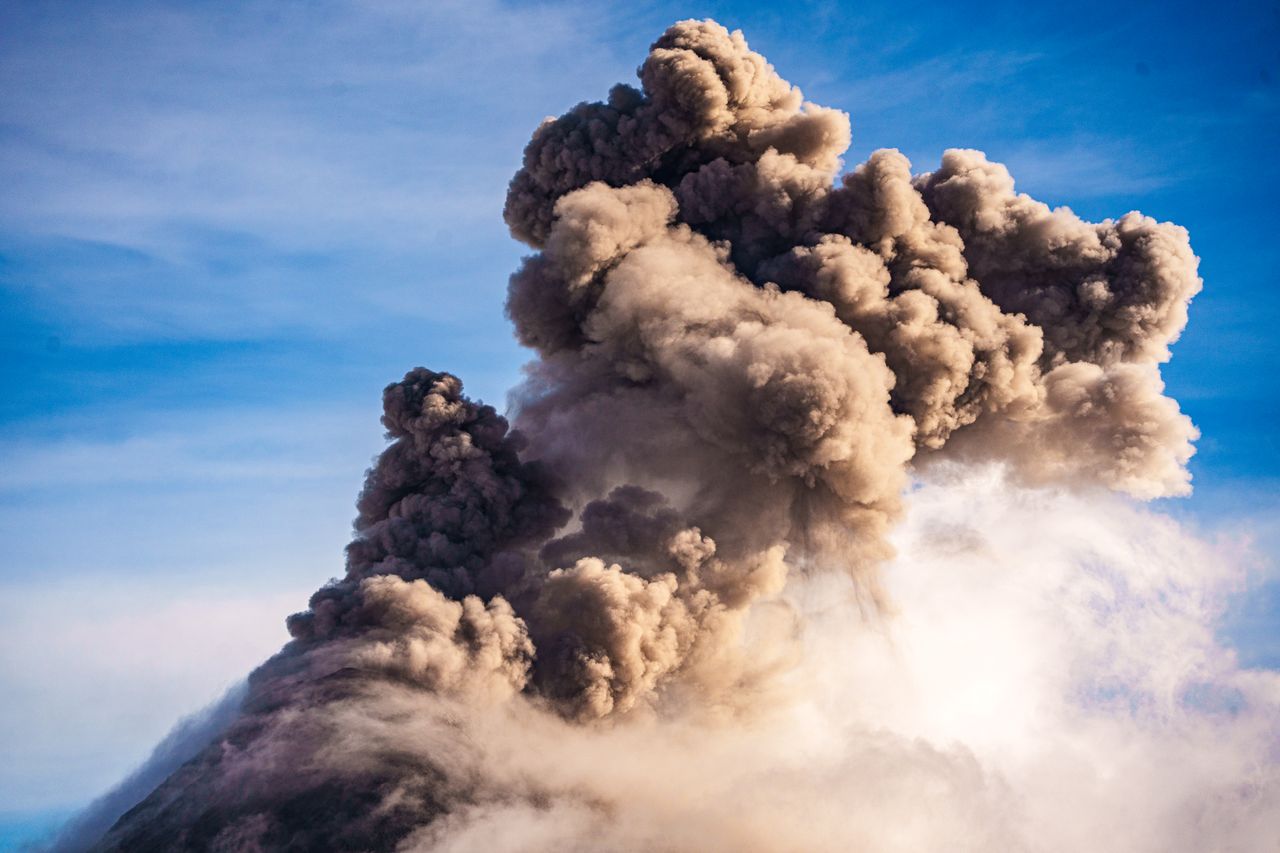
A major eruption at the Anak Krakatau volcano in early September 2026 caused widespread flight cancellations and ashfall across parts of Java and Sumatra.
Key facts
- •The eruption lasted more than 24 hours, beginning in early September 2026.
- •Ash reached altitudes of 6,000 meters to the east and 15,000 meters to the west of the volcano.
- •Eight airports on Java and Sumatra were closed, disrupting nearly 3,000 flights.
- •Approximately 340,000 passengers were stranded due to the airport closures.
- •The volcano remains at the second-highest alert level, a status held since early July 2026.
In early September 2026, the Anak Krakatau volcano, located between the Indonesian islands of Java and Sumatra, experienced a powerful eruption lasting over 24 hours. The event sent significant quantities of ash and volcanic gases into the atmosphere, impacting air quality in regions including Jakarta and forcing the temporary closure of eight airports.
By the numbers
Impact on Aviation and Infrastructure
The eruption resulted in the disruption of nearly 3,000 flights as ash reached altitudes of up to 6,000 meters to the east and 15,000 meters to the west of the volcano by September 6. Eight airports across Java and Sumatra were temporarily closed due to the hazardous conditions, leaving approximately 340,000 passengers stranded. Operations at these airports resumed by September 8.
Environmental and Health Concerns
The Indonesian Humanitarian Coordination Platform reported that ashfall affected populated areas, particularly in Jakarta and West Java. Volcanic ash presents health risks, including potential irritation to the respiratory tract, eyes, and skin. Officials noted that these hazards differ from the smoke produced by peatland fires in terms of particle characteristics and necessary protection measures.
Volcanic Activity Status
Following the intense explosive activity, the eruption subsided on September 6, though the volcano continued to rumble. It returned to a pattern of Strombolian eruptions, which involve intermittent spurts of ash and volcanic material. Despite the reduction in intensity, the volcano remains at the second-highest alert level, a status it has maintained since early July 2026.
Timeline
- Early July 2026Anak Krakatau was placed at the second-highest alert level.
- September 5, 2026Satellites captured images of the explosive eruption.
- September 6, 2026The continuous explosive eruption subsided, and ash reached peak recorded altitudes.
- September 8, 2026Airports resumed operations following the two-day closure.
Advertisement
This article was independently rewritten by ManyPress editorial AI from reporting originally published by NASA Breaking News.