French political scientist Anaïs Marin discusses the evolution of Alexander Lukashenko's regime, his reliance on Moscow, and his history of using diplomatic maneuvering to secure Russian support.
Key facts
- •Anaïs Marin served as the UN special rapporteur on human rights in Belarus from 2018 to 2024.
- •Lukashenko was elected president in 1994 on a platform of fighting corruption.
- •The Kremlin sent Russian state television reporters to Minsk in 2020 after Belarusian journalists resigned in protest of state brutality.
- •Marin characterizes Belarusian foreign policy under Lukashenko as 'dictaplomacy,' defined by conditional loyalty.
- •The Kremlin viewed the 2020 Belarusian protests as a 'second Maidan' that threatened to spread to Russia.
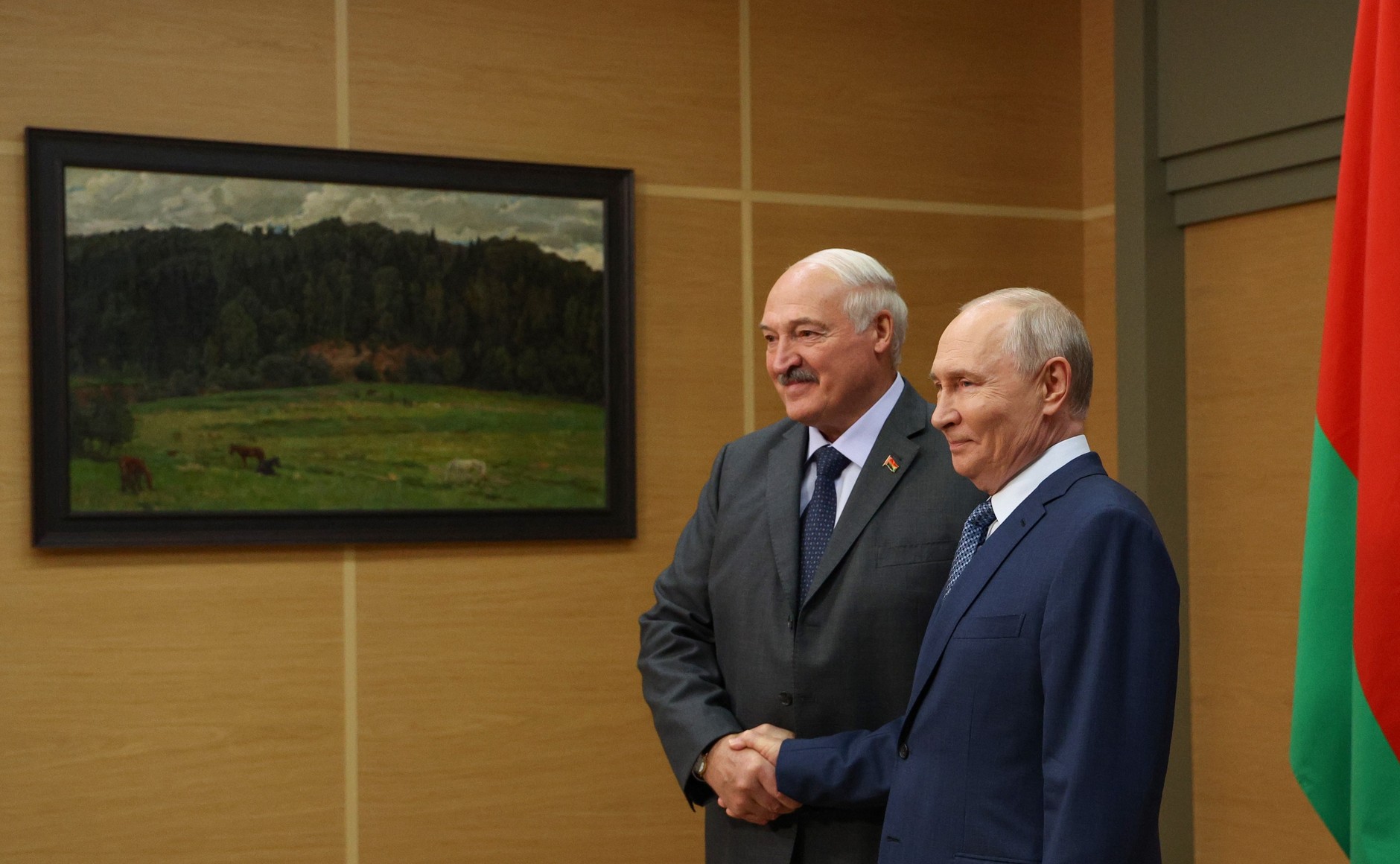
Anaïs Marin, a former UN special rapporteur on human rights in Belarus, argues that Belarusian President Alexander Lukashenko has historically utilized a strategy of 'dictaplomacy' to maintain power. According to Marin, Lukashenko long used the threat of normalizing relations with the West as a tool to blackmail Russia for economic and political concessions. However, since the 2020 protests, his dependence on the Kremlin has deepened, leaving him with little room for independent maneuvering.
From Populist Candidate to Paternalistic Regime
Lukashenko rose to power in 1994 as a populist candidate who promised to combat corruption. Once in office, he systematically reshaped the nation's institutions and constitution to ensure his long-term control. Marin describes his governance as a paternalistic social contract, where he positioned himself as the 'father of the nation' and provided a state-managed system reminiscent of the Soviet era in exchange for the public's political compliance.
The Shift in Foreign Policy and Dependence
Before 2020, Lukashenko successfully balanced his relationship with Russia by occasionally signaling interest in the West to secure benefits from Moscow. Marin notes that this strategy was never intended to lead to democratization, but rather to secure sanctions relief or financial support. Following the 2020 protests, which the Kremlin viewed as a potential 'contagion' similar to the 2011-2012 Russian protests, Lukashenko's options vanished. With Western channels closed due to his 'spiral of repression,' he became almost entirely dependent on Russian President Vladimir Putin.
Timeline
- 1994Alexander Lukashenko was elected president of Belarus.
- 2011-2012Protests occurred on Bolotnaya Square in Russia.
- 2020Belarusian state television journalists resigned in protest of the government's response to demonstrations.
Advertisement
This article was independently rewritten by ManyPress editorial AI from reporting originally published by EUobserver.