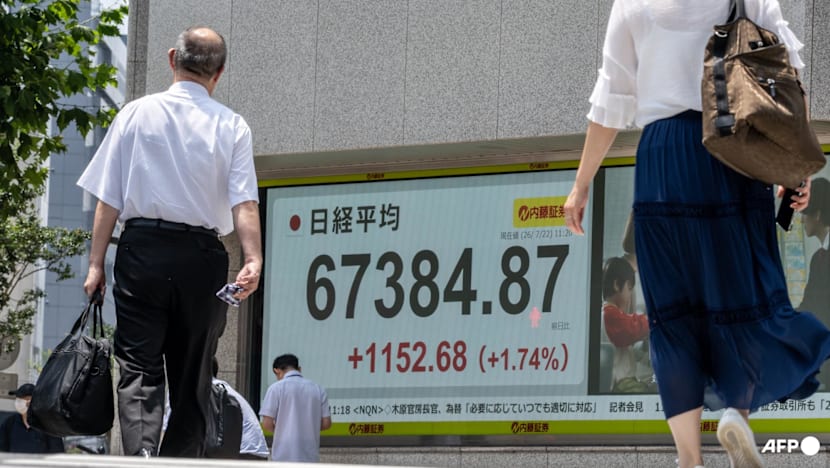
Asian markets fell on Friday following a Wall Street selloff driven by rising oil prices, Middle East conflict, and skepticism regarding the returns on artificial intelligence investments.
Key facts
- •The 'Magnificent Seven' index lost nearly US$800 billion in market value on Thursday.
- •Samsung and SK Hynix shares both fell more than 7 percent in Seoul.
- •Brent crude prices rose 7 percent on Thursday to exceed US$100 per barrel.
- •The U.S. administration is imposing new tariffs on 60 trading partners following the expiration of previous measures.
- •Kioxia shares dropped nearly 10 percent on the Tokyo market.
Asian markets dropped on Friday, July 24, tracking a significant selloff on Wall Street. Investors are responding to a combination of factors, including a resurgent conflict in the Middle East, oil prices rising above US$100 per barrel, and growing uncertainty regarding the profitability of massive capital investments in artificial intelligence.
By the numbers
Tech Sector and AI Investment Scrutiny
Technology companies, particularly the 'Magnificent Seven' in the U.S., experienced significant declines as investors questioned the timing of returns on substantial AI-related spending. On Thursday, Alphabet shares fell nearly 7 percent, while Tesla dropped more than 14 percent. Meta, Microsoft, and Amazon have collectively projected AI-related expenditures exceeding US$700 billion for the year.
Middle East Conflict and Energy Markets
Renewed hostilities between the U.S. and Iran, compounded by Houthi rebel involvement in the Red Sea, have pushed Brent crude oil prices back above US$100 per barrel. The blockade of Saudi ports and potential disruption to shipping channels have raised concerns about renewed inflation and the possibility of central banks increasing interest rates. UN Secretary-General Antonio Guterres described the situation as teetering on the edge of the unimaginable.
Market Impact and Trade Policy
The selloff impacted major Asian indices, with Seoul falling more than 3 percent and Tokyo’s Nikkei index also recording sharp losses. Additionally, the U.S. administration announced plans to impose new tariffs of 10 percent to 12.5 percent on 60 trading partners, including China and India, citing concerns over forced labor.
Timeline
- FebruaryThe U.S. Supreme Court struck down a host of duties, limiting the president's ability to impose tariffs.
- Last monthA U.S.-Iran truce caused oil prices to drop and eased concerns regarding interest rate hikes.
- ThursdayThe Magnificent Seven suffered their largest one-day drop since April 2025, and Brent crude rose above US$100.
- FridayAsian markets tracked a Wall Street selloff, and temporary 10 percent tariffs were set to expire.
Advertisement
This article was independently rewritten by ManyPress editorial AI from reporting originally published by Channel NewsAsia.