UK residents are struggling to find certified eclipse glasses as demand surges ahead of Wednesday's solar eclipse, the most significant in the country since 1999.
Key facts
- •The upcoming solar eclipse is expected to obscure about 90% of the Sun in the UK.
- •The Royal Museums Greenwich has sold out of eclipse glasses due to high demand.
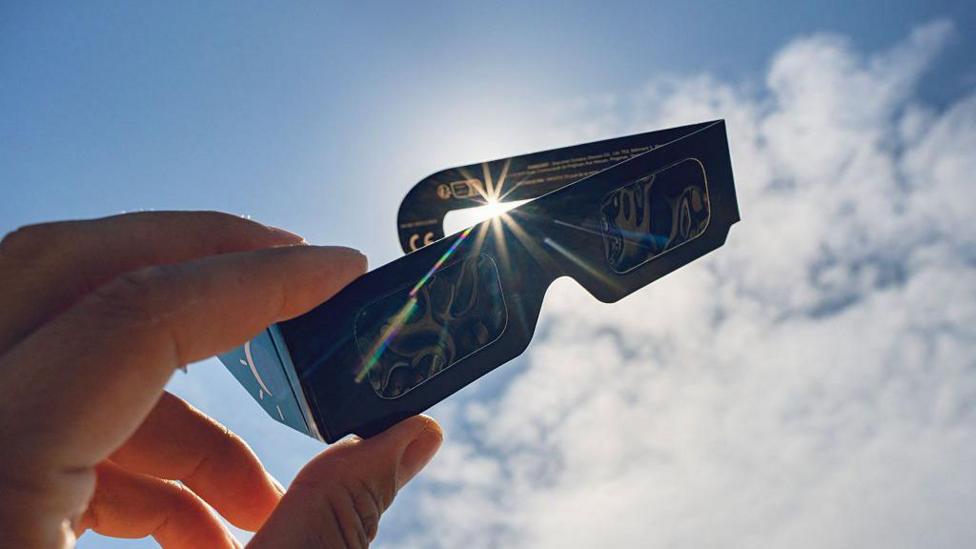
- •The UK Health Security Agency advises checking for the ISO 12312-2 safety standard on all glasses.
- •The Royal College of Ophthalmologists reported 70 cases of vision damage following the 1999 eclipse.
- •Experts warn that standard sunglasses are insufficient for viewing the eclipse safely.
Retailers across the UK are reporting a shortage of specialized eclipse glasses as demand spikes for Wednesday's solar eclipse. With the Moon expected to obscure approximately 90% of the Sun, the event is considered the most significant of its kind in the UK since 1999. Many online retailers and physical shops, including the Royal Museums Greenwich, have sold out of stock due to an unprecedented volume of orders.
By the numbers
Safety Warnings and Standards
Health officials and experts have issued urgent warnings against looking directly at the Sun, noting that even brief exposure can cause permanent eye damage. The UK Health Security Agency recommends using glasses that meet the international safety standard ISO 12312-2. Experts emphasize that standard sunglasses do not provide adequate protection, as specialized eclipse glasses are designed to block almost all light except for the Sun itself. The Royal College of Ophthalmologists has warned that the retina lacks pain receptors, meaning individuals may not feel damage as it occurs. During the 1999 solar eclipse, the college recorded approximately 70 cases of vision problems, with roughly 40% of those affected having viewed the event for less than a minute. The college suggests that indirect viewing methods, such as watching a broadcast or livestream, are the safest options.
Advertisement
This article was independently rewritten by ManyPress editorial AI from reporting originally published by BBC Science & Environment.