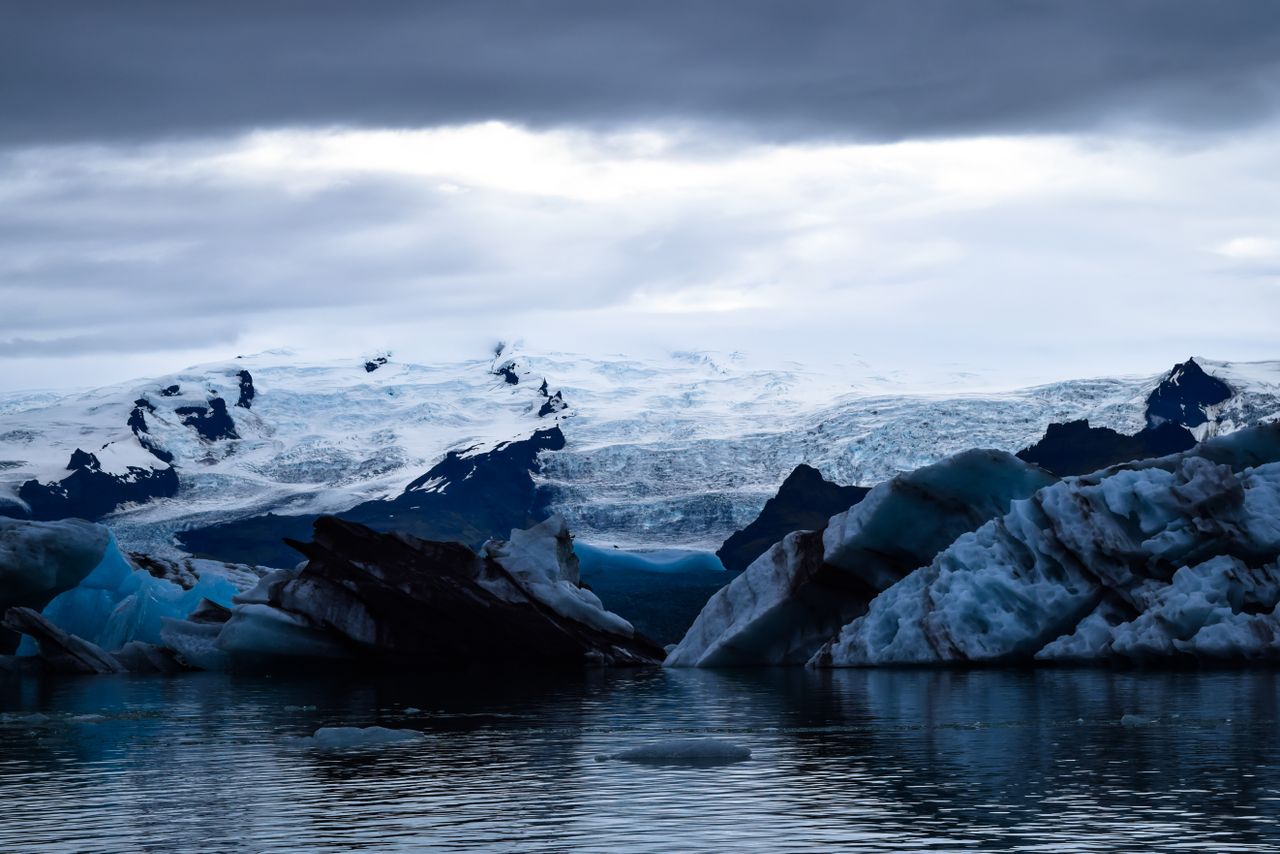
Researchers analyzed over 15,000 satellite observations of ice cliffs to evaluate their role in glacier retreat and future sea level rise projections.
Key facts
- •The study analyzed 15,330 individual satellite observations of ice cliffs around the world.
- •Marine ice-cliff instability refers to the theory that cliffs taller than 100 meters can trigger rapid ice loss.
- •Global sea levels have risen by more than 8 inches (20 centimeters) since 1880.
- •Researchers used satellite laser altimetry to calculate cliff heights and compare them with environmental factors.
- •The findings suggest that while some aspects of MICI occur in nature, other factors can limit the speed of glacial retreat.
A study led by the Woods Hole Oceanographic Institution has conducted a comprehensive analysis of ice cliffs fringing Earth's ice sheets. By examining 15,330 satellite observations, researchers aimed to test the theory of marine ice-cliff instability, which suggests that tall ice cliffs can trigger rapid, self-sustaining ice loss.
By the numbers
Testing the Marine Ice-Cliff Instability Theory
The theory of marine ice-cliff instability (MICI) posits that ice cliffs exceeding approximately 100 meters (328 feet) above the waterline may become structurally unstable. Because this process had not been directly observed, its inclusion in sea level rise projections has been a subject of debate among scientists. The new study, published in Science, utilized satellite laser altimetry to measure surface elevation, allowing researchers to compare cliff heights with factors such as ice thickness, water depth, and calving rates.
Findings on Glacier Retreat
Lead author Caroline Needell noted that while the study suggests current models may underestimate how quickly tall ice cliffs can break apart, it also indicates that glaciers often retreat into regions where conditions become less favorable for continued rapid loss. Co-author Jeremy Bassis observed that while ice sheets can calve rapidly, current examples suggest such retreat is short-lived and glaciers eventually restabilize. Researchers emphasize that these findings provide a new data set to refine ice-sheet models and reduce uncertainty in future sea level rise projections.
Advertisement
This article was independently rewritten by ManyPress editorial AI from reporting originally published by Phys.org.