Eurostat data for 2024 identifies the busiest maritime hubs in the EU, with the Netherlands leading in total goods handled.
Key facts
- •Rotterdam is the busiest EU port, processing 397.3 million tonnes of goods in 2024.
- •The Netherlands leads all EU countries with a total of 538.1 million tonnes of goods handled.
- •The top 20 busiest ports include facilities in France, Italy, Spain, Portugal, Greece, Sweden, and Germany.
- •EU ports collectively handled 3.4 billion tonnes of goods in 2024, representing 26% of global sea-traded volume.
- •In March 2026, the European Commission launched two strategies to support the resilience and sustainability of the waterborne sector.
In 2024, EU ports processed approximately 3.4 billion tonnes of goods, accounting for 26% of the 13 billion tonnes of cargo transported by sea globally. According to Eurostat, maritime trade remains the primary method for the bloc's external freight, handling nearly 90% of such volume. The Netherlands currently holds the top position among EU member states for total cargo throughput.
By the numbers
Top Performing EU Ports
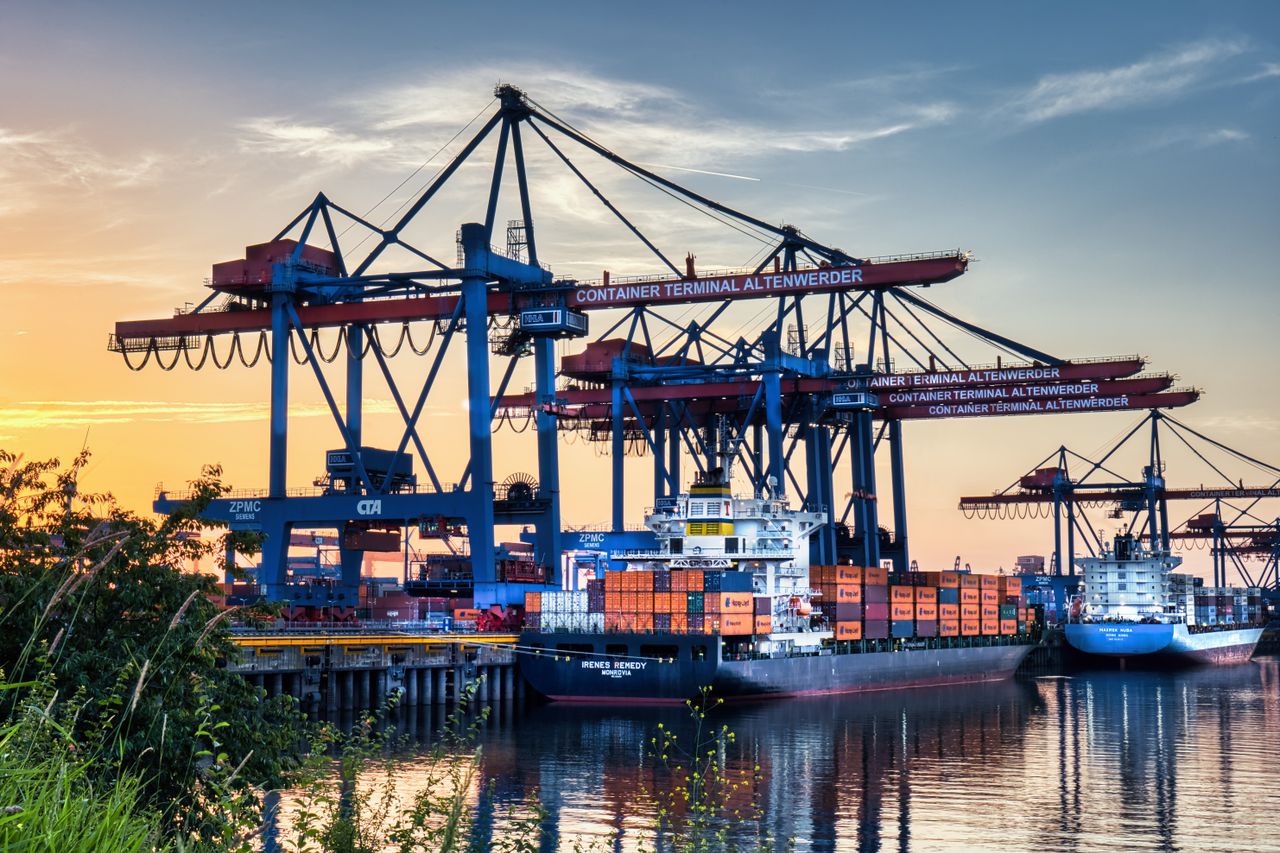
Rotterdam in the Netherlands is the busiest port in the EU, handling 397.3 million tonnes of goods in 2024. The port of Antwerp-Bruges in Belgium ranks second with 243.7 million tonnes, while Germany's Hamburg follows in third place with 97 million tonnes. The top five is completed by Spain's Algeciras at 81.5 million tonnes and Amsterdam at 78.8 million tonnes. Other major hubs include France's HAROPA complex, which handled 76.6 million tonnes, and the Polish port of Gdansk with 71 million tonnes. The top 10 list also features Marseille, Valencia, and the Romanian port of Constanta.
National Freight Rankings
The Netherlands leads the EU in total gross weight of goods handled across all its ports, reaching 538.1 million tonnes. Italy ranks second with 488.6 million tonnes, closely followed by Spain at 486 million tonnes. These three nations significantly outperform other member states, with Belgium, Germany, and France each handling between 269 and 275 million tonnes. When including EU candidate countries and EFTA members, Turkey ranks second overall with 524.7 million tonnes of goods handled, while Norway ranks eighth with 212.1 million tonnes.
Strategic Initiatives
The European Commission continues to prioritize the waterborne sector, citing its historical role in economic development. In March 2026, the Commission adopted two new strategies aimed at enhancing the competitiveness, sustainability, security, and resilience of the EU's ports, shipping, and shipbuilding industries.
Advertisement
This article was independently rewritten by ManyPress editorial AI from reporting originally published by Euronews Business.