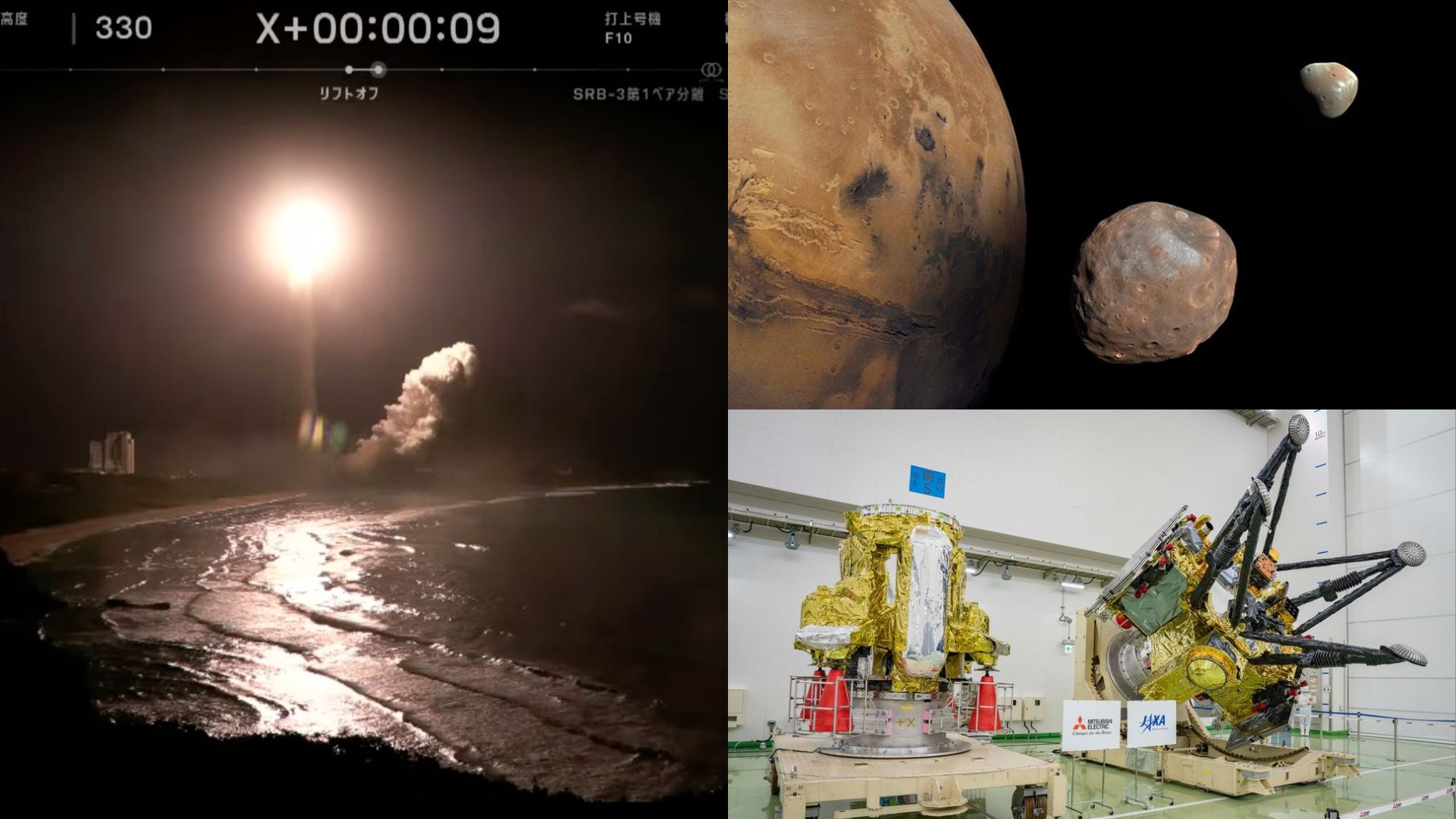
The JAXA-led MMX mission has launched on an H3 rocket, aiming to retrieve soil and rock samples from the Martian moon Phobos by 2031.
Key facts
- •The MMX spacecraft is designed to collect at least 10 grams of soil and rock from the surface of Phobos.
- •The mission is a collaboration between JAXA, NASA, the French space agency CNES, and the European Space Agency.
- •The Idefix rover will spend 100 days surveying the surface of Phobos to assist in selecting landing and sampling sites.
- •Phobos is a small, pock-marked moon measuring approximately 14 miles in diameter.
- •The mission is expected to return the collected samples to Earth in 2031.
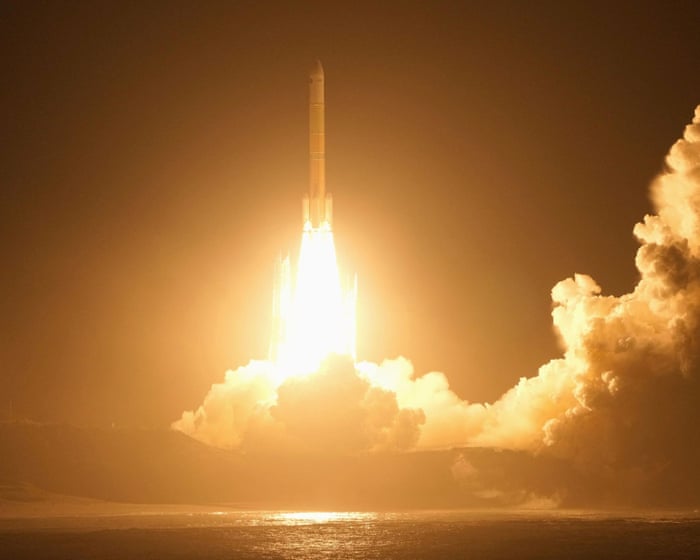
Japan’s Martian Moons Exploration (MMX) mission successfully launched from the Tanegashima Space Center, marking the start of an international effort to collect surface samples from Phobos. The spacecraft, propelled by an H3 rocket, aims to provide insights into the origins of the solar system and the formation of Mars's moons. The mission is a collaborative project involving JAXA, NASA, the French space agency CNES, and the European Space Agency.
By the numbers
Mission Objectives and Scientific Goals
The primary goal of the MMX mission is to determine the origin of Phobos and its companion moon, Deimos. Scientists are currently testing two main theories: that the moons are captured asteroids or that they consist of debris from a massive ancient collision with Mars. By analyzing at least 10 grams of material in sophisticated Earth-based laboratories, researchers hope to uncover clues regarding the formation of planets and the potential development of organic matter or life.
Operational Timeline and Technical Approach
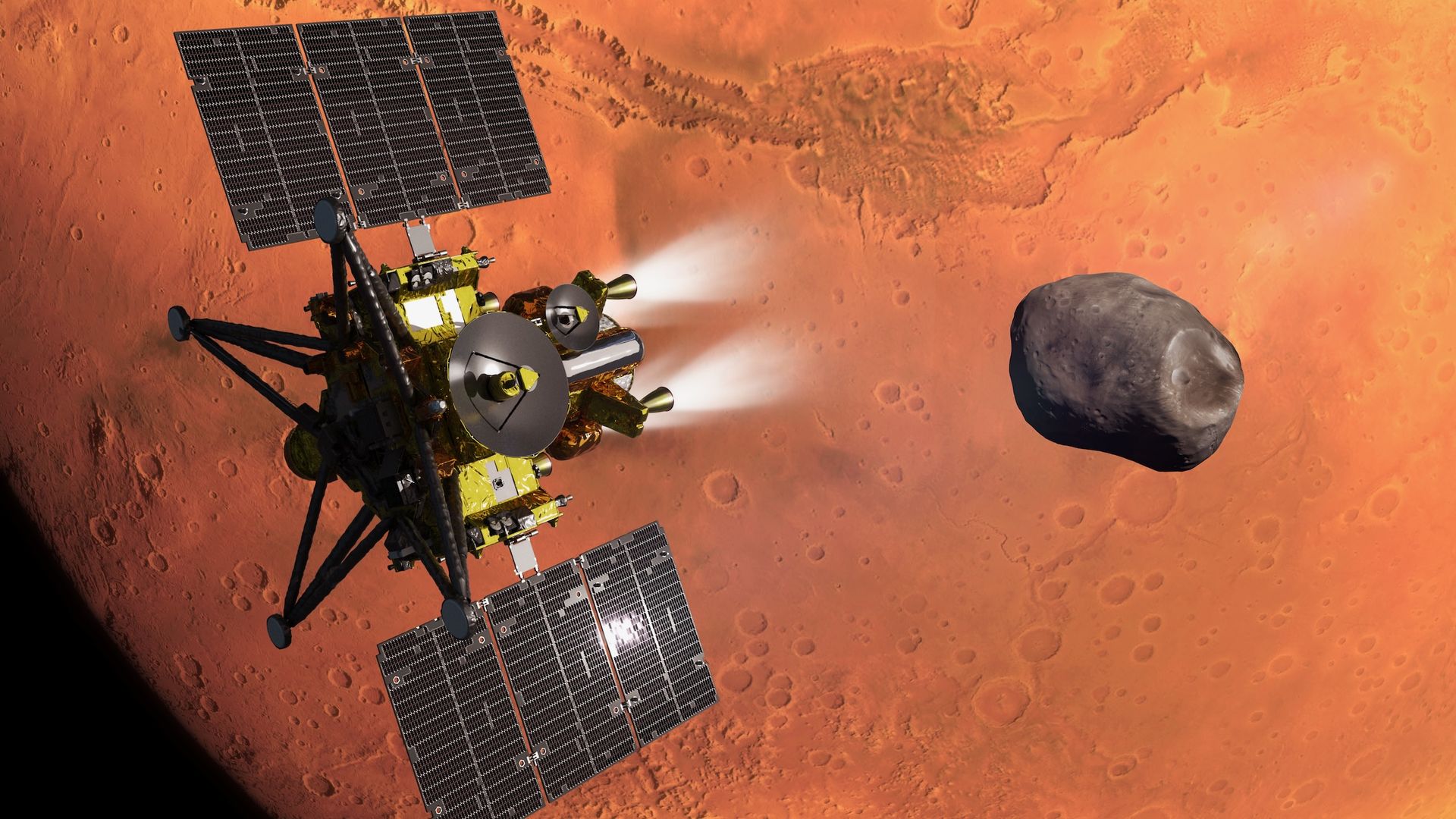
Following its launch, the spacecraft is expected to reach the Martian system to begin its orbital phase. The mission will deploy a four-wheeled rover named Idefix, which will survey the surface to identify suitable sampling sites. The main spacecraft is then scheduled to land on Phobos to gather material using a drilling and vacuuming process. The return module is planned to depart from the vicinity of Mars and transport the collected samples back to Earth in 2031.
Advertisement
This article was independently rewritten by ManyPress editorial AI from reporting originally published by Guardian Science, Scientific American.