Millions of people across Europe gathered to view a solar eclipse, with total and partial phases visible from various locations.
Key facts
- •The solar eclipse occurred on August 12, 2026.
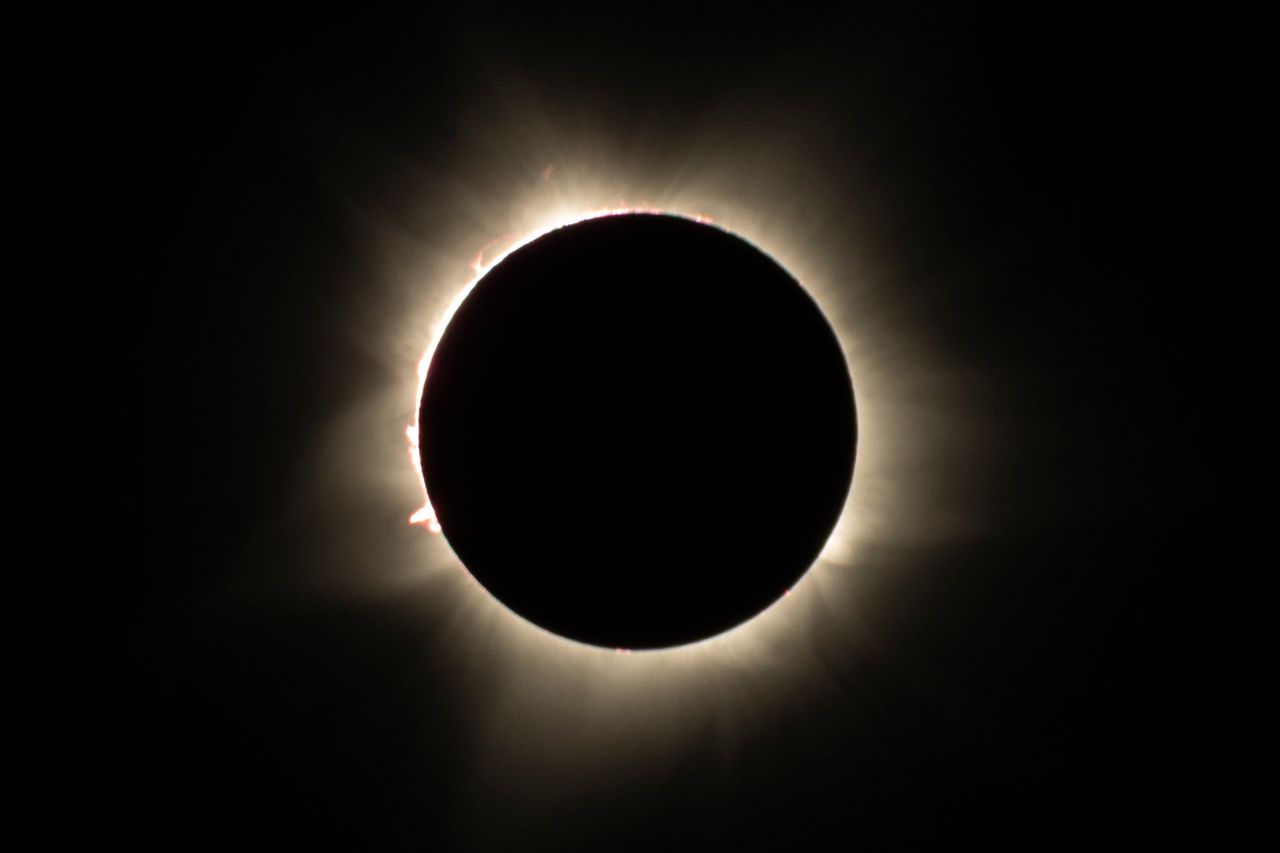
- •Total eclipse phases were recorded in locations including Lodoso, Spain, and off the coast of Greenland.
- •Partial eclipse views were reported in cities such as Berlin, Budapest, Stockholm, and Folkestone.
- •Observers used specialized protective glasses to view the partial phases of the eclipse.
- •Astrophotographers and university researchers utilized equipment to document the event across various European sites.
Millions of people across Europe stepped outside on August 12, 2026, to observe a solar eclipse. The event, which featured both total and partial phases, was captured by observers from Spain to Iceland and Greenland.
Observations Across Europe
The eclipse was viewed from numerous locations, including Berlin, Germany, where the moon was seen partially covering the sun near the Molecule Man sculpture. In Budapest, Hungary, observers utilized protective glasses, a practice also documented at the top of St Mary's Church bell tower in Rickmansworth, Britain, and at Puerto de Sagunto beach in Spain.
Total Eclipse and Scientific Activity
Total eclipse conditions were observed in locations such as the Javalambre Astrophysical Observatory in Spain and from the cruise ship Ambition off the coast of Greenland. In Berlanga de Duero, Spain, members of the 'Los Taraos' astrophotography group prepared equipment to document the event, while astrologists from the University of Toulouse conducted observations from the summit of the Pic du Midi in France.
Advertisement
This article was independently rewritten by ManyPress editorial AI from reporting originally published by NPR World.