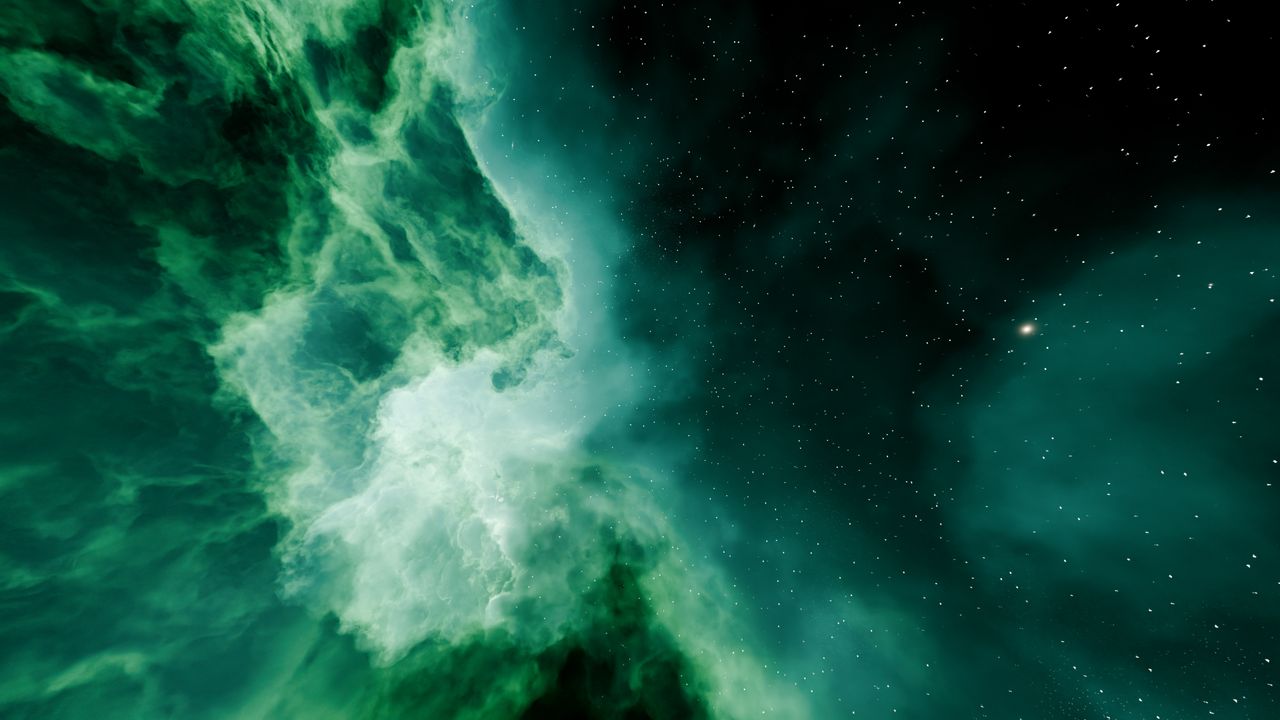
A look at the Dark Doodad Nebula and the globular star cluster NGC 4372, two celestial objects located in the constellation Musca.
Key facts
- •The Dark Doodad Nebula is located in the constellation Musca.
- •The nebula is approximately 700 light-years from Earth.
- •NGC 4372 is a globular star cluster located 20,000 light-years away.
- •Dennis di Cicco coined the name 'Dark Doodad' in 1986.
- •The Dark Doodad is part of the Musca molecular cloud.
The Dark Doodad Nebula is a dusty interstellar cloud situated in the southern constellation Musca, the Fly. This nebula is positioned near the Coalsack Nebula and the Southern Cross, appearing in the same telescopic field of view as the globular star cluster NGC 4372.
By the numbers
Celestial Characteristics
The Dark Doodad Nebula is located approximately 700 light-years away and spans over 30 light-years in length. It is part of the Musca molecular cloud, which is considered a potential site for star formation. The nebula stretches for about 3 degrees across the sky. NGC 4372 is a globular star cluster situated about 20,000 light-years away in the halo of the Milky Way galaxy. Its appearance near the Dark Doodad is a result of their alignment along the same line-of-sight, rather than a physical association between the two objects.
Origin of the Name
The name 'Dark Doodad' was coined by astro-imager and writer Dennis di Cicco. He created the moniker in 1986 while he was observing Comet Halley from the Australian outback.
Advertisement
This article was independently rewritten by ManyPress editorial AI from reporting originally published by NASA Breaking News.