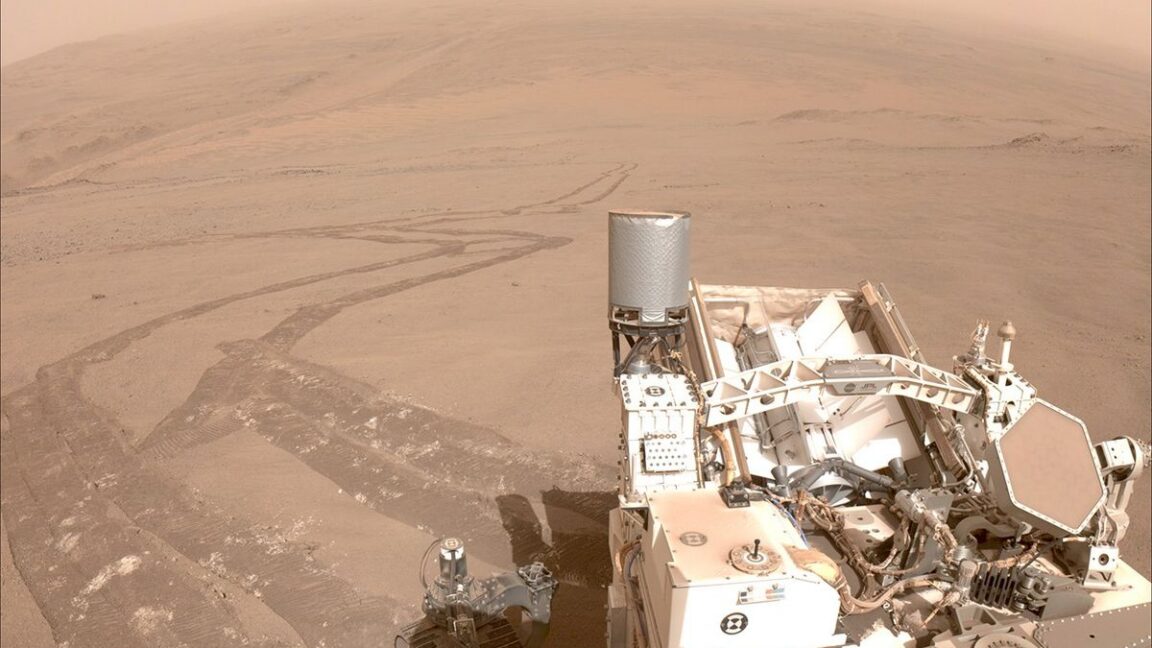
NASA's Perseverance rover is successfully exploring ancient terrain in Jezero Crater, with engineers reporting no significant wear on its redesigned wheels.
Key facts
- •Perseverance is analyzing rocks in Jezero Crater that are roughly 4 billion years old.
- •The rover's wheels were redesigned to avoid the wear and tear issues seen on the Curiosity rover.
- •NASA is working to certify the rover's wheel actuators for a distance of at least 100 km.
- •The rover does not carry propellants, lubricants, or other consumables.
- •Scientists are comparing the ancient Martian environment to Earth's Mojave Desert.
The Perseverance rover is currently studying ancient rocks in Mars' Jezero Crater that date back approximately 4 billion years. Scientists are using the rover to investigate the planet's geological history and potential past habitability during an era when large lakes and oceans may have existed.
By the numbers
Rover Durability and Design
Engineers report that the rover is performing well after several years on the Martian surface. Unlike the Curiosity rover, which experienced significant wheel wear, Perseverance features a redesigned wheel system that shows no signs of appreciable degradation. The vehicle operates using Radioisotope Thermoelectric Generator (RTG) power and does not require propellants, lubricants, or consumables.
Operational Lifespan and Goals
While the wheel actuators were initially tested for a 20 km lifespan, NASA is currently certifying them for at least 100 km of travel. Due to its power system and design, officials believe the rover will be capable of continuing its autonomous operations across the Martian landscape for many years.
Advertisement
This article was independently rewritten by ManyPress editorial AI from reporting originally published by Ars Technica.